
Last updated November 4, 2026
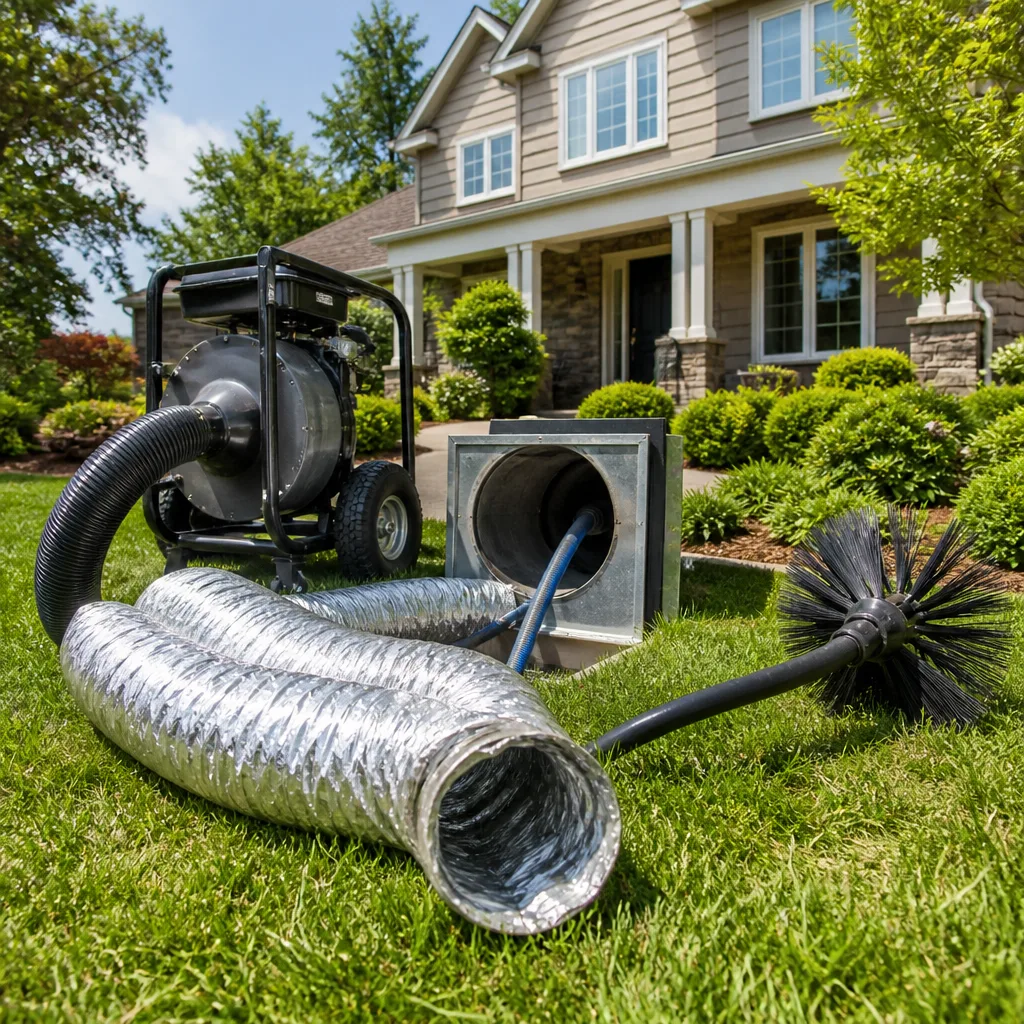 Whole-home duct cleaning
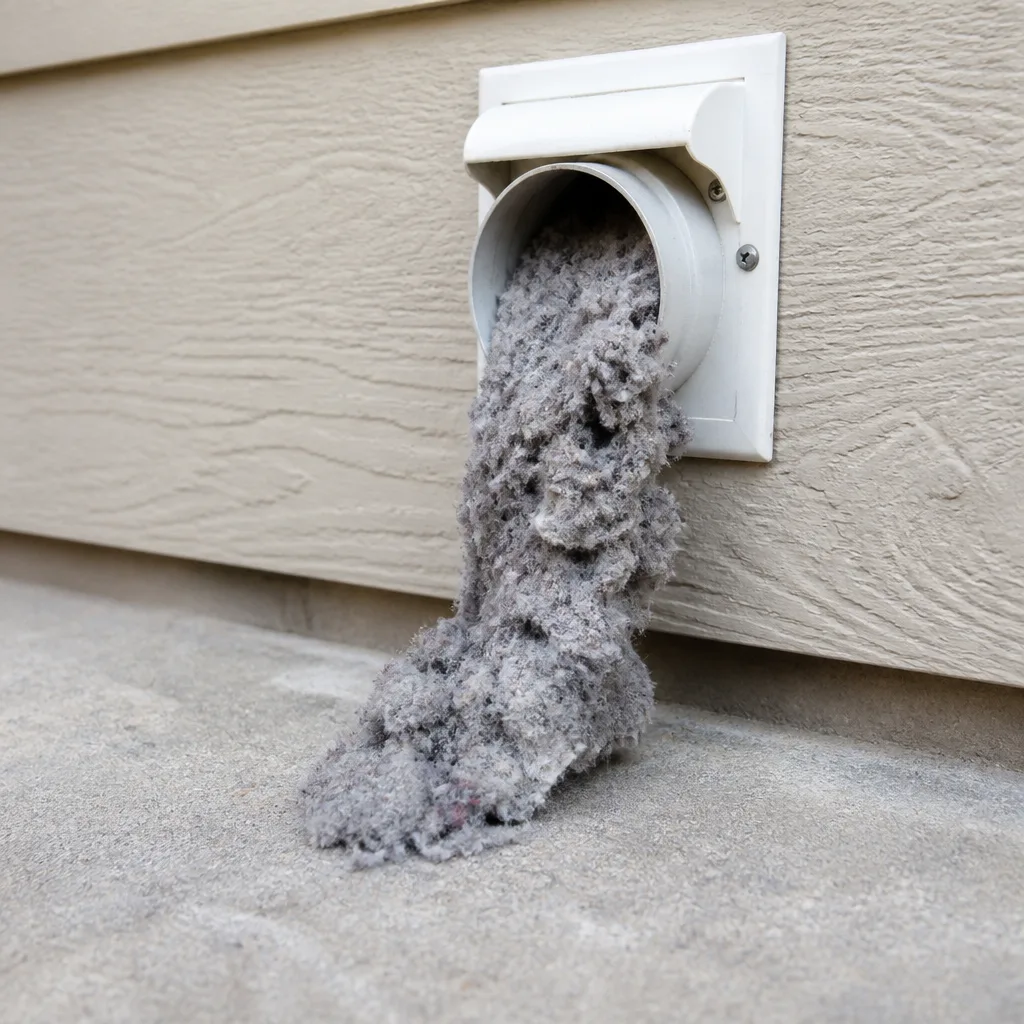 Dryer vent cleaning
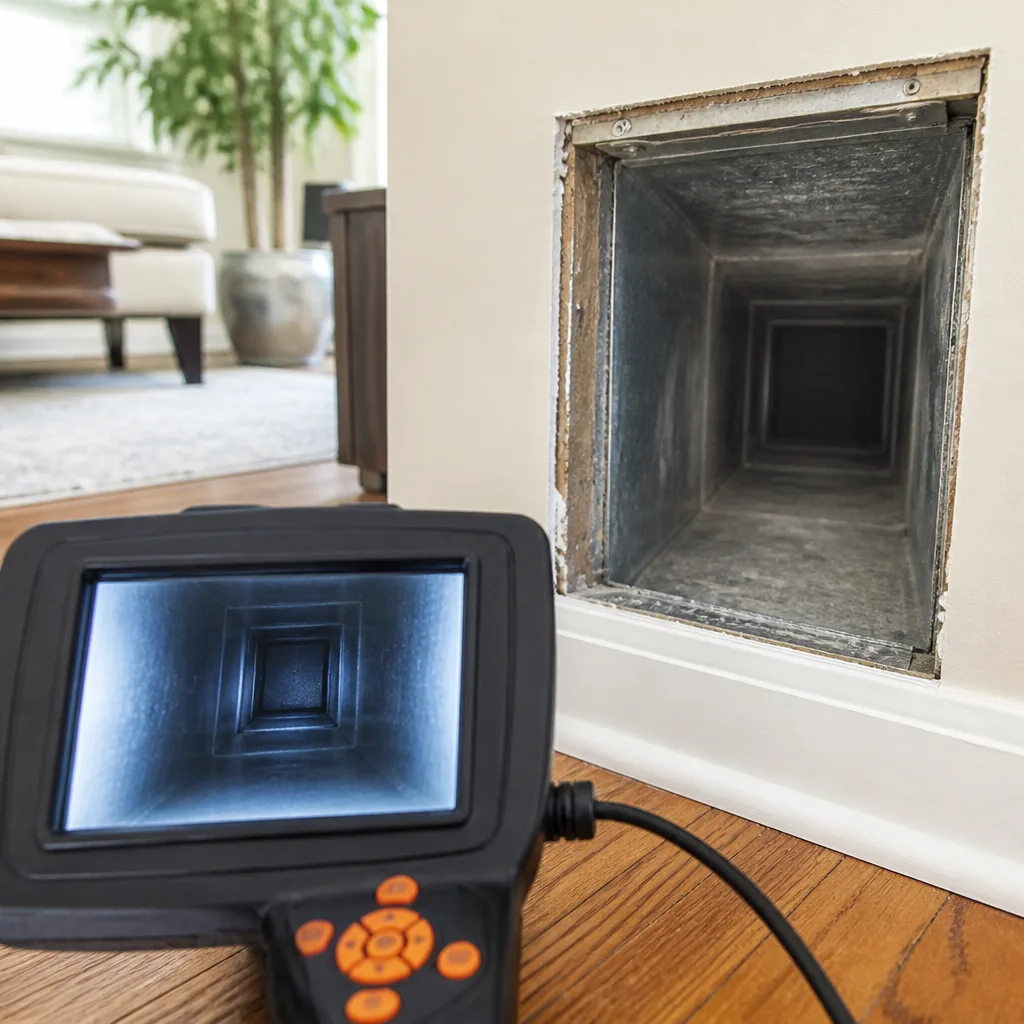 Camera inspection
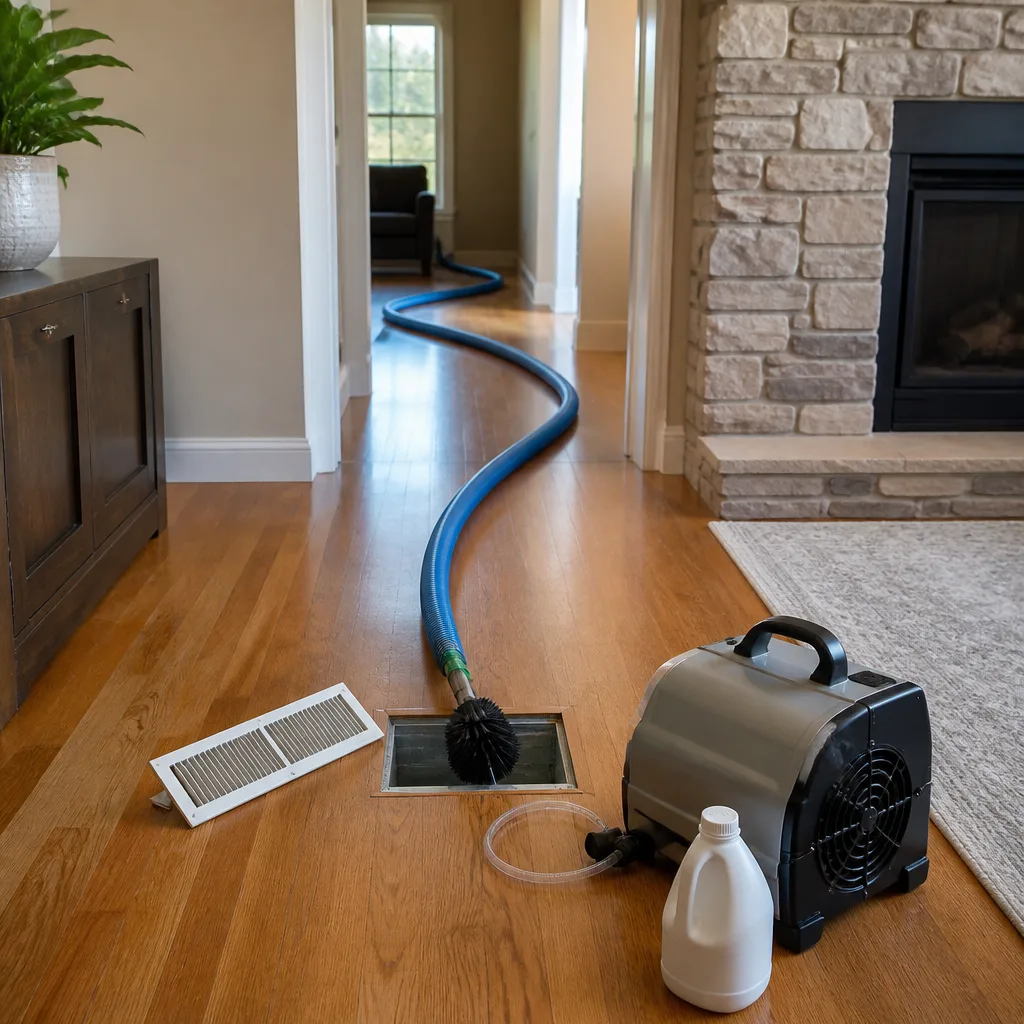 Sanitizing & deodorizing
Whole-system duct and dryer vent check with before-and-after photos - you see exactly what came out of your vents
That "$99 whole-house special" is a bait ad - the real number appears once they are in your hallway, or the "clean" is a shop-vac at the register. We photograph the inside of your ducts before and after instead.
Air Duct Cleaning Warning Signs: A Hayward Homeowner’s Reference Guide
Most people think the first sign of dirty ducts is dust puffing out of a register when the system kicks on. By the time you see that, the buildup inside the ductwork has been affecting your home for weeks. In Hayward, where homes range from 1950s ranch-style builds to new townhouses near downtown, the duct systems that move air through those spaces tell a story about what’s accumulating inside them. This guide covers the mechanical and behavioral warning signs that show up before visible dust does: airflow changes between rooms, filters loading faster than they used to, and the specific smells that distinguish dust from mold from rodents. You’ll learn what to check, what each sign indicates, and when the problem needs more than a filter change.
Styles & brands we work with
- Whole-home duct cleaning
- Dryer vent cleaning
- Camera inspection
- Sanitizing & deodorizing
Quick Answer
Air duct cleaning warning signs in Hayward typically start with airflow imbalances between rooms, not visible dust. If some rooms heat or cool unevenly, your filter loads twice as fast as it used to, or you notice a musty smell that returns after cleaning, the ductwork itself likely needs professional attention. A filter that gets dirty fast is not a filter problem, it’s a duct problem.
Table of Contents
- Airflow Imbalance: The First Warning Sign
- Filter Loading Rate: Your Ductwork’s Diagnostic Tool
- Smell Profiles: Dust vs. Mold vs. Rodent Intrusion
- Static Pressure and What Your Thermostat Reveals
- Post-Renovation Warning Signs in Hayward’s Remodel Market
- Visible Signs at Registers and Returns
- What Rising Energy Bills Indicate About Your Ducts
- Common Mistakes to Avoid
- When to Call a Professional
- Frequently Asked Questions
- The Bottom Line
Airflow Imbalance: The First Warning Sign
A duct system accumulating debris serious enough to affect air quality usually shows it first as an airflow imbalance. Rooms that used to heat or cool at the same rate now behave differently. One bedroom stays warmer in summer. A living room takes an hour longer to reach the thermostat setting. This happens because debris doesn’t distribute evenly through ductwork. It settles in horizontal runs, collects at elbows and register boots, and restricts airflow to specific branches of the system while others stay clear.
Hayward’s mild climate means many homes run their systems in a narrow band of temperatures, which can mask the problem. A room that’s three degrees warmer on a 90-degree day might not register as a concern. But that differential is the system telling you something is restricting airflow to that branch. In our experience, homeowners often wait until the imbalance becomes uncomfortable before investigating, and by then the restriction has been building for months.
Here’s a simple comparative test you can do without any equipment:
- Set your thermostat to a comfortable temperature and let the system cycle normally for a full day.
- Check each room at the same time of day for three consecutive days. Mid-afternoon works well in Hayward because the outside temperature is fairly consistent.
- Note which rooms feel different. A bedroom that’s consistently warmer than a hallway or adjacent room indicates restricted airflow to that branch.
- Feel the airflow at the register. Compare the force of air coming from registers in different rooms. A register with noticeably weaker airflow than a similar-sized register elsewhere is a restriction indicator.
- Close the door to that room for an hour while the system runs. If the room becomes stuffy quickly, the supply air isn’t reaching it properly.
This test doesn’t require training or tools, just attention. The key is comparing rooms against each other, not against an abstract standard. Your home’s system is balanced when airflow is roughly equal across similar-sized spaces. When that balance shifts, the cause is usually physical: debris in the ductwork, a disconnected section, or a crushed flex duct. A professional air duct cleaning can address the debris issue, but airflow imbalance is also a common symptom of duct damage that requires repair.
Filter Loading Rate: Your Ductwork’s Diagnostic Tool
Your air filter is the single most useful diagnostic tool in your home. It sits in the airstream before the furnace, capturing whatever the return ducts bring back. When your ducts are clean, the filter loads at a predictable rate. When ducts are dirty, the filter loads faster because the system is circulating debris that’s already inside the ductwork, not just what’s coming from your living space.
A filter that needs replacement twice as often as it used to is a warning sign, not a filter brand problem. If you used to change your filter every three months and now it’s visibly dirty after six weeks, something changed in the system. The filter is doing its job, but it’s working harder because the ductwork behind it is holding dust, pet dander, and construction debris that circulates continuously.
Here’s how to use filter loading as a diagnostic:
- Track your replacement interval. Note the date every time you change the filter. If the interval shrinks by 30 percent or more without a corresponding change in your household (new pet, more people, open windows), the ducts are the likely source.
- Look at the color and texture of the filter. Household dust is typically light gray. Construction dust, especially drywall dust, is white and chalky. Dark, sooty residue can indicate combustion particles or rodent activity near ductwork.
- Inspect the filter’s frame. If you see dust caked around the edges while the center is cleaner, air is bypassing the filter, which means the ductwork itself may not be sealed properly.
We work with Honeywell filtration products, and the loading rate you observe on your filter is the same information a technician uses to assess system health. The difference is that a professional can open the ductwork and confirm where the debris is coming from. If you’re changing filters more often than you used to, the answer usually isn’t a thicker filter. It’s cleaning what’s behind the filter.
Smell Profiles: Dust vs. Mold vs. Rodent Intrusion
Smells inside duct systems are distinct, and each one points to a different problem. Homeowners often describe any unpleasant odor from vents as “musty,” but that word covers at least three different situations that require different responses.
Dust smell is the most common and the least alarming. It’s a dry, slightly acrid smell, like an old heater running for the first time in months. In Hayward, where the mild climate means systems cycle less consistently than in harsher regions, dust settles in ducts during idle periods and burns off when the system runs. A dust smell that fades after the system runs for a few minutes is normal. A dust smell that persists through an entire cycle, or returns every time the furnace ignites, indicates significant accumulation inside the ductwork.
Mold smell is damp and earthy, like a wet towel left in a hamper. It doesn’t burn off with system operation, it gets stronger when the system runs because air moving across damp surfaces picks up more odor. This is more serious than dust accumulation. Mold requires moisture, which means something in the system is wet: a leaking evaporator coil, condensation in an uninsulated duct run, or water intrusion from outside. If you smell mold consistently, don’t just clean the ducts. Find and fix the moisture source first, or the problem returns.
Rodent smell is sharp and ammonia-like, often accompanied by the smell of droppings or urine. It’s concentrated near specific registers rather than throughout the house, because rodents nest in one area of the duct system. This is the most urgent of the three. Rodents in ductwork mean entry points exist, droppings are present, and the air you’re breathing is passing through contaminated material. The response here is removal, sanitization, and sealing the entry points, not just a cleaning.
To identify what you’re smelling, run the system for five minutes and then stand near a register. Dust smell comes through as a dry, warm odor. Mold comes through damp. Rodent comes through sharp and lingering. If the smell changes depending on which room you’re in, the problem is localized to specific duct branches.
Static Pressure and What Your Thermostat Reveals
Static pressure is the resistance to airflow inside your duct system. When ducts are clean and properly sized, air moves through at the pressure the system was designed for. When debris accumulates, the system has to work harder to push the same volume of air. Homeowners can’t measure static pressure without a manometer, but they can observe the symptoms of elevated static pressure through behavior they already see at the thermostat.
One observable symptom is short cycling. When static pressure is high, the furnace or air conditioner reaches the thermostat setpoint, shuts off, and then the temperature in the room drifts quickly because the system never really delivered the right volume of air. The thermostat calls for cooling again, the system runs briefly, shuts off, and the cycle repeats. If your system seems to turn on and off more frequently than it used to, that’s not normal wear. It’s often airflow restriction.
Another symptom is temperature overshoot. You set the thermostat to 72, the system runs, but the room reaches 74 before the thermostat registers it. This happens because the thermostat is measuring air in one location while the system is struggling to distribute air evenly through dirty ducts. The result is a house that feels inconsistent even though the thermostat reading doesn’t change.
Hayward homes with older duct systems are particularly susceptible to static pressure increases. Ducts that were installed decades ago have accumulated years of particulate. Flex duct that’s been in place since the 1990s may have sagged or compressed. Abatement Technologies filtration equipment is designed for higher-intensity air quality work, and in our experience, the homes that need it most are often the ones where static pressure has been climbing silently for years without anyone measuring it.
If you notice short cycling or temperature inconsistency, have the system checked. High static pressure forces the blower motor to work harder, which shortens its lifespan and increases energy consumption even before air quality becomes a noticeable issue.
Post-Renovation Warning Signs in Hayward’s Remodel Market
Hayward has an active remodel market. Homes in the Glen Eden, Burbank, and Mission-Foothill neighborhoods are regularly updated, and construction inside those homes produces dust that behaves differently than household particulates. Drywall dust is the most common, but flooring removal, sanding, and demolition all generate fine material that enters duct systems through return air grilles, often because the contractor didn’t seal the registers before starting work.
Drywall dust in ducts behaves differently than household dust. It’s finer, so it travels deeper into the system. It’s heavier than the organic dust that circulates naturally, so it settles in horizontal runs and at register boots where airflow slows. And it’s binding: when it mixes with even small amounts of moisture, it forms a paste that adheres to duct surfaces and hardens over time. A standard filter can’t capture all of it during the renovation, and what’s left behind in the ducts keeps circulating for months after the project ends.
The warning signs specific to post-renovation duct contamination are:
- White or chalky dust on registers and nearby surfaces within weeks of the project finishing. Household dust is gray. Drywall dust is white.
- A persistent chemical or fresh-paint smell from vents even after the rest of the house has aired out. That smell is being circulated from inside the ducts.
- Unusual filter loading where the filter surface looks caked and white rather than progressively gray. This indicates a pulse of fine material moved through the system at once.
- Uneven airflow in rooms near the renovation area. Debris settles in the branches closest to where the work happened, restricting those rooms first.
Homeowners often assume that running the system during a remodel will filter out construction dust. It does the opposite. It pulls that dust into the return ducts and distributes it through the entire system. If you’ve completed a renovation in Hayward and your HVAC system has been running normally since, the ducts should still be inspected. Construction dust responds differently to cleaning than household dust, and it needs to be removed with professional equipment rather than allowed to settle.
Visible Signs at Registers and Returns
Visible dust at registers is the sign everyone knows, and it’s the last one to show up. By the time debris is actually falling out of a register, the accumulation inside the ductwork is significant. But there are other visible indicators that appear earlier and are easier to miss.
Dust streaks on walls or ceilings near registers. This is called ghosting or smudging. It happens when air moving through a register carries fine particulates that impinge on surfaces near the opening. The streaking appears as dark lines radiating from the register, and it indicates that the air leaving the ducts is dirtier than the air in the room.
Debris inside the register boot. Remove a register cover and look inside with a flashlight. If you see dust, hair, or construction material built up on the inside surfaces of the boot where it meets the duct, that material is being resuspended every time the system runs. The boot is the transition point where air slows down, which is exactly where debris settles.
Dirty return grilles. Return grilles pull air from your living space back to the furnace. When they show a thick coat of dust on the outside, the ductwork behind them is holding even more. Returns are the first point of entry for household particulates, and they show accumulation earlier than supply registers.
These visible signs are useful confirmation of what airflow analysis and filter loading already told you. They’re not early warning signs on their own, which is why this guide focuses on the mechanical and behavioral indicators first. If you see visible debris at registers or returns, the problem is advanced and professional cleaning is warranted.
What Rising Energy Bills Indicate About Your Ducts
When your ducts are dirty, your system runs longer to deliver the same amount of conditioned air. That translates directly to energy consumption. A Hayward homeowner who sees a gradual increase in cooling costs from one summer to the next, without a corresponding change in usage, is looking at a system that’s fighting resistance inside its own ductwork.
The connection between dirty ducts and energy use is mechanical. Debris on the inside surfaces of ducts reduces the effective diameter of the airway. The blower motor works harder to move air through a smaller opening. The furnace or air conditioner runs longer to satisfy the thermostat. Every hour of extra runtime is energy you’re paying for without getting more comfort.
One useful comparison is your spring and fall bills. Hayward’s mild climate means many homes run minimal heating or cooling for months at a time. If your shoulder-season bills are climbing even when you’re not running the system much, the increase is likely from something other than the ducts. But if your summer and winter bills rise at a faster rate than shoulder-season bills, that points to the HVAC system working harder, and duct restriction is a common cause.
Energy bill increases from dirty ducts are gradual. A sudden spike usually points to a different problem: a refrigerant leak, a failing blower motor, or a thermostat malfunction. The ductwork causes slow, steady degradation that matches the slow, steady accumulation of debris. Tracking your usage over time is the only way to see it clearly, and it’s worth doing even if you don’t suspect a problem. In a home where we later install Aprilaire air quality components, we often find the homeowner noticed the energy issue before the air quality issue. The signs were there.
Common Mistakes to Avoid
- Replacing the filter and calling it done. A dirty filter is a symptom. If it’s loading faster than before, the ducts are the source. A new filter will be just as dirty in the same short interval.
- Assuming a new home has clean ducts. New construction in Hayward often leaves construction debris inside ductwork, especially drywall dust and sawdust from framing. A new house doesn’t mean clean ducts.
- Waiting for visible dust to act. By the time debris is falling out of registers, the system has been carrying it for months. Airflow imbalance and filter loading show up earlier, and they’re free to observe.
- Confusing duct cleaning with filter replacement. These are different services with different purposes. The filter captures airborne particulates as air enters the furnace. Duct cleaning removes accumulated debris from inside the ductwork. Doing one doesn’t eliminate the need for the other.
- Attempting to clean ducts with a shop vacuum. Household vacuums lack the reach and agitation to remove debris that’s adhered to duct surfaces. Professional Rotobrush and Nikro systems are designed specifically for this work, and entry-level setups simply can’t replicate the results.
- Ignoring a rodent smell as “old house smell.” Ammonia odors from vents are never normal. The problem won’t fade with time, and it affects air quality as long as the source remains in the ductwork.
- Running the system during a renovation. This pulls construction dust into the return ducts and distributes it through the entire home. Seal registers before any work begins, and have ducts inspected after the project finishes.
When to Call a Professional
Some warning signs you can observe and track on your own. Airflow differentials, filter loading rates, and smell profiles are all within a homeowner’s ability to monitor. But the response to those signs is professional work. You can’t clean duct interiors with household tools, and you can’t diagnose a static pressure problem without the equipment to measure it.
Call a professional when you’ve noticed airflow imbalance between rooms for more than a few weeks, when your filter loading interval drops significantly, when a musty or ammonia smell persists through multiple system cycles, or when construction work has been done in your home without register sealing. If your ductwork is showing signs of physical damage, like airflow that’s weak in one room but strong everywhere else, that’s a repair issue, not just a cleaning issue. Duct Cleaning Hayward offers free estimates in Hayward call (833) 589-9902. We answer 24/7. Fast dispatch from 7am to 7pm, Sunday through Friday.
Frequently Asked Questions
The earliest warning signs are airflow imbalances between rooms, a filter that loads visibly faster than it used to, and a persistent dust smell during system operation. Visible dust at registers appears later, after significant accumulation has already occurred. If you’re noticing rooms heating or cooling unevenly, start by comparing airflow at registers in different rooms.
You can observe three things without any special tools. First, compare airflow between registers in different rooms, a weaker stream in one room indicates restriction. Second, track how quickly your air filter gets dirty, if the interval drops by 30 percent or more, the ducts are likely holding debris. Third, pay attention to smells when the system runs, a persistent dust or musty odor that doesn’t fade is coming from inside the ductwork.
Yes. A filter that needs replacement twice as often as it used to, without a corresponding change in your household, indicates that debris already inside the ductwork is circulating through the system. The filter captures what reaches it, but the source of that debris is behind the filter, in the ducts themselves.
Mold in air ducts smells damp and earthy, like a wet towel left in a hamper. It gets stronger when the system runs because moving air picks up more odor from damp surfaces. Unlike dust smell, which can fade after a few minutes of operation, mold smell persists through the entire cycle. If you notice this consistently, find and fix the moisture source before cleaning the ducts.
Rodent intrusion smells sharp and ammonia-like, similar to urine or droppings. The smell is usually concentrated near specific registers rather than throughout the house, because rodents nest in one area of the duct system. This is an urgent situation that requires removal, sanitization, and sealing of entry points.
Most homes in Hayward benefit from duct cleaning every three to five years, but the interval depends on your specific conditions. Homes with pets, recent renovations, or residents with allergies may need service more frequently. The best indicator is not a calendar date, it’s the warning signs described in this guide. If you’re seeing airflow imbalance, fast filter loading, or persistent odors, it’s time regardless of the last service date. Call (833) 589-9902 for an exact quote. Estimates are free.
Yes. Debris on duct interior surfaces restricts airflow, which forces the blower motor to work harder and the system to run longer to reach the thermostat setpoint. In Hayward, where cooling costs matter during summer months, a gradual increase in energy bills over time without a change in usage can indicate duct restriction. The increase is typically slow and steady rather than sudden.
Does dryer vent cleaning affect indoor air quality?
Dryer vent cleaning is primarily a safety service rather than an air quality service. A clogged dryer vent restricts airflow, which makes the dryer work harder and increases the risk of lint fires. It also can push lint and moisture back into the laundry area. But it’s a separate service from air duct cleaning, which addresses the system that heats and cools your home.
The Bottom Line
Your duct system tells you when it needs attention. The signals are airflow imbalances between rooms, filters loading faster than they should, and specific smells that distinguish dust from mold from rodents. These signs appear weeks or months before visible dust at registers. Homeowners in Hayward who want cleaner air inside their homes should treat the ductwork as a system that communicates through its behavior, not just as a hidden passage that either looks dirty or doesn’t. When the signals point to a problem, professional equipment makes the difference. We use Rotobrush and Nikro systems for residential duct cleaning, work with Honeywell and Aprilaire products for air quality improvements, and offer air duct repair as a standalone service because cleaning around damaged ductwork isn’t enough. We repair what others just clean around. Your ducts work invisibly, until they don’t.
Written by the team at Duct Cleaning Hayward, serving Hayward since 2011.
See the difference
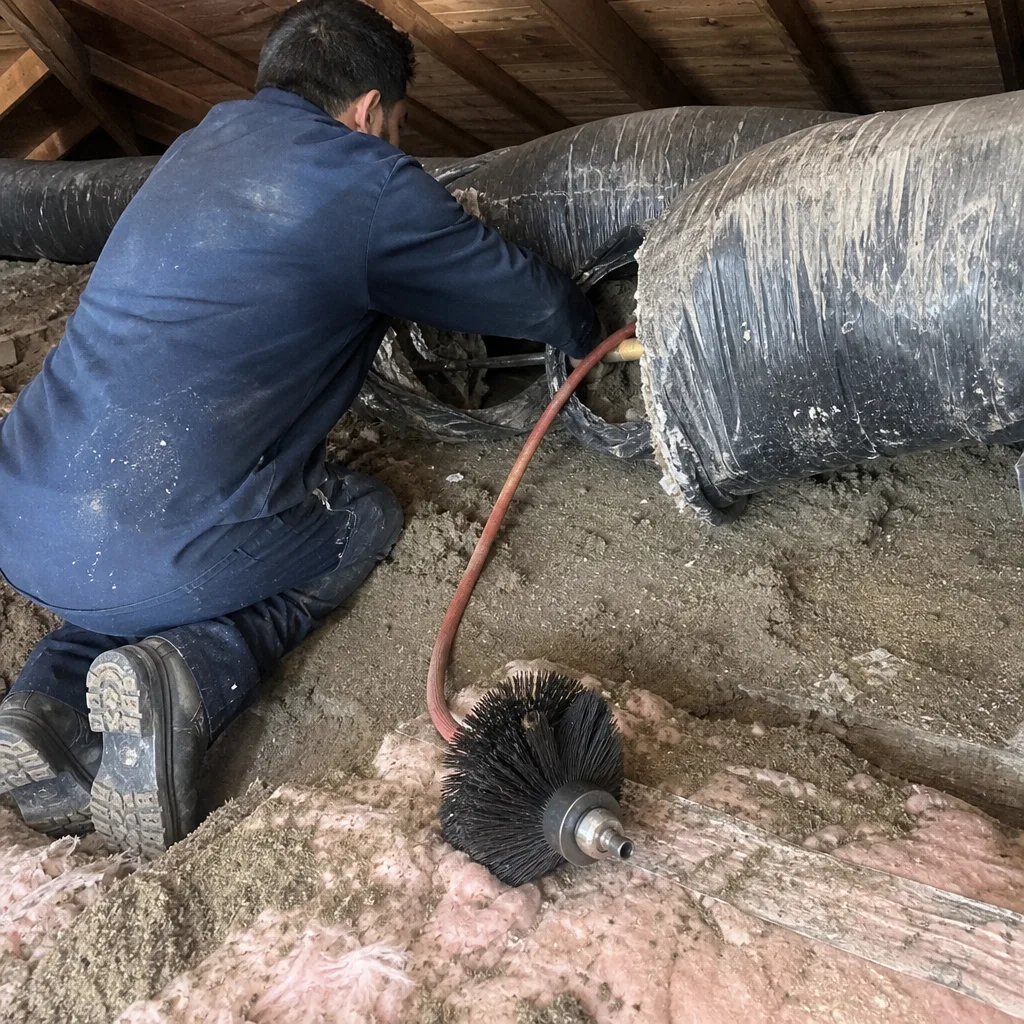 Before
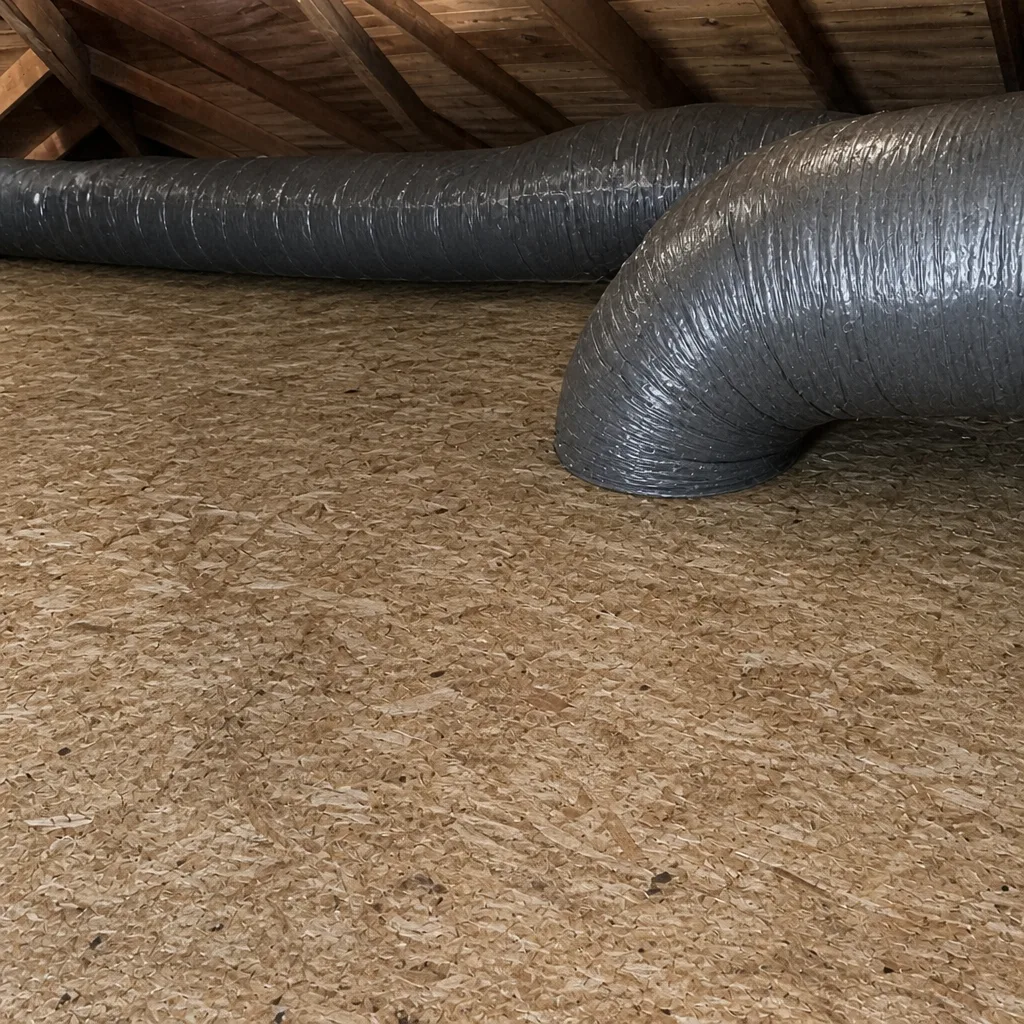 After
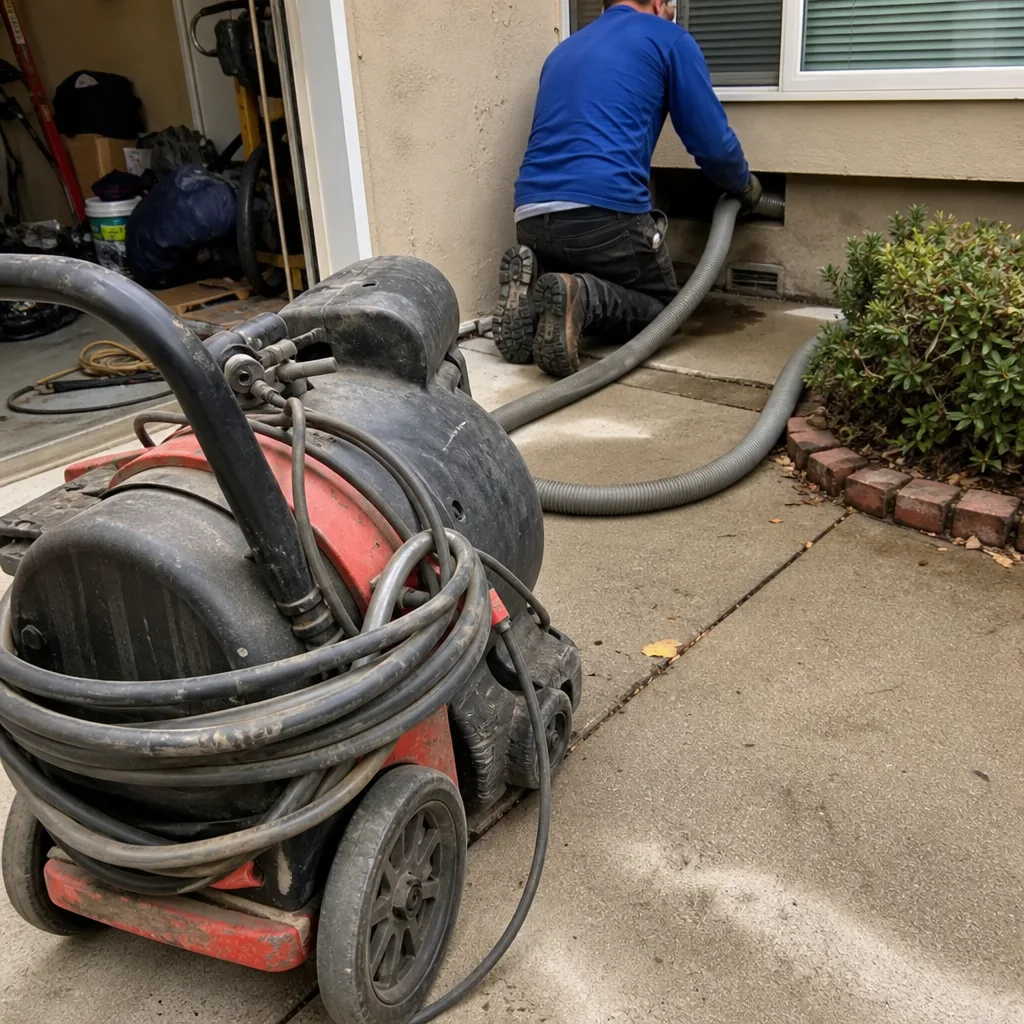 Before
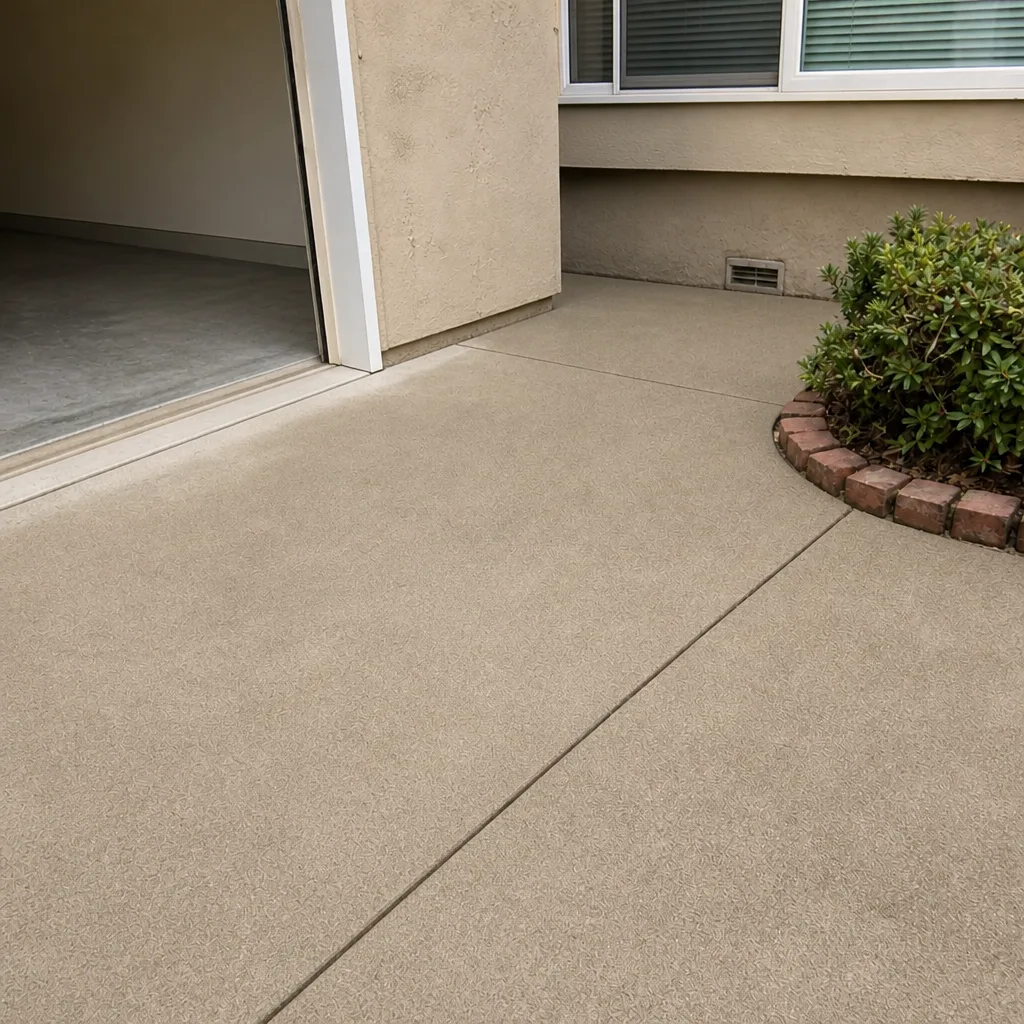 After
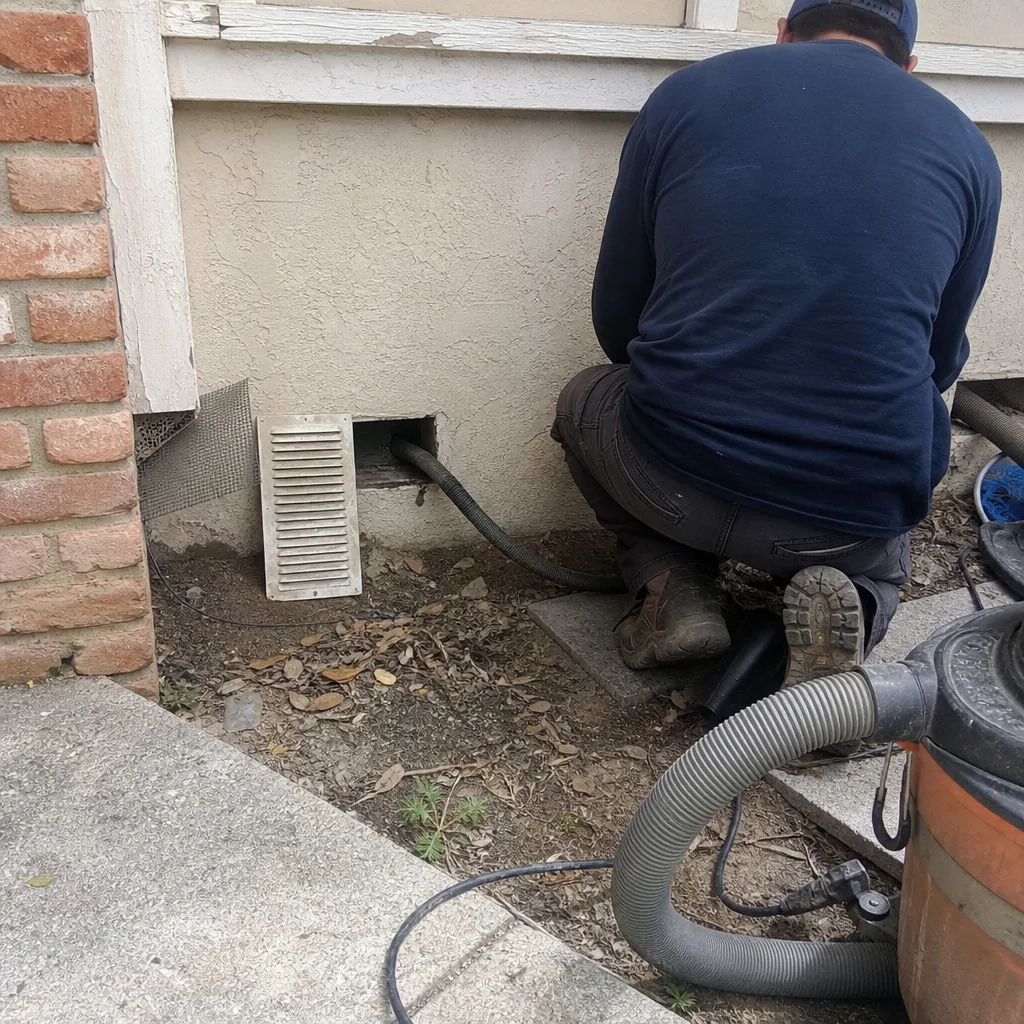 Before
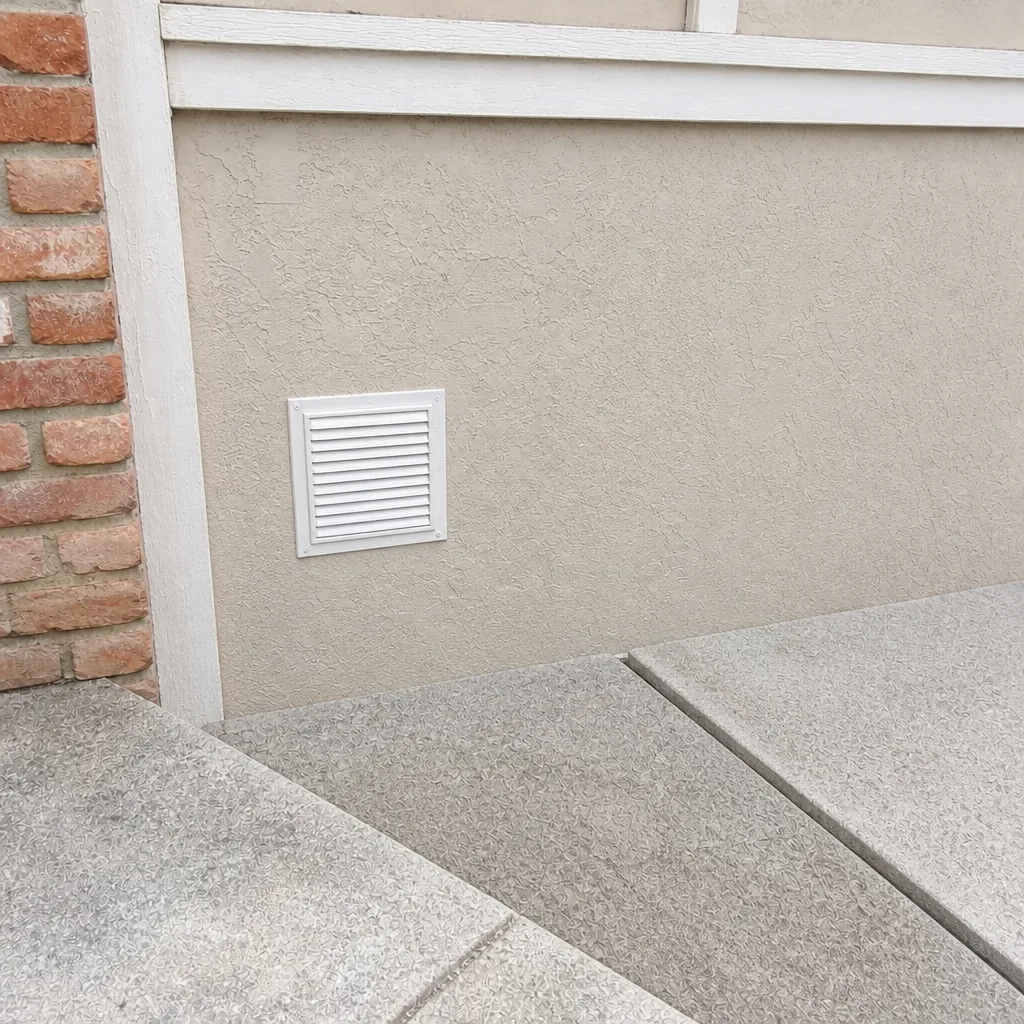 After