
Last updated November 4, 2026
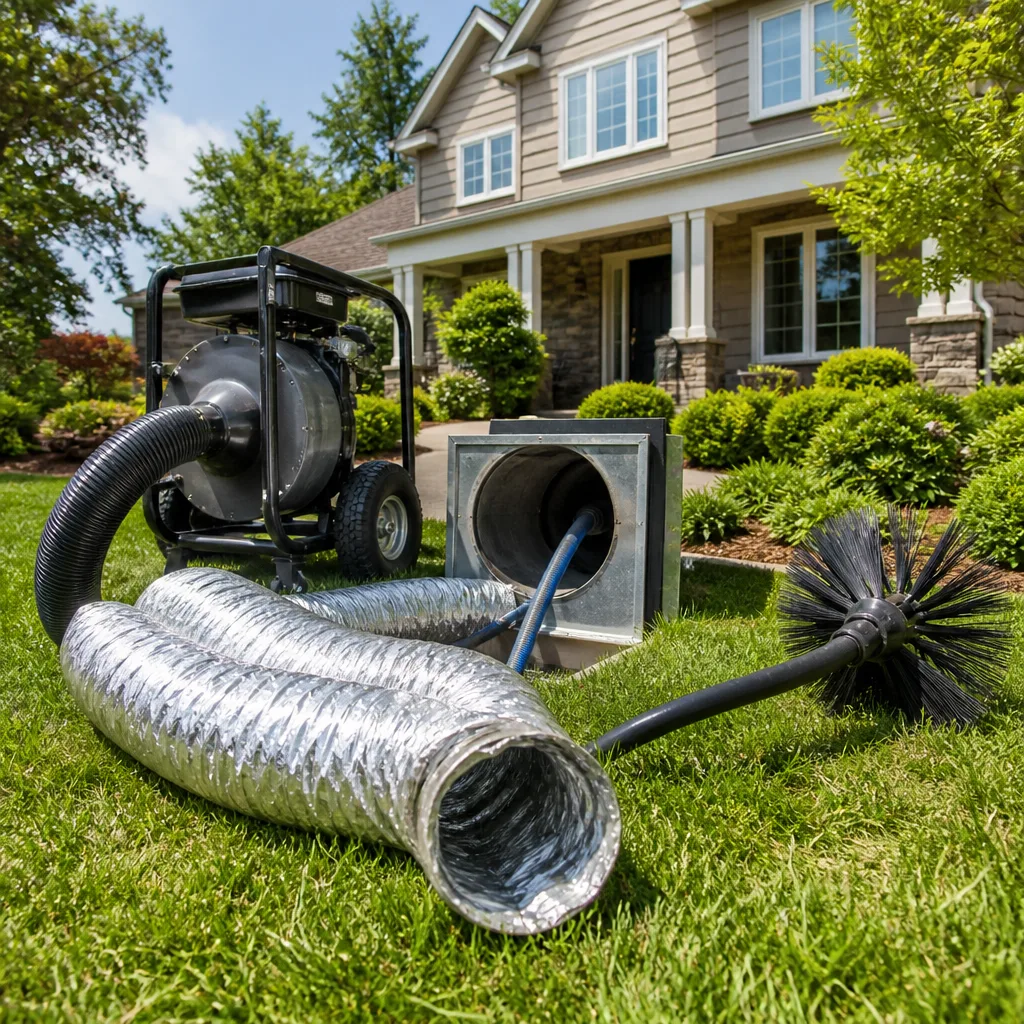 Whole-home duct cleaning
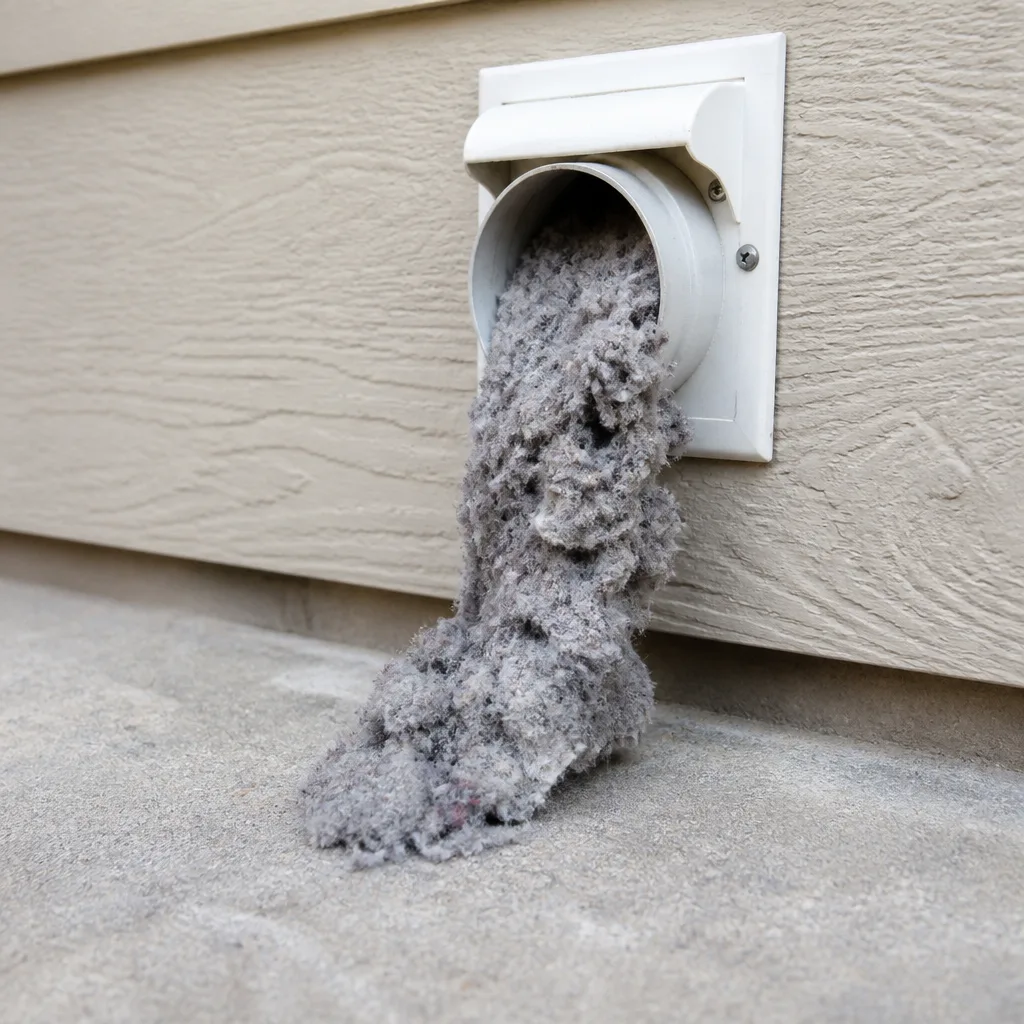 Dryer vent cleaning
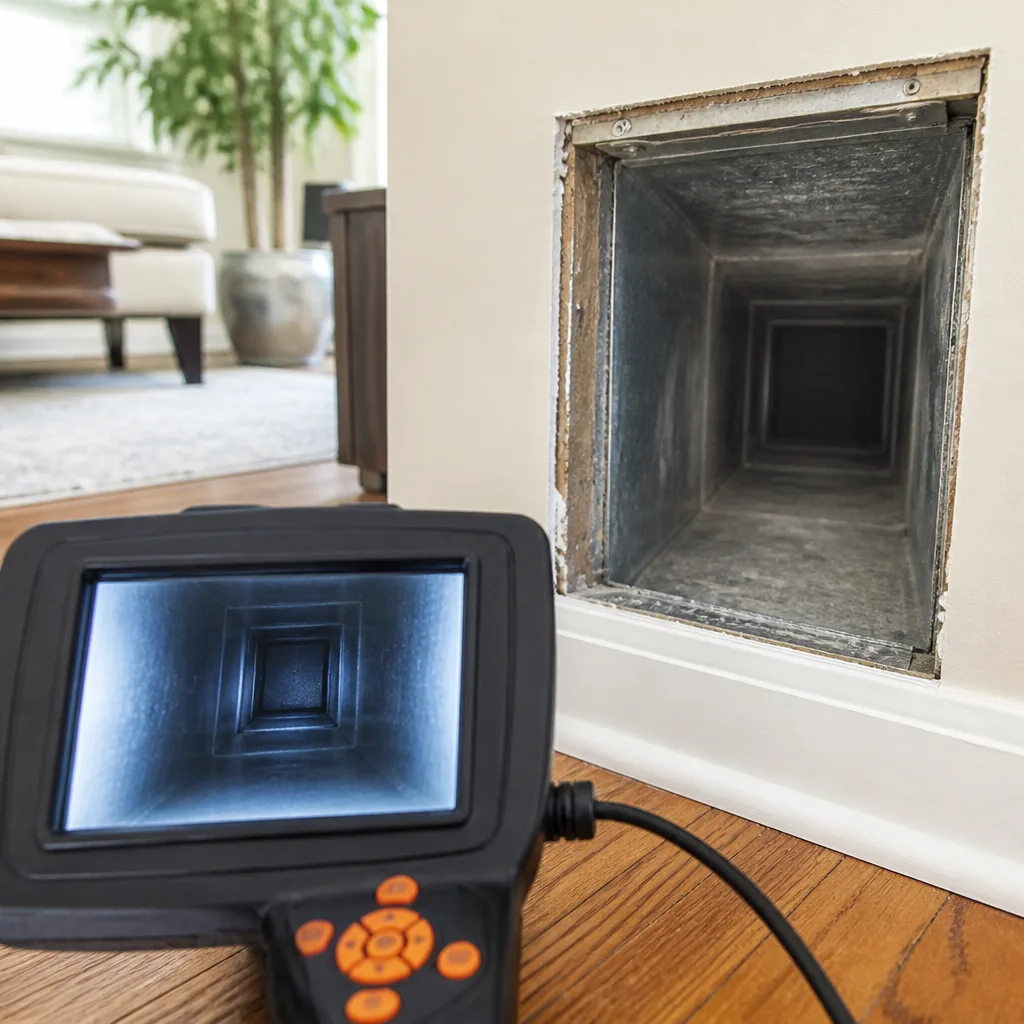 Camera inspection
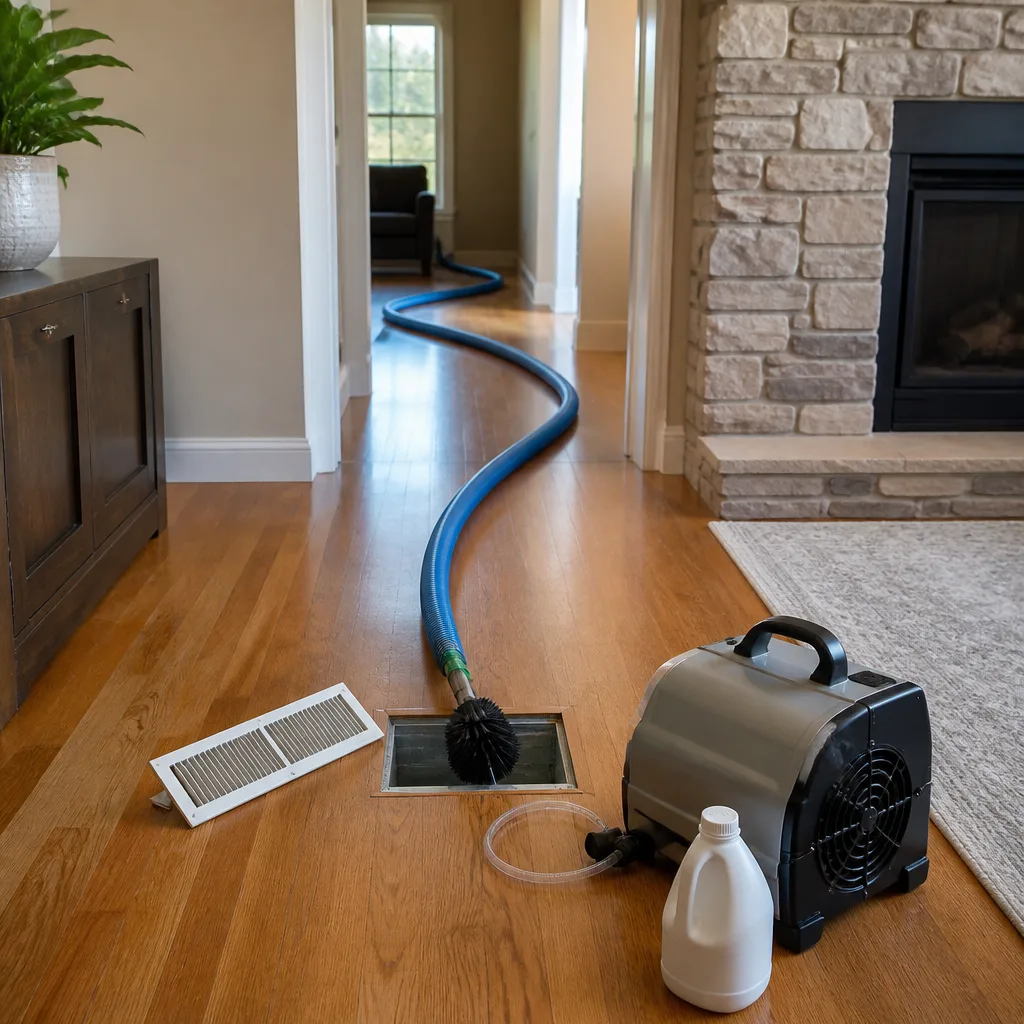 Sanitizing & deodorizing
Whole-system duct and dryer vent check with before-and-after photos - you see exactly what came out of your vents
That "$99 whole-house special" is a bait ad - the real number appears once they are in your hallway, or the "clean" is a shop-vac at the register. We photograph the inside of your ducts before and after instead.
The Complete Guide to Air Duct Cleaning in Hayward
Most duct cleaning guides treat the process as if every home has the same ductwork and the same dust. Hayward doesn’t work that way. A significant portion of homes here were built before 1980, which means your first step is often not a vacuum. It’s an inspection, because older duct systems frequently contain materials that a careless cleaning can damage or disturb. This guide walks through what actually matters in Hayward: your duct material, our marine layer humidity, wildfire smoke residue, and how to tell a real source-removal cleaning from a noisy upsell.
Quick Answer
Air duct cleaning in Hayward means using professional agitation and negative-air equipment, like Rotobrush or Nikro systems, to remove debris from the entire duct network rather than just vacuuming the visible registers. For most Hayward homes, especially pre-1980 builds, the first step is a material and condition inspection, because sheet metal, flex duct, and fiberboard each require different cleaning settings. Homes affected by wildfire smoke or coastal humidity usually need cleaning more often than the national “every 3-5 years” guidance suggests.
Styles & brands we work with
- Whole-home duct cleaning
- Dryer vent cleaning
- Camera inspection
- Sanitizing & deodorizing
Table of Contents
- What Air Duct Cleaning Actually Does
- Duct Materials in Hayward Homes and Why They Matter
- Pre-1980 Hayward Homes: What to Check First
- Marine Layer Humidity and What It Does Inside Ducts
- Wildfire Smoke: How It Changes the Cleaning Conversation
- What the NADCA Source Removal Standard Actually Means
- How a Proper Cleaning Unfolds, Step by Step
- How to Choose a Duct Contractor in Hayward
What Air Duct Cleaning Actually Does
Air duct cleaning removes accumulated dust, debris, pet dander, and sometimes microbial growth from the inside of supply and return ductwork. The goal is source removal, which means dislodging material from duct surfaces and extracting it from the home, not just pushing it around or leaving it to re-enter living spaces later.
A proper cleaning in Hayward addresses the whole system: supply ducts, return ducts, registers, grilles, the blower compartment, and the air handler cabinet. The distinction matters because a system that only gets its registers wiped clean looks fine but still recirculates whatever sits deeper in the runs. We use professional-grade agitation tools and negative-air collection, the same approach commercial contractors trust. That is the difference between a cosmetic pass and a cleaning that changes what comes out of your vents.
Here is what a full-system cleaning typically includes:
- Pushing the ductwork under negative pressure with a high-powered vacuum system
- Mechanically agitating interior surfaces with rotating brushes or compressed air
- Cleaning supply and return registers and grilles
- Cleaning the blower motor housing and fan assembly
- Inspecting for disconnected joints, gaps, or tears that bypass the filter
For homes that have never had a cleaning done, the first visit often reveals more than dust. We’ve found insulation fibers, construction debris, and even pet toys inside return runs. None of that shows up at the register until the system is opened. If your ducts have never been inspected as a system, air duct cleaning is often the first time anyone actually sees what has been moving through them.
Duct Materials in Hayward Homes and Why They Matter
Not all ductwork can handle the same cleaning method. This is where a lot of Hayward homeowners get burned by generic contractors who treat every system like sheet metal. The three common materials in Hayward homes each need a different protocol.
Sheet metal ducts are the most forgiving. They hold up to aggressive mechanical agitation with rotating brushes, and they clean thoroughly when the contractor understands what pressure to run. Most well-built systems from the 1980s onward use galvanized sheet metal for trunk lines, with short flex connectors running to individual registers.
Flex duct is the flexible, insulated tubing you see in attics and crawlspaces. It has an inner plastic liner wrapped by insulation and an outer vapor barrier. The inner liner is delicate. Brushes that work beautifully on sheet metal can tear flex duct if the operator runs them too aggressively or uses the wrong brush type. Cleaning flex duct requires lower contact pressure and often a gentler agitation method than metal.
Fiberboard duct shows up in some older Hayward builds. It is a rigid board made from compressed fiberglass, often lined on the interior with a moisture-resistant coating. Once that coating degrades, the exposed fiberglass becomes a trap for dust and, in humid conditions, microbial growth. Fiberboard should never be scrubbed with water or cleaned with aggressive brushes, because rough handling releases fibers into the airstream. In many cases, fiberboard in poor condition is better replaced than cleaned, which is why a pre-cleaning inspection matters so much.
The right equipment matters here. Rotobrush and Nikro systems both have material-specific settings, and an operator who knows Hayward housing stock will check what you have before the vacuum ever turns on. If a contractor quotes you a price without asking about your duct material, that is a sign they are treating air duct cleaning as a commodity rather than a trade.
Pre-1980 Hayward Homes: What to Check First
Hayward grew fast after World War II and again during the 1960s and 1970s. That growth left the city with a large stock of homes built before 1980, and those homes often contain duct materials and installation choices that newer construction does not. Before any cleaning begins in one of these houses, there are three things to check.
- Duct lining condition. Some pre-1980 homes used ducts lined with an asbestos-containing material for insulation. If the lining is intact and in good shape, a careful cleaning can proceed. If it is deteriorating, cleaning could release fibers into the air. The National Emission Standards for Hazardous Air Pollutants (NESHAP) regulate how damaged asbestos materials must be handled, and a duct cleaning contractor should identify this risk before work starts. If lining damage is suspected, the duct section may need professional assessment or encapsulation rather than cleaning.
- Flex duct quality from original installation. If flex duct was added in a retrofit decades ago, it may be made from older plastic liners that have become brittle. What looks like simple dust accumulation could actually be pieces of the liner itself flaking off. Cleaning brittle flex duct without inspection can turn a small tear into a failed run.
- Filter bypass and air leakage. Older homes often have return air paths that were never properly sealed. We have cleaned systems in Hayward where the return air was being pulled through unsealed crawlspace joints for years, pulling in dirt, insulation fibers, and whatever else lives under a house. A cleaning is the right time to find and seal those leaks, because a cleaned system that still draws crawlspace air will get dirty again fast.
The sequence is inspection first, then cleaning, then leak sealing if needed. If a contractor wants to skip straight to the vacuum, they are skipping the part that protects your home.
Marine Layer Humidity and What It Does Inside Ducts
Hayward sits on the eastern side of the Bay, where the marine layer rolls in on summer mornings and keeps overnight humidity high even when the afternoon warms up. That matters for ducts because humidity is the main driver of microbial growth inside a system. Dust alone is mostly a nuisance. Dust plus consistent moisture becomes something else.
The inside of a duct system sees temperature swings as conditioned air moves through it. During cooling season, the air inside supply ducts is colder than the air in an unconditioned attic or crawlspace. When warm, humid air contacts the exterior of a cold duct, condensation forms on the outside. If the duct insulation is damaged or missing, that condensation can soak into fiberglass insulation or wick through joints. Inside the duct, the cool surfaces can also reach dew point if the system runs long enough.
This is why Hayward’s humidity behaves differently from inland cities like Livermore or Pleasanton. Inland summer air dries out by mid-morning. Hayward’s overnight marine layer keeps relative humidity elevated for much longer, which gives microbial growth a longer daily window. Homes near the shoreline and in lower-lying areas of the flatlands see this more than houses up in the Hayward Hills.
What this means practically: if your ducts have never been cleaned and your home is in one of Hayward’s lower, humid neighborhoods, you may be dealing with more than dust. A cleaning that only addresses dry debris will miss what the humidity has been doing. That is also why we often recommend pairing a duct cleaning with an upgrade to the filtration side of the system in homes where humidity has already caused issues.
Wildfire Smoke: How It Changes the Cleaning Conversation
Wildfire smoke has become a recurring part of Bay Area life, and Hayward homes see smoke from fires in the North Bay, the East Bay hills, and sometimes the Central Valley. Smoke is not like household dust, and the difference matters for duct cleaning. Household dust is mostly skin cells, fabric fibers, pet hair, and tracked-in soil. It is heavy and settles quickly. Smoke particulates are extremely fine, often in the sub-2.5-micron range, which means they stay suspended longer and travel deeper into the duct system.
When smoke gets pulled into a return vent, the finest particles can coat the entire interior surface of the ductwork, not just the bottom of horizontal runs. They also work their way into the blower housing and across the evaporator coil if the system has been running. The smoke residue is often sticky at first, because wildfire smoke contains oils and tars along with carbon. That sticky residue traps later dust more aggressively than clean metal would.
This creates a practical concern for Hayward homeowners. After a significant smoke season, a visible layer of soot at the register is only part of the story. Even if registers look pale, the duct interior may hold a fine coating that keeps recirculating through the home for months. Homes with older, leaky returns pull in more smoke than homes with tight, well-sealed systems.
What to do: if you ran your HVAC system during a smoke event with the filters in place, the filter likely caught much of the coarse material but not the finest fraction. That fine fraction is what settles in ducts. A cleaning after a heavy smoke season is reasonable, even if your last cleaning was recent. The right filter, whether Honeywell or Aprilaire media, helps going forward, but it can’t remove what has already settled inside the runs.
What the NADCA Source Removal Standard Actually Means
The National Air Duct Cleaners Association (NADCA) sets the most widely referenced standard for residential duct cleaning, and its core principle is source removal. The phrase gets thrown around in marketing, but it has a specific technical meaning. Source removal means physically removing contaminants from the surfaces of the duct system, not encapsulating them, not spraying them with chemicals that make them fall down later, and not just loosening them and hoping the air handler blows them out.
NADCA’s ACR standard, the Assessment, Cleaning, and Restoration of HVAC Systems, specifies that the system must be put under negative pressure while mechanical agitation dislodges debris. The vacuum and the agitation happen together so that loosened material is pulled out of the home rather than redistributed. That is the key distinction from a “blower clean” where a tech simply reverses airflow or runs the system fan harder, which leaves material inside the ducts.
How to verify a Hayward contractor is actually following this:
- Ask whether they use a negative air machine or simply a portable vacuum at each register. Source removal requires the whole system under negative pressure.
- Ask whether they agitate the full length of each duct run, or just the visible first few feet. A Rotobrush or Nikro system is designed to travel the full interior of each run.
- Ask whether they clean the blower motor and air handler. NADCA’s standard covers the entire system, not just the duct branches.
- Ask to see before-and-after photos of the duct interior, not just the register covers.
The standard also requires that the system be inspected after cleaning. A contractor who cannot show you the interior of your own ducts after the work is not following source removal, regardless of what their marketing says.
How a Proper Cleaning Unfolds, Step by Step
A real cleaning is not a 45-minute pass with a shop vac at each register. In Hayward, on a typical single-family home, a full source-removal cleaning takes a few hours and follows a set sequence. Here is what the process looks like when it is done properly.
- System inspection and material identification. Before anything is turned on, the technician opens access points and identifies what the ducts are made of, where the main runs are, and whether there are any obvious leaks, disconnected joints, or signs of moisture. This is also when pre-1980 homes get checked for lining condition.
- Filter access and system protection. The filter is removed and checked. Registers are masked off except for the ones being worked, and the air handler is isolated so debris cannot be pulled through the blower during the process.
- Negative pressure setup. A high-powered vacuum is connected to the main trunk line, typically through a large access cut that gets sealed and capped afterward. This puts the entire system under negative pressure so loosened debris flows out of the home.
- Mechanical agitation. Rotating brushes or compressed air tools are run through each duct branch. The agitation loosens material stuck to the interior surfaces, and the negative pressure pulls it into the collection unit. Rotobrush and Nikro equipment does this in one pass with the brush and vacuum working together.
- Blower and air handler cleaning. The blower motor housing and fan wheel are cleaned with appropriate tools. This step gets skipped by a lot of low-cost operators, but it is where a large share of accumulated dust sits in many Hayward systems.
- Register and grille cleaning. Covers are cleaned, either by hand or with the agitation system, and reinstalled.
- Final inspection and leak check. The technician re-inspects the system, verifies that the ducts are actually clean, and notes any remaining issues such as disconnected runs, damaged insulation, or filter bypass. You should leave with before-and-after photos and a clear list of what was found.
The inspection step is the one that separates serious operators from budget shops. If the first thing a contractor does is start the vacuum, they have not yet looked at what they are cleaning. That is how flex duct gets torn and fiberboard gets damaged.
How to Choose a Duct Contractor in Hayward
Hayward has a mix of housing stock, from postwar bungalows in the flatlands to newer hillside construction, and the right contractor knows the difference. The air system in a 1960s Burbank tract home and the system in a 1990s Hayward Hills build have different failure modes. A contractor who treats them identically is guessing.
Here is what to look for when you are comparing companies:
- Specialization over generalization. A contractor whose entire business is duct and vent work thinks about airflow differently than an HVAC company that cleans ducts as a sideline. Duct Cleaning Hayward is built around this single trade, which changes how the work is approached.
- Real equipment, not shop-vac rigs. Professional duct cleaning systems such as Rotobrush and Nikro put the entire system under negative pressure and agitate mechanically. A portable vacuum at each register is not source removal, no matter what it costs.
- Willingness to discuss materials. Ask what they would do differently for sheet metal versus flex duct versus fiberboard. If they do not have a clear answer, they have not thought about it. That is a red flag.
- Capability beyond cleaning. If the inspection turns up a torn flex run or a disconnected return, a cleaning-only contractor will clean it and leave the leak for another day. A company that offers Hayward air duct repair as a standalone service can fix what the inspection finds.
- No per-vent teaser pricing. The industry is full of bait-and-switch pricing built around a low per-vent figure that balloons once the tech arrives. Honest pricing is per system, based on the written estimate, before work starts.
Dryer vent cleaning sits alongside air duct cleaning for a reason. Lint accumulation in dryer vents is one of the leading causes of residential fires, and a home that has never had its ducts cleaned has likely never had its dryer vent cleaned either. We recommend asking about dryer vent cleaning at the same time, since both systems run through the same walls and both respond to the same inspection-first approach.
Common Mistakes to Avoid
- Skipping the pre-cleaning inspection. In a pre-1980 Hayward home, the inspection is the most important part of the job. If a contractor starts vacuuming without checking duct material and lining condition, they can damage what they are trying to clean.
- Choosing by price alone. The cheapest Hayward duct cleaning quote is usually cheapest because it excludes the blower cleaning, skips the inspection, or uses equipment that cannot reach the full length of each run. The price difference is not a discount. It is a smaller job.
- Assuming smoke residue is just dust. Wildfire smoke particulates are finer and stickier than household dust, and they settle throughout the entire duct interior. A standard “dust removal” cleaning after a smoke season leaves the fine fraction behind.
- Cleaning flex duct with metal duct methods. Rotating brushes that are appropriate for sheet metal can tear the inner liner of flex duct if the operator runs them too aggressively. Material-specific settings exist for a reason.
- Ignoring the dryer vent. Homeowners often treat dryer vents and air ducts as separate projects, but they share the same risk profile: accumulated debris in an enclosed air passage. A home cleaning should at least include a dryer vent inspection.
- Using a filter upgrade as a substitute for cleaning. A better Honeywell or Aprilaire media filter catches more particles going forward, but it does nothing about what has already settled inside the duct runs. Cleaning first, then filtration, is the right order.
- Assuming every 5 years is right everywhere. The national “every 3-5 years” guidance is a default, not a rule for Hayward. Marine layer humidity and wildfire smoke seasons can both shorten that interval for local homes.
See the difference
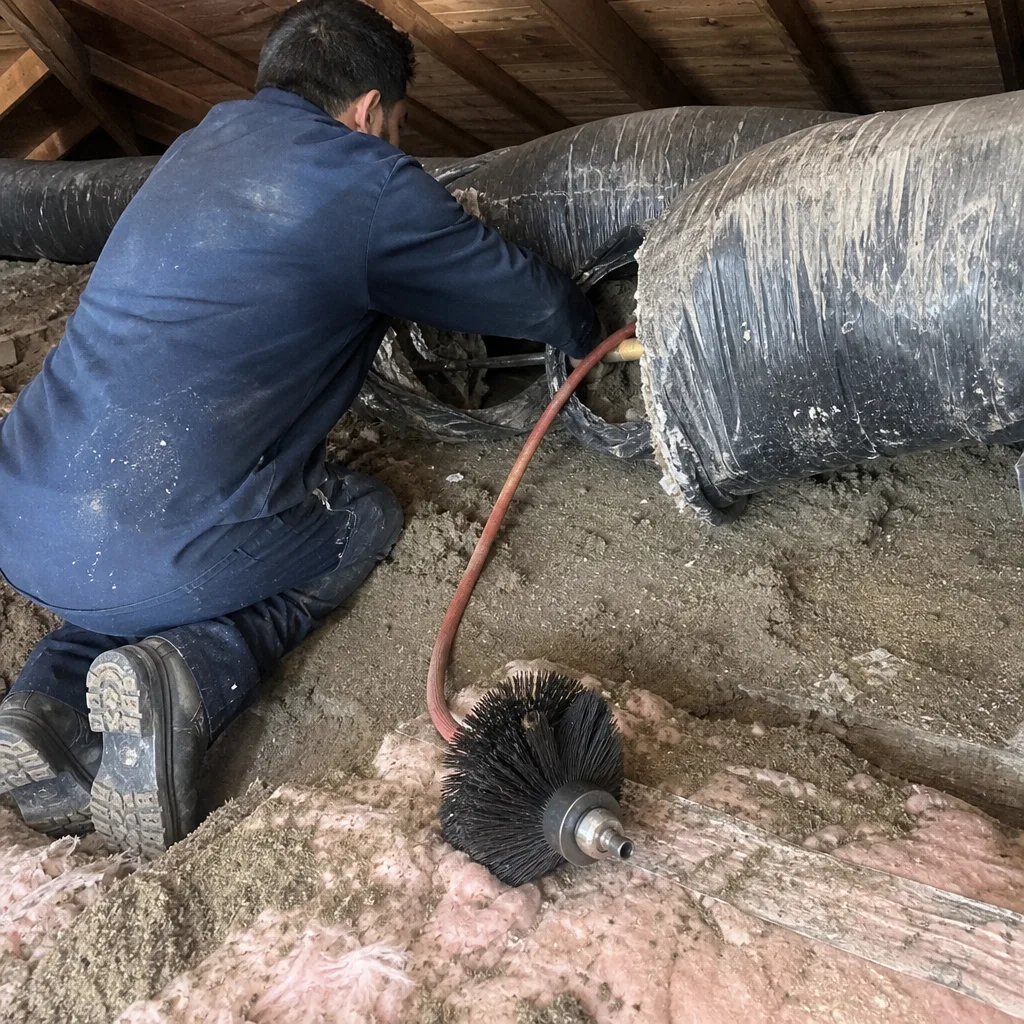 Before
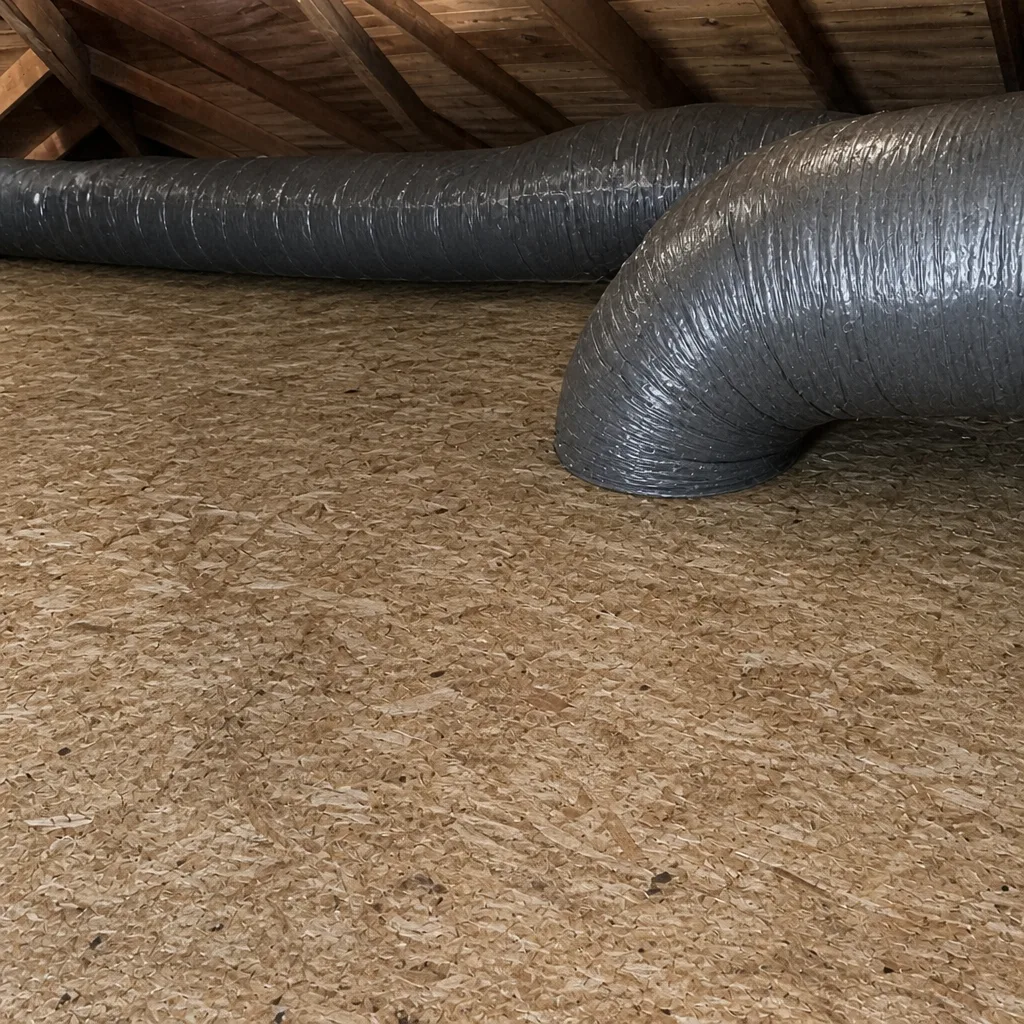 After
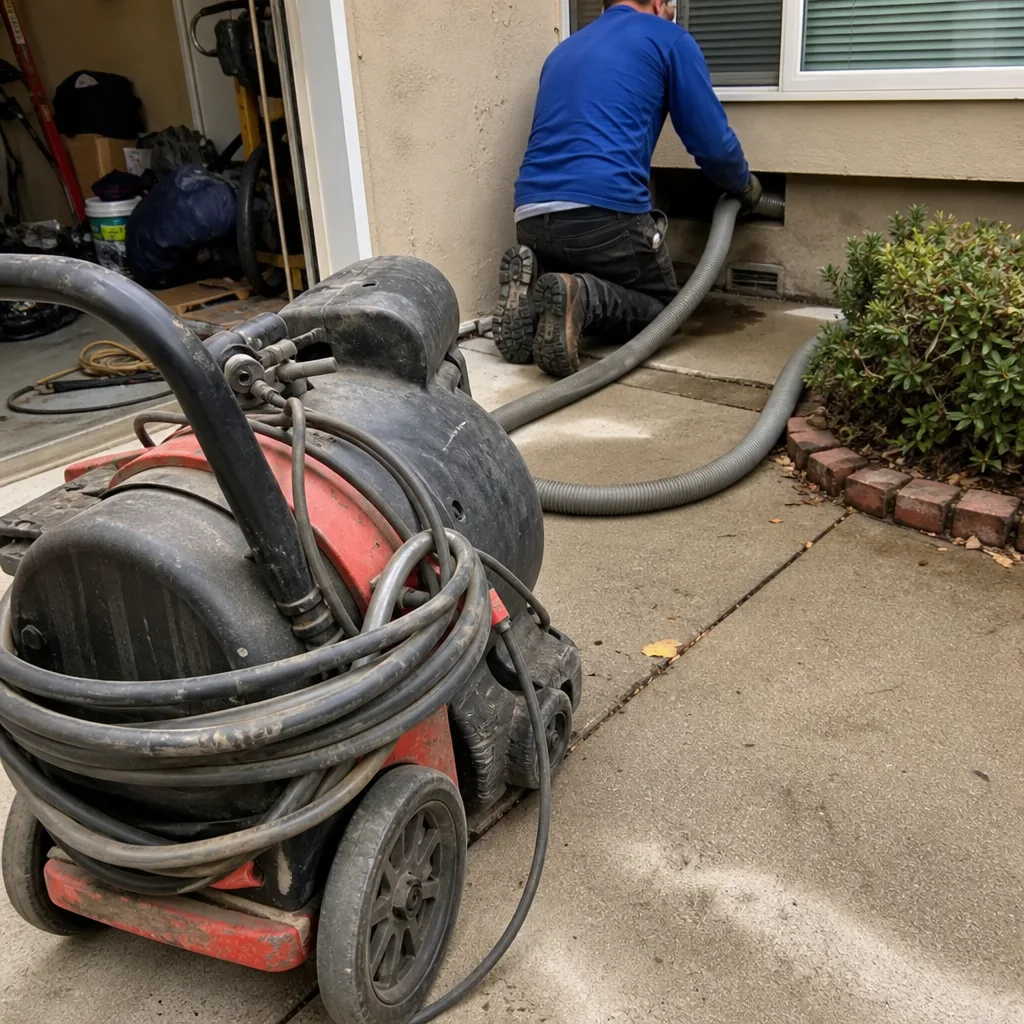 Before
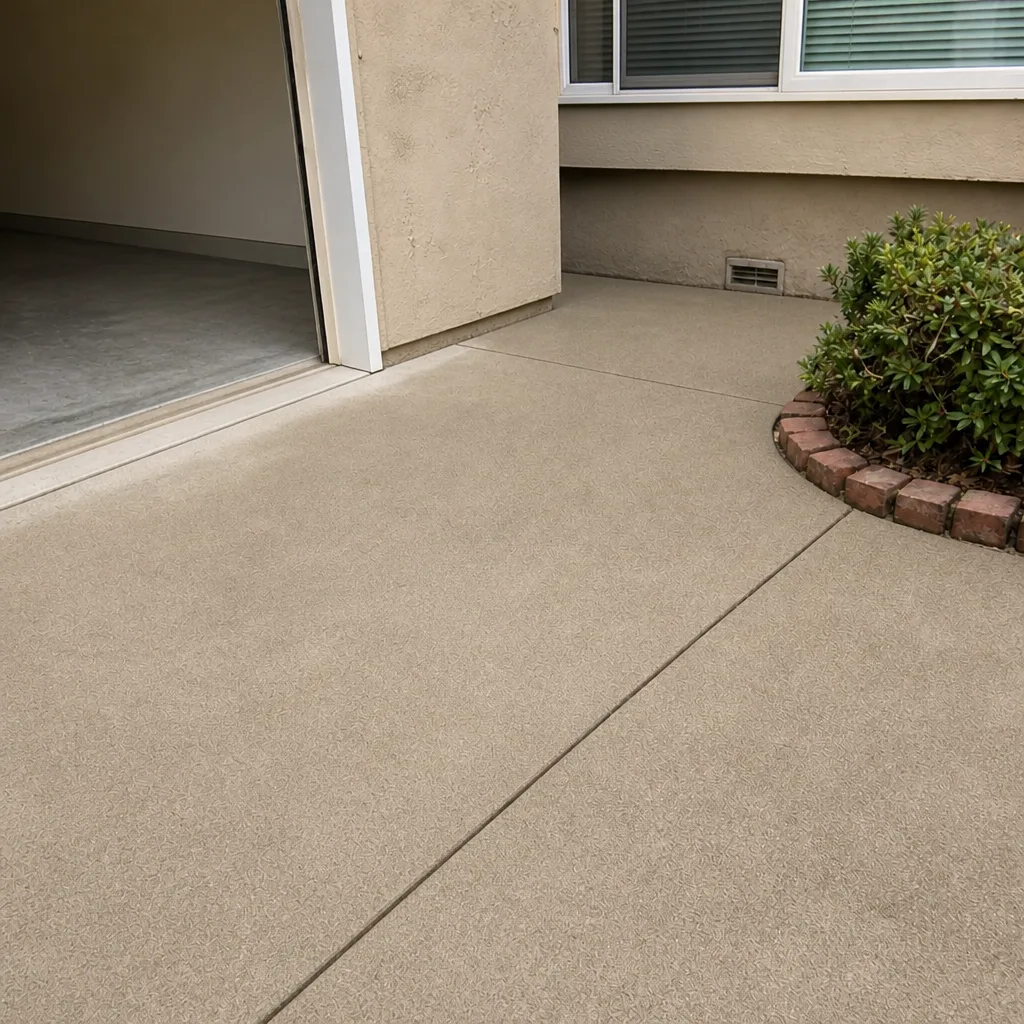 After
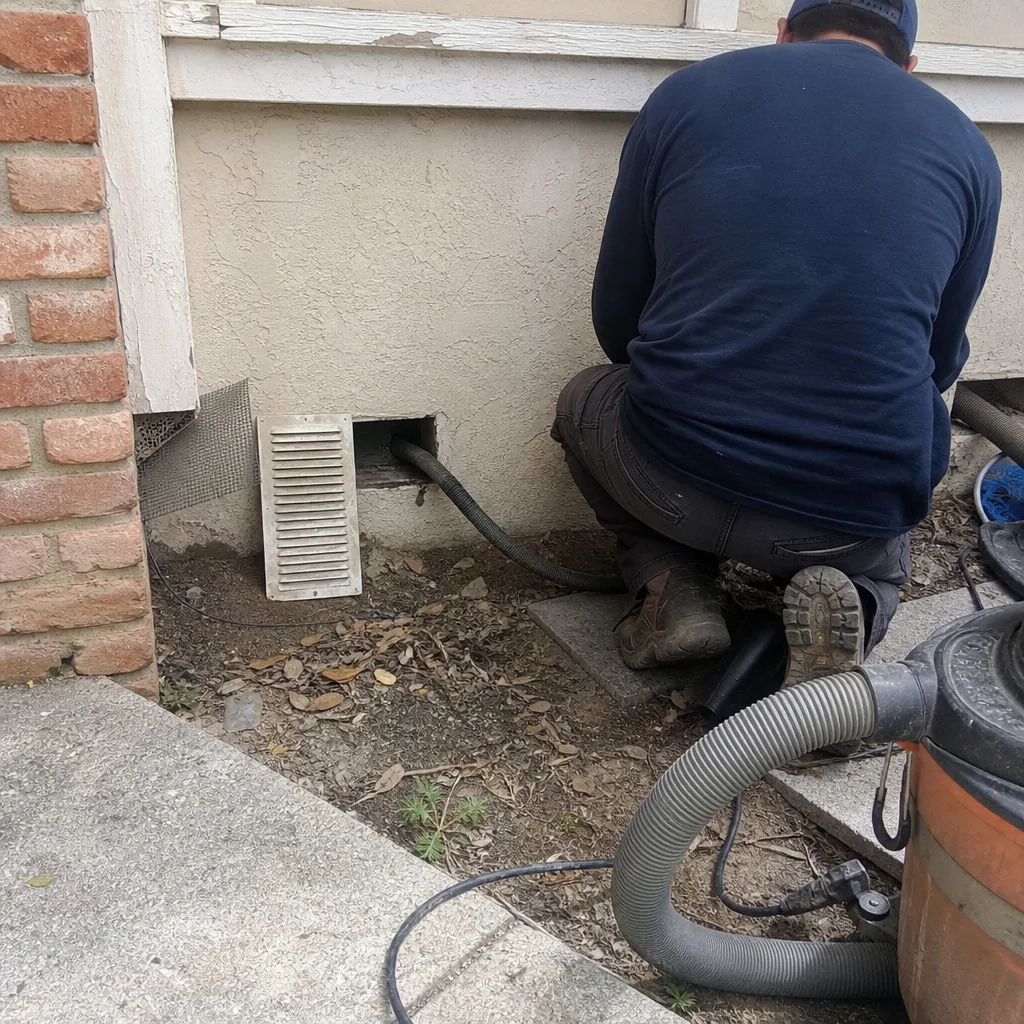 Before
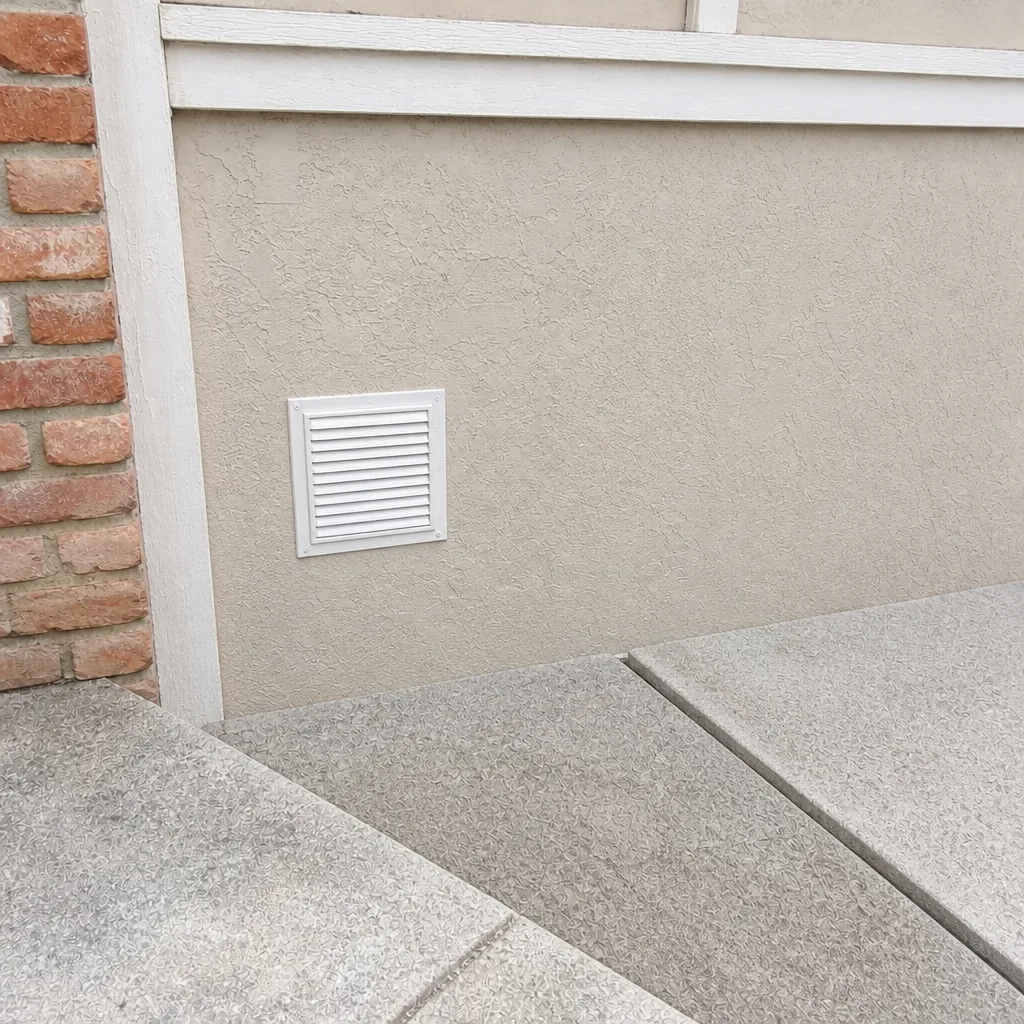 After
When to Call a Professional
Visible dust at the registers is an obvious signal, but duct problems usually show up in other ways first. Call a professional if you notice musty odors that appear when the system turns on, if rooms in your home stay dusty despite regular cleaning, or if allergy symptoms get worse when the HVAC runs. Higher than expected energy bills can also point to a system that is working against restricted airflow. If your home has been through a wildfire smoke season, or if it has been more than a few years since anyone looked inside the ducts, an inspection is worth the time. Duct Cleaning Hayward offers free estimates in Hayward. Call (833) 589-9902. We answer 24/7. Fast dispatch from 7am to 7pm, Sunday through Friday.
Frequently Asked Questions
Air duct cleaning in Hayward is priced per system by written estimate, not per vent. The total depends on the number of runs, the duct material, and what the inspection finds. Be wary of per-vent teaser pricing, which is the most common upsell structure in this trade. Call (833) 589-9902 for a free estimate and an honest number before any work starts.
Most Hayward homes benefit from a cleaning every 3 to 5 years, but that interval shortens if you have pets, if anyone in the home has significant allergies, or if your system has pulled in wildfire smoke. Marine layer humidity can also accelerate buildup in lower-lying neighborhoods. An inspection tells you more than a calendar can.
Air duct cleaning removes accumulated dust, pet dander, and other particulate matter from the surfaces of your duct system, which reduces what recirculates through the home when the HVAC runs. It is not a medical treatment, but homes with allergy sufferers often notice a difference after a source-removal cleaning, especially if the system has never been cleaned before.
Source removal means putting the entire duct system under negative pressure while mechanically agitating the interior surfaces, so loosened material is extracted from the home rather than redistributed. Basic cleaning that only uses a portable vacuum at each register leaves material deeper in the runs. The NADCA standard is built around source removal.
Yes, flex duct can be cleaned safely when the contractor uses material-appropriate settings and gentler agitation than sheet metal requires. The inner liner is delicate, and aggressive brushing can tear it. An inspection before cleaning identifies what material is present and protects against damage during the job.
A contractor following NADCA practices should provide before-and-after photos of the interior of your ducts, not just the register covers. You should also receive a basic inspection report noting any leaks, disconnected runs, or damaged materials found during the work. If a company cannot show you the inside of your own system, that is a reason to choose someone else.
The Bottom Line
Air duct cleaning in Hayward is not a one-size-fits-all service. Your home’s age, duct materials, humidity exposure, and smoke history all shape what a proper cleaning looks like. The inspection comes first, and it is the step that protects pre-1980 homes from unnecessary damage. Source removal with professional equipment, not per-vent pricing and portable vacuums, is what actually changes the air in your home. And when the inspection finds a torn run or a leaking return, repair matters as much as cleaning. If you are ready to find out what is actually inside your ducts, call Duct Cleaning Hayward at (833) 589-9902 for a free estimate. We answer 24/7. Fast dispatch from 7am to 7pm, Sunday through Friday.
Written by the team at Duct Cleaning Hayward, serving Hayward since 2011.