
Last updated November 4, 2026
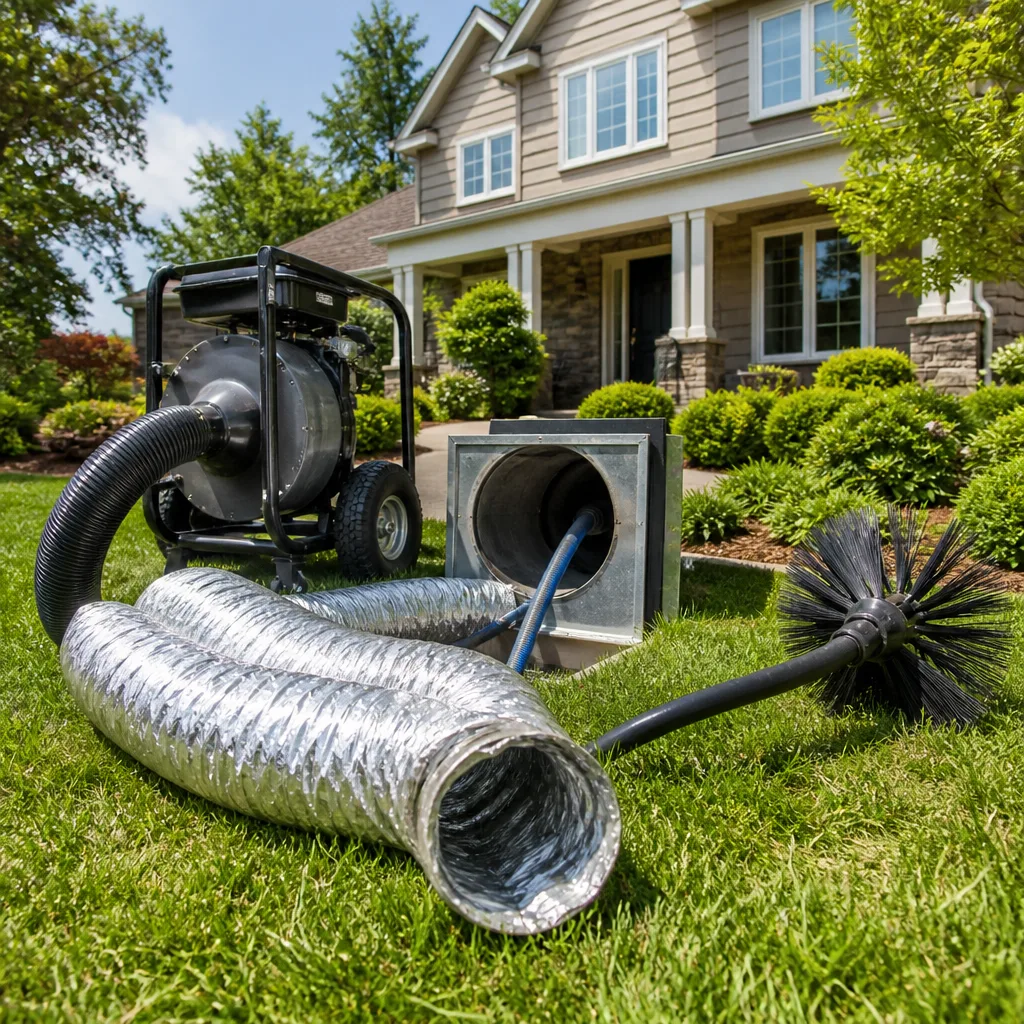 Whole-home duct cleaning
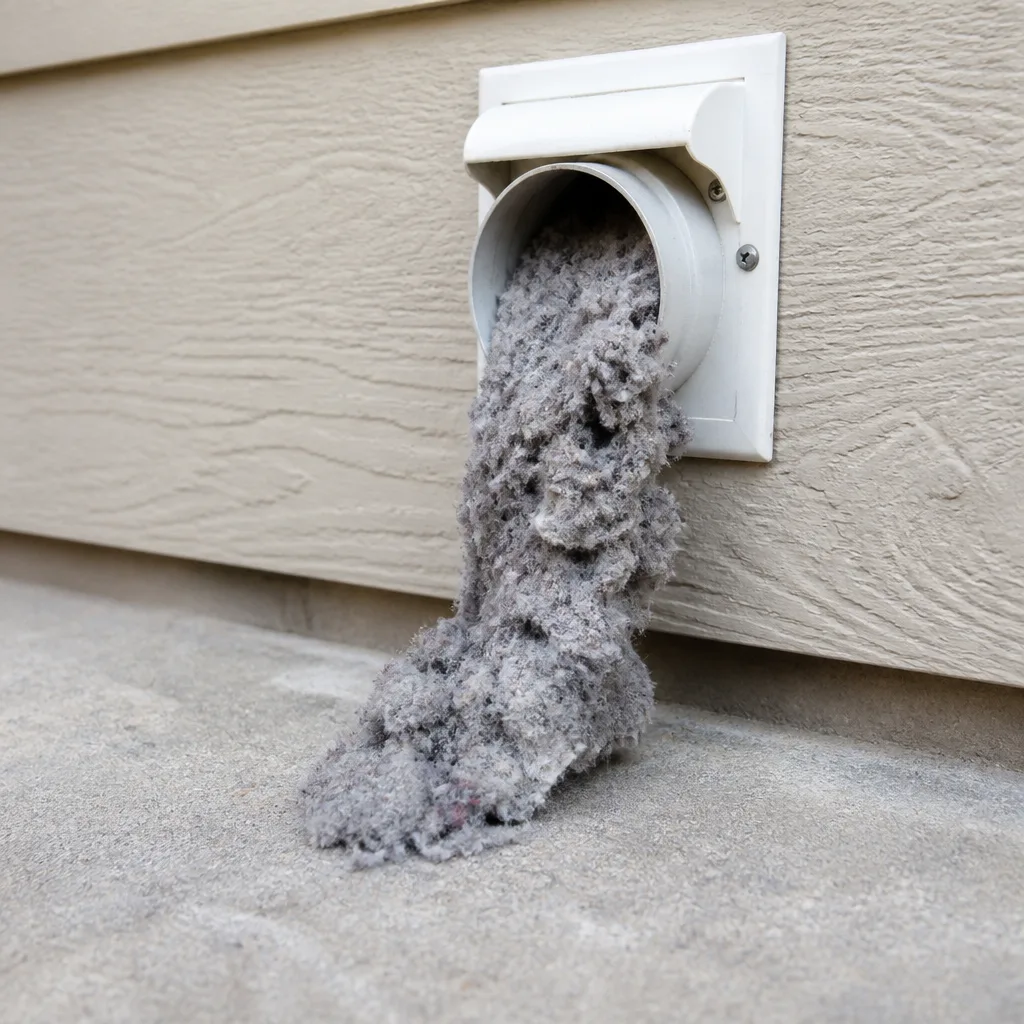 Dryer vent cleaning
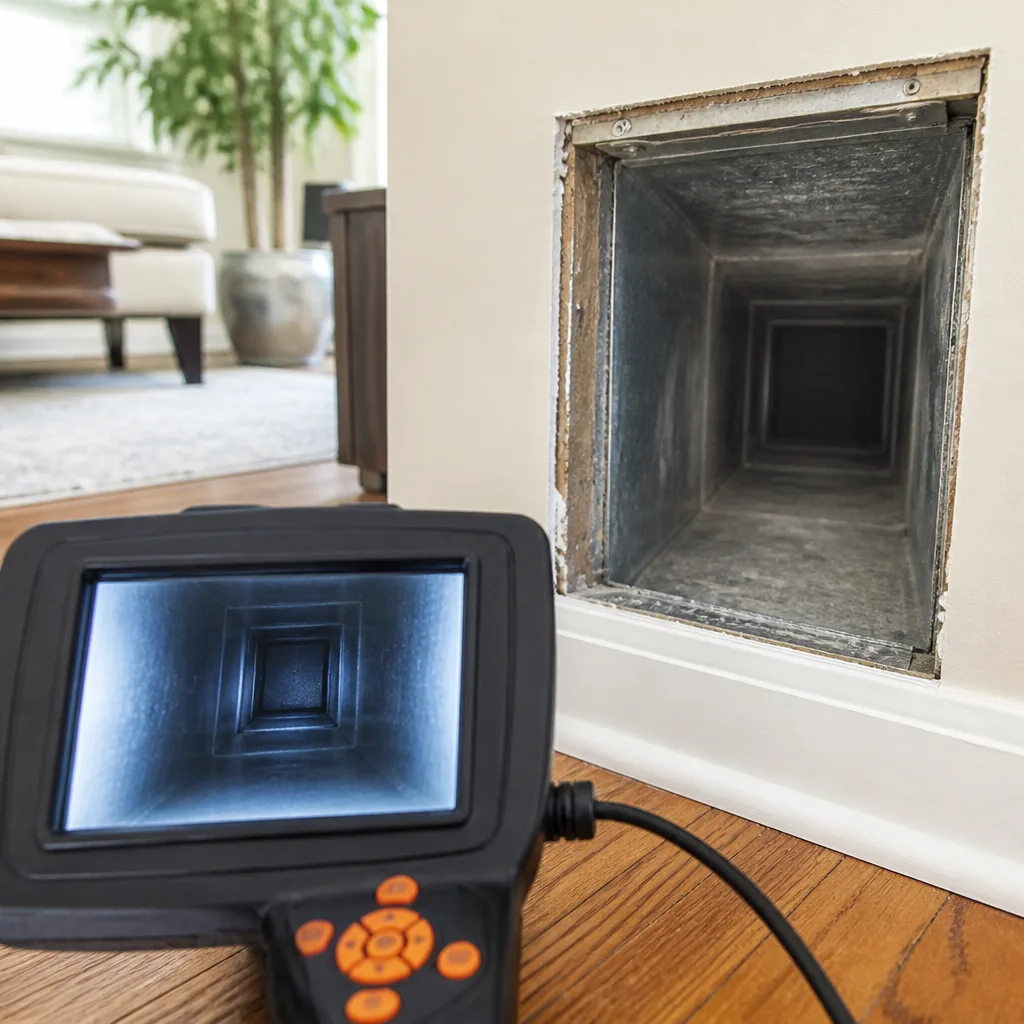 Camera inspection
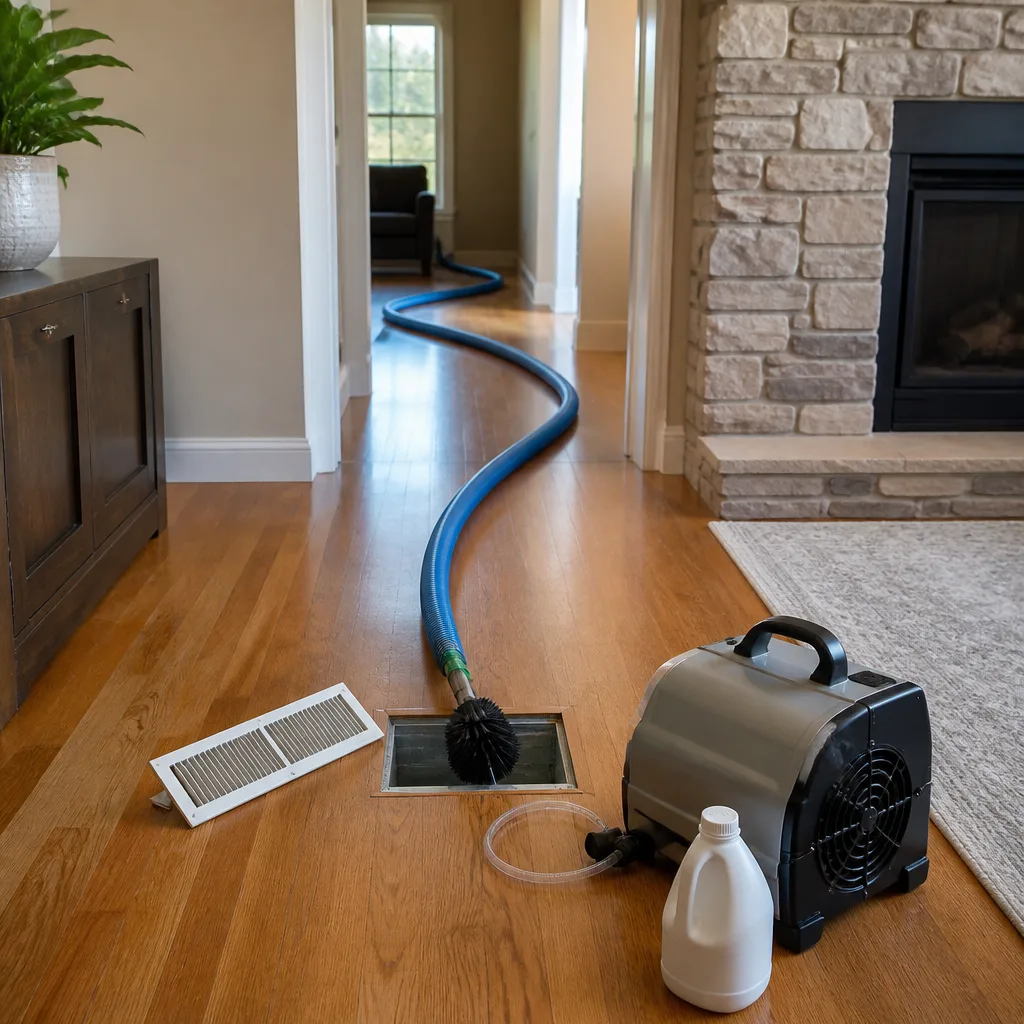 Sanitizing & deodorizing
Whole-system duct and dryer vent check with before-and-after photos - you see exactly what came out of your vents
That "$99 whole-house special" is a bait ad - the real number appears once they are in your hallway, or the "clean" is a shop-vac at the register. We photograph the inside of your ducts before and after instead.
DIY vs Professional Air Duct Cleaning: The Hayward Homeowner’s Decision Guide
Most Hayward homeowners assume the DIY-versus-professional question comes down to elbow grease and a Saturday afternoon. The real deciding factor is physics, specifically whether your equipment can generate enough sustained negative pressure to remove debris from a 30-foot trunk line without simply loosening it and letting it settle deeper inside the system. This guide explains what consumer tools actually accomplish, where they hit a wall, and how to make an honest call about your own ductwork. By the end, you’ll know exactly what you can handle yourself, what requires professional-grade equipment, and why that distinction matters for the air you breathe in a Hayward home.
Styles & brands we work with
- Whole-home duct cleaning
- Dryer vent cleaning
- Camera inspection
- Sanitizing & deodorizing
Quick Answer
DIY duct cleaning works for registers, return grilles, and the first few feet of visible ductwork, but it cannot produce the negative pressure required for true source removal from main trunk lines. For systems older than a few years with visible debris, flex duct, or allergy concerns in the household, professional air duct cleaning with Rotobrush or Nikro equipment is the only way to remove rather than redistribute contaminants. The honest recommendation for most Hayward homes is a hybrid approach: handle simple surface cleaning yourself, and call a specialist for the trunk line and air handler.
Table of Contents
- What DIY Can Actually Accomplish
- The Physics of Source Removal: CFM and Negative Pressure
- Why Duct Configuration in Hayward Changes the Calculus
- When DIY Makes the Problem Worse
- The Rental Equipment Reality
- A Pre-Cleaning Inspection You Can Do This Weekend
- Equipment Matters: What Professional-Grade Actually Means
- Common Mistakes to Avoid
- When to Call a Professional
- Frequently Asked Questions
- The Bottom Line
What DIY Can Actually Accomplish
Let’s be fair to the do-it-yourselfer. There are several legitimate maintenance tasks around your ductwork that do not require a professional and can genuinely improve airflow and indoor air quality when done correctly.
A shop vac with a brush attachment can clean the face of every supply register and return grille in a Hayward home effectively. These surfaces collect dust, pet hair, and cooking grease, and removing that accumulation improves both airflow and appearance. The key is removing the grille or register completely and cleaning it on both sides, not just wiping the visible face.
You can also clean the first one to two feet of duct visible behind each register opening. In most Hayward homes built between the 1960s and 1990s, that means rigid sheet metal duct that runs horizontally for a short distance before turning toward the trunk line. A shop vac hose can reach that first bend effectively, and wiping the accessible interior with a damp microfiber cloth removes surface dust before it breaks loose and travels deeper.
Filter maintenance is another legitimate DIY task. Replacing a standard one-inch filter every 60 to 90 days, or a four-inch media filter every six to 12 months, keeps the air handler from pulling debris through the system in the first place. The filter slot itself can be vacuumed out whenever you change the filter, removing the lint and dust that accumulates at that junction.
If you have a dryer, checking the exterior vent termination and the accessible portion of the transition duct is straightforward and worthwhile. Lint accumulation at the exterior hood is visible and removable. For the full length of a dryer vent cleaning run through a wall or crawlspace, the right tool needs to reach much further, which is where professional equipment becomes necessary.
None of these DIY tasks require specialized knowledge or risk damaging your system. They are maintenance, not source removal. Understanding that distinction is the whole point.
The Physics of Source Removal: CFM and Negative Pressure
Source removal sounds like industry jargon, but it means something specific. True cleaning removes debris from the entire duct system, including the trunk line and branch runs, and captures it rather than simply stirring it up. The measurement that determines whether that can happen is CFM, cubic feet per minute of airflow, and the negative pressure it creates inside the duct.
A high-quality consumer shop vac moves perhaps 100 to 180 CFM through a standard 2.5-inch hose. That is enough to pick up sawdust from a workshop floor or crumbs from a car interior because the debris is loose and within a few feet of the hose end.
A professional duct cleaning system moves significantly more air. Rotobrush equipment, for example, is designed to create the kind of sustained negative pressure that keeps the entire duct run under suction while agitation tools loosen debris from the inner walls. The principle is simple: if you agitate debris without simultaneously moving enough air past it, the debris settles somewhere else in the system. It does not disappear.
That is the failure point for nearly every DIY duct cleaning attempt. The shop vac hose reaches only as far as the trunk line, while the brush or improvised agitation tool knocks dust loose from surfaces the vacuum cannot keep under negative pressure. Because the CFM of a consumer vacuum drops dramatically over distance and around bends, the loosened debris simply travels further into the system and settles in the trunk line, on top of the air handler coil, or inside the return plenum. This is worse than the original condition, because settled debris has now been redistributed into places that are harder to reach.
In professional terms, this is why contractor-grade systems use either truck-mounted vacuum units or portable units built around high-CFM blowers paired with full-length hose runs. The Niko and Rotobrush systems that specialized companies use in Hayward are built for this exact problem. The vacuum moves enough air to keep the whole duct run in suction, while the brush head agitates, and the debris exits the system entirely into a collection canister or the truck-mounted filter.
The physics does not change based on how careful you are. It changes based on airflow, and consumer tools do not provide enough of it for most duct configurations.
Why Duct Configuration in Hayward Changes the Calculus
Hayward’s housing stock has a distinct profile, and it matters for this question. The city grew substantially as a bedroom community for the East Bay, which means a high concentration of single-story ranch homes and late-mid-century two-story homes built between the 1950s and 1980s.
Ranch homes in neighborhoods like Tennyson-Alquire and Burbank typically have long horizontal trunk lines running through an attic or crawlspace, with branch runs feeding each room. A trunk line 30 feet long is average; 40 feet is not uncommon in larger floor plans. Every foot of that run, plus every 90-degree turn, reduces the effective airflow of any vacuum connected at a single register. By the time the air from a consumer shop vac reaches the far end of a 35-foot trunk line, the negative pressure is insufficient to keep the duct interior under meaningful suction.
Two-story homes in areas like Fairview and Glen Eden often route return air through interior wall cavities, which builders framed and drywalled on two sides, using the void as the return plenum. These panned returns are common in Hayward construction of that era. Cleaning them properly requires access through the return grille and the ability to reach 8 to 15 feet into a narrow, sealed cavity. A DIY attempt from the return opening removes some surface dust but leaves the majority in place, particularly around the framing bays where the cavity changes direction.
Older Hayward homes sometimes have flex duct retrofits, where sections of insulated flexible duct replace rigid metal in hard-to-reach areas. Flex duct has a spiral wire inner structure and a thin interior liner that is easy to tear with an improvised brush. This is one of the scenarios where DIY agitation without sufficient suction does the most harm. Debris loosened from the flex liner after a puncture can enter the airstream continuously, and you will not know the liner is damaged until air quality in that room worsens.
This matters because the main trunk line, not the registers, is where dust accumulates by volume. In a duct system that has not been cleaned in years, the first few feet behind each register may look dusty, but the real accumulation sits along the bottom of the trunk line, where airflow velocity drops and particles fall out of suspension. That is the area a consumer vacuum never reaches under proper negative pressure, which means the highest-volume debris load in your home’s ductwork remains untouched by any DIY method.
When DIY Makes the Problem Worse
Understanding when a DIY attempt crosses from ineffective into counterproductive is central to making the right call. We have seen this enough times in Hayward homes to describe it accurately.
The most common problem is the brush-on-a-drill approach. A homeowner attaches a length of flexible drill shaft or a plumbing drain brush to a cordless drill, feeds it into a register opening, and spins it to loosen dust. The idea is that the loosened dust gets vacuumed out by a shop vac held at the register. In practice, the brush loosens far more debris than the vacuum can capture. The dust cloud inside the duct settles deeper in the system, and the homeowner has converted light surface dust into concentrated settled debris inside the trunk line.
Flex duct is the most vulnerable to this approach. A spinning brush or even a stiff snake pushed too aggressively can tear the thin inner liner. That tear allows dust, insulation fibers, and unconditioned attic air to enter the duct stream permanently. Repairing torn flex duct requires removing and replacing the affected section, which is exactly the kind of repair Duct Cleaning Hayward handles as a standalone service, and it costs more than a cleaning would have.
Another counterproductive DIY move is using a leaf blower at the return opening to “blow out” the ducts. This pressurizes the system from the wrong direction and forces dust into the air handler, the evaporator coil if the home has central air, and the interior supply vents. It does not capture anything; it just relocates the debris throughout the house and into the equipment. Hayward homes with central cooling have an evaporator coil sitting directly above or beside the furnace. Dust packed onto that coil restricts airflow and can shorten the life of the compressor, which is a repair no homeowner wants to fund.
What most homeowners fail to appreciate until it happens is that a DIY attempt can complicate the professional cleaning that follows. Aggressive agitation can pack debris into the air handler cabinet, around the blower motor, and into tight corners of the plenum that even professional equipment takes longer to remove. In practical terms, a weekend project with a shop vac can add time and cost to a professional cleaning by making the worst debris harder to reach.
The do-no-harm test is simple: if your method cannot create enough suction to pull loosened debris out of the duct while you work, it is moving dust, not removing it. Using a brush on a duct interior without that level of airflow is actively making your home’s air quality worse.
The Rental Equipment Reality
It is reasonable to ask: can I rent the same equipment the professionals use? The answer is more nuanced than a simple yes or no, and it explains part of what separates the DIY market from the professional standard in Hayward.
Truck-mounted duct cleaning systems are not available for rent anywhere. These units are installed permanently in a commercial vehicle, powered by the truck engine or a dedicated gas engine, and they generate between 8,000 and 12,000 CFM at the vacuum source. They are industrial tools designed for commercial contractors, and no rental yard carries them. The cost of the truck, the unit, and the maintenance makes them a business asset, not a weekend rental.
What rental yards do carry, when they carry duct cleaning equipment at all, are portable units that look more like oversized shop vacs than professional systems. These units typically move between 400 and 800 CFM at the machine, which sounds like more than a shop vac until you account for friction loss through 25 to 50 feet of hose and the multiple bends required to reach a trunk line. By the time the air reaches the end of the hose, a portable rental unit performs closer to consumer-grade equipment than to a Nikro or Rotobrush system.
The hose itself is the other limitation. A brush-on-a-drill setup simply has no meaningful capacity to affect a 30-foot horizontal run. The suction drops off dramatically over that distance, even with a large-diameter hose, and the nylon brush cannot carry the vacuum bubble with it.
There is also the matter of what happens to the debris during rental cleaning. Professional systems either connect to a giant collection bag at the access point or feed into a truck-mounted filter that vents outside the home. A portable rental unit vents into the room or the attic, which means any bypass dust re-enters the living space or the building cavity. In a Hayward ranch with the unit set in the hallway and a hose running into a register, you are essentially filtering loose dust through a canister inside your own home. It is not a hygienic approach.
The honest summary: rental equipment may extend your reach, but it remains fundamentally different from the source-removal systems a specialty company brings to a job. Expecting it to perform like a truck-mounted Rotobrush setup in a 40-foot Hayward trunk line is a category mistake, not a reasonable expectation.
A Pre-Cleaning Inspection You Can Do This Weekend
There is a legitimate way to bring a DIY mindset to professional duct cleaning: use your access to the home to document what a technician will need to know. A pre-cleaning inspection gives the contractor better information, and it can reduce the time on site because the technician knows what to expect before arriving.
Start with your filters. Remove them and look at the surface. Heavy gray fuzz on the intake side means the filter has been doing its job, but it also tells you the duct system upstream has been carrying a load of airborne debris. If the filter is clean but the registers are dusty, the return side is pulling unfiltered air from somewhere, which is a useful clue for a technician.
Next, remove a few supply registers in different rooms. Use a flashlight to look into the first few feet of visible duct. Note whether you see dust streaks on the bottom of the duct, pet hair clinging to the sides, or any dark staining that could indicate moisture at some point in the past. Do not touch it; just look.
Check the return grille, which is usually larger and located in a hallway or central wall. Inside the cavity, you may see the filter box or, in older Hayward homes, a panned return with wall cavities visible. Look for loose debris, dust accumulation on the framing, or any sign of insulation touching the return path.
Walk around the exterior of the house and locate the dryer vent termination. Note whether the flap closes fully, whether lint has accumulated on the hood, and whether the area around the vent shows lint fibers on the siding or stucco. This simple observation helps a professional determine whether your dryer vent run is restricted before they hook up the cleaning equipment.
Finally, check your thermostat and return-air path for balance issues. If some rooms run noticeably warmer or cooler than others, or if a door slams shut when the system turns on, the duct system may have leakage or a crimped branch. These are symptoms a professional can diagnose quickly, and telling them ahead of time gives them a head start.
Doing this inspection yourself costs nothing but an hour, and it makes you a more informed customer when you call a Hayward duct specialist. You will be able to describe what you saw, and the technician will come prepared for what the system actually needs.
Equipment Matters: What Professional-Grade Actually Means
Duct cleaning companies in the Bay Area do not all use the same tools, and the difference is not cosmetic. It is the difference between loosening dust and removing it.
Rotobrush systems are built for reach. A rotating brush head, typically nylon or poly, is driven by an electric motor at the end of a flexible shaft. The brush spins inside the duct, dislodging dust from all four interior surfaces while a high-CFM vacuum, either an integrated unit or a separate negative-air machine, pulls the loosened material out through a collection apparatus. The value of the Rotobrush is its combination of agitation and simultaneous suction; the dust does not get a chance to settle because the vacuum keeps pace with the brush.
Nikro equipment operates on a similar principle with a heavier commercial build. Nikro units are known for high negative pressure and large collection capacity, which matters on long trunk lines and heavily soiled systems. A Nikro negative-air machine connected at the air handler end of a trunk line can hold the entire run under suction while a Rotobrush-style agitation head works from the other end. This is the standard professional configuration for source removal, and it is difficult to replicate with any portable or rental arrangement.
The distinction between these systems and consumer vacuums is airflow volume sustained over distance. A professional system maintains enough negative pressure to keep dust moving through 30 or 40 feet of duct plus multiple branch runs, all while the brush agitates. The vacuum does not just capture what the brush pushes toward it; the whole duct interior stays under suction.
After the cleaning itself, air quality components matter too. Honeywell and Aprilaire make filter media, ultraviolet units, and whole-home air cleaners that integrate with a residential HVAC system. A Hayward home with allergy sufferers or pets may benefit from an upgrade to a four-inch media cabinet or a whole-home filter, and the company that cleans the ducts can often install those components in the same visit. The point of cleaning is giving your system a clean start; the point of filtration is keeping it cleaner longer.
For homes with deeper air quality problems, Abatement Technologies builds filtration equipment that moves beyond standard cleaning. HEPA-filtered air scrubbers and negative-air machines can handle situations where dust, construction debris, or biological material have made the indoor environment unhealthy. This equipment is not necessary for every home, but having access to it when a job calls for it is what separates a specialist from a company doing a basic vacuum pass.
None of this is to say that equipment alone makes the difference. But when it comes to the core question of whether DIY can match professional results, the equipment is the answer: consumer tooling moves air at shop-vac levels, while the systems mentioned above are built to hold an entire duct network under negative pressure while debris is removed from every surface.
Common Mistakes to Avoid
- Treating register dust as the whole problem. The visible dust behind a register is a fraction of the system’s total debris load. Cleaning only this area leaves the trunk line untouched, and the next time the blower kicks on, more dust migrates to the registers you just cleaned.
- Using a spinning brush without proper suction. This redistributes debris into the air handler and the deeper ductwork. It is the single most common way a DIY job makes the system dirtier than it was before you started.
- Poking a shop vac hose into flex duct. The interior liner tears easily, and once it tears, the duct must be replaced. That is a repair above and beyond cleaning, and it turns a maintenance project into a structural problem.
- Blowing air through the system to “flush” the ducts. A leaf blower at a return opening pushes dust into the air handler and the living space. It does not vent debris outside, and it does not clean anything.
- Renting a portable unit and expecting truck-mounted results. Rental units lack the CFM and hose diameter to hold a long Hayward trunk line under real negative pressure. You are paying for the appearance of professional equipment without the performance.
- Cleaning without sealing the other openings. When you run any vacuum in a duct system, you have to seal the registers you are not working on. If you do not, the vacuum pulls air through the nearest unrestricted opening rather than through the duct, and the debris stays put.
When to Call a Professional
Call a professional when you see visible dust streaking from multiple registers, when household members with allergies or asthma notice symptoms that improve away from home, when the HVAC system has not been cleaned in more than five years, or when you have flex duct, panned returns, or a trunk line longer than 15 feet. These are the conditions where DIY cannot achieve source removal, and a professional system is the only tool equal to the job. Duct Cleaning Hayward offers free estimates in Hayward – call (833) 589-9902. We answer 24/7. Fast dispatch from 7am to 7pm, Sunday through Friday.
Frequently Asked Questions
Visible dust on register faces and nearby walls shortly after cleaning, a persistent musty odor when the system runs, excess dust settling on furniture within days of dusting, and growing allergy symptoms at home all suggest the duct system is holding more debris than normal. A pre-cleaning inspection through several register openings can confirm whether the trunk line has an accumulation layer. If you see dust streaks and settled debris beyond the first few feet, the system is due for professional attention.
A shop vac can clean the register itself and the first one to two feet of visible duct behind it. It cannot maintain useful negative pressure through a 20- to 40-foot trunk line, which is where the majority of debris in a Hayward home accumulates. Use it for surface maintenance, not source removal.
Because the outcome depends on the duct configuration and the CFM of the tool, not on effort. A short, straight run may respond adequately to consumer suction, while a long flex-duct run or a 35-foot trunk line will not. Inconsistent results are actually the expected result of applying the same limited tool to different system layouts.
Professional equipment generates the CFM and sustained negative pressure to keep an entire duct run under suction while a brush head agitates the interior. This means loosened debris exits the system into a collection unit rather than settling deeper into the trunk line or migrating into the air handler. That is the functional definition of source removal.
Most residential duct cleaning jobs take between two and four hours, depending on the number of supply and return runs, the system configuration, and the level of soiling. A single-story ranch with standard rigid ductwork trends shorter; a two-story home with panned returns and flex duct retrofits trends longer. The estimate you receive before work begins will account for your system’s specifics.
No. Aggressive DIY cleaning can pack debris into harder-to-reach areas and complicate the professional job that follows. Instead, do a visual inspection, clean the register faces, change the filter, and give the technician the information you gathered. That reduces time on site without making the system harder to clean.
Compromised ductwork, whether from torn flex liner, disconnected branch runs, or collapsed sections, requires repair before cleaning makes sense. If the system is leaking, cleaning it will only be a temporary fix. A specialist that offers air duct repair as a standalone service can diagnose and fix the problem at the same time as the cleaning, which is more efficient than scheduling two contractors.
The Bottom Line
The DIY-versus-professional decision in Hayward ultimately comes down to what your tools can physically accomplish. Register cleaning, filter maintenance, and a visual inspection are legitimate DIY tasks that improve your system and give you a better understanding of its condition. Source removal from the trunk line, branch runs, air handler, and return plenum is not a DIY task, because consumer vacuums do not generate the negative pressure needed to capture debris across a full duct run. If you have a ranch home with a 30-foot trunk line, flex duct anywhere in the system, or family members with respiratory concerns, the professional route is the only honest answer. Call (833) 589-9902 for a free estimate in Hayward. We answer 24/7. Fast dispatch from 7am to 7pm, Sunday through Friday.
Written by the team at Duct Cleaning Hayward, serving Hayward since 2011.
See the difference
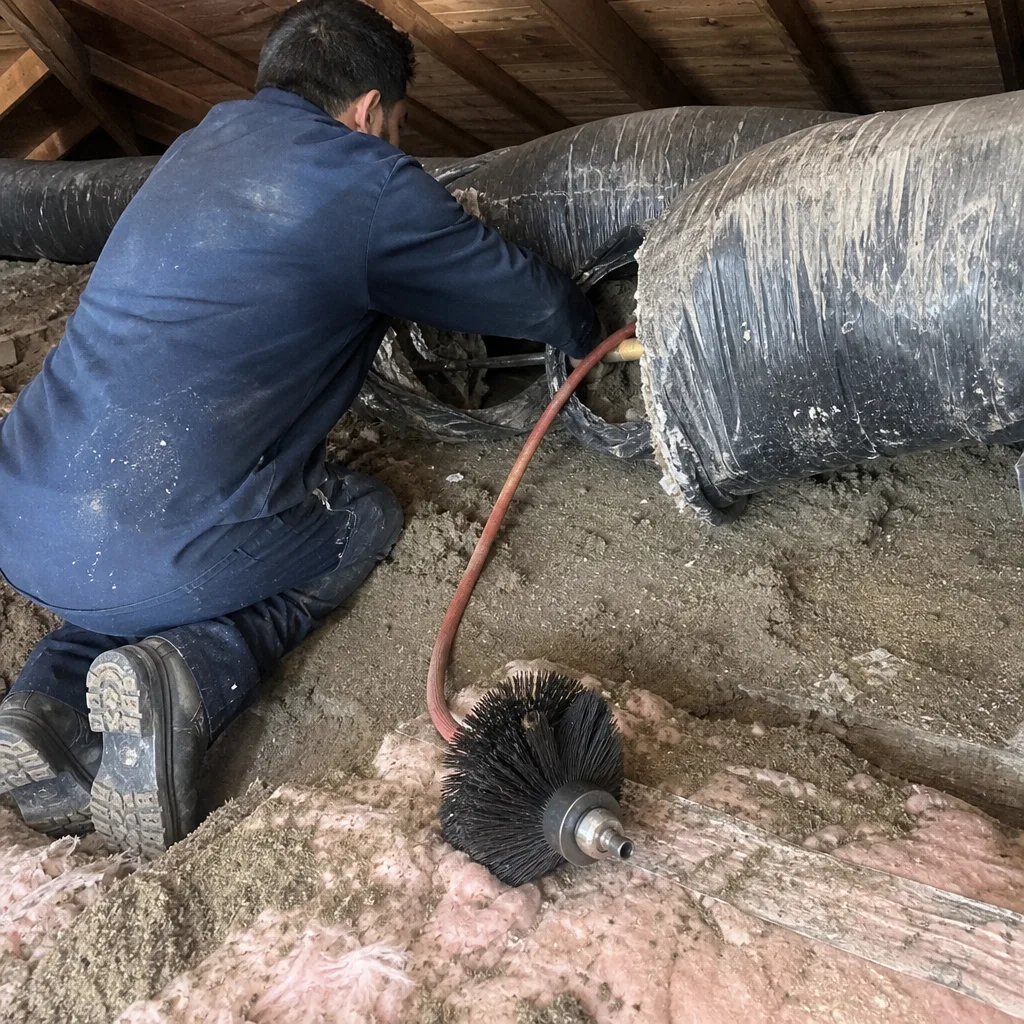 Before
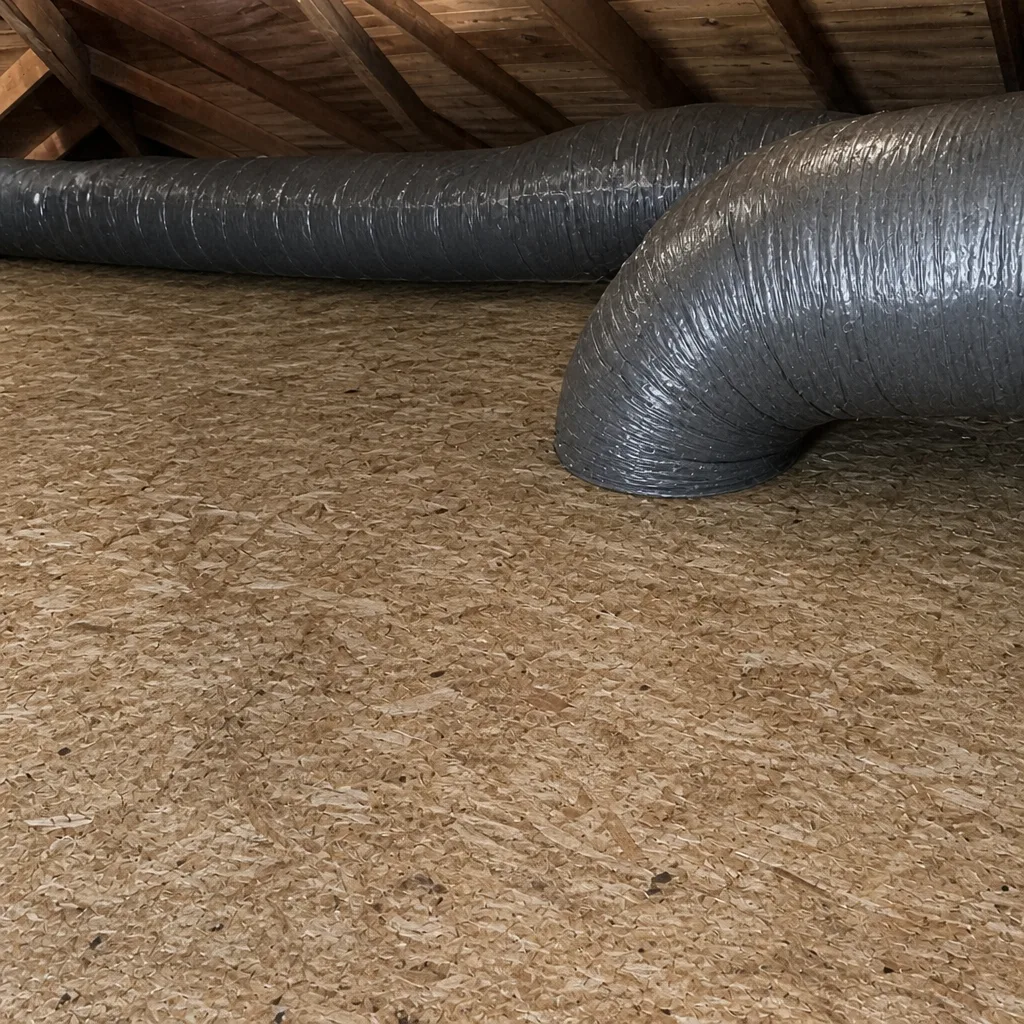 After
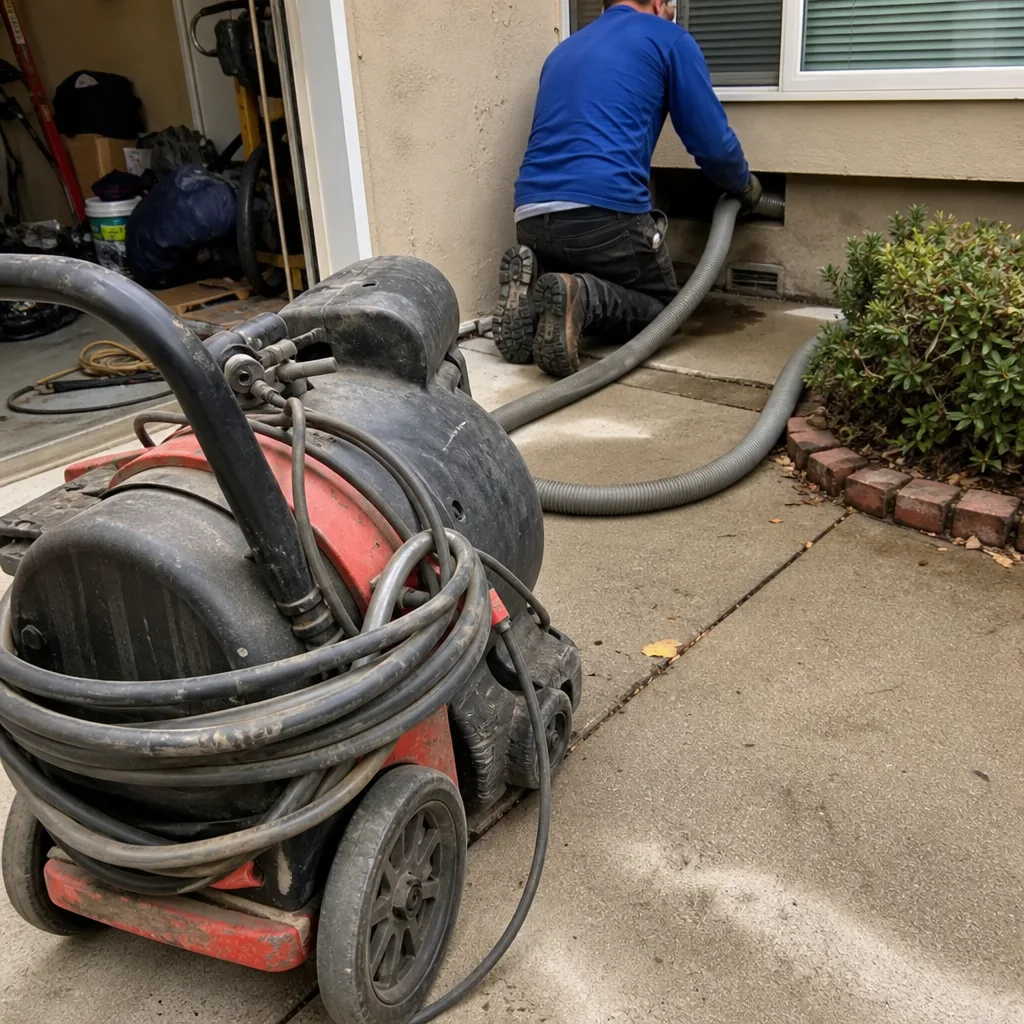 Before
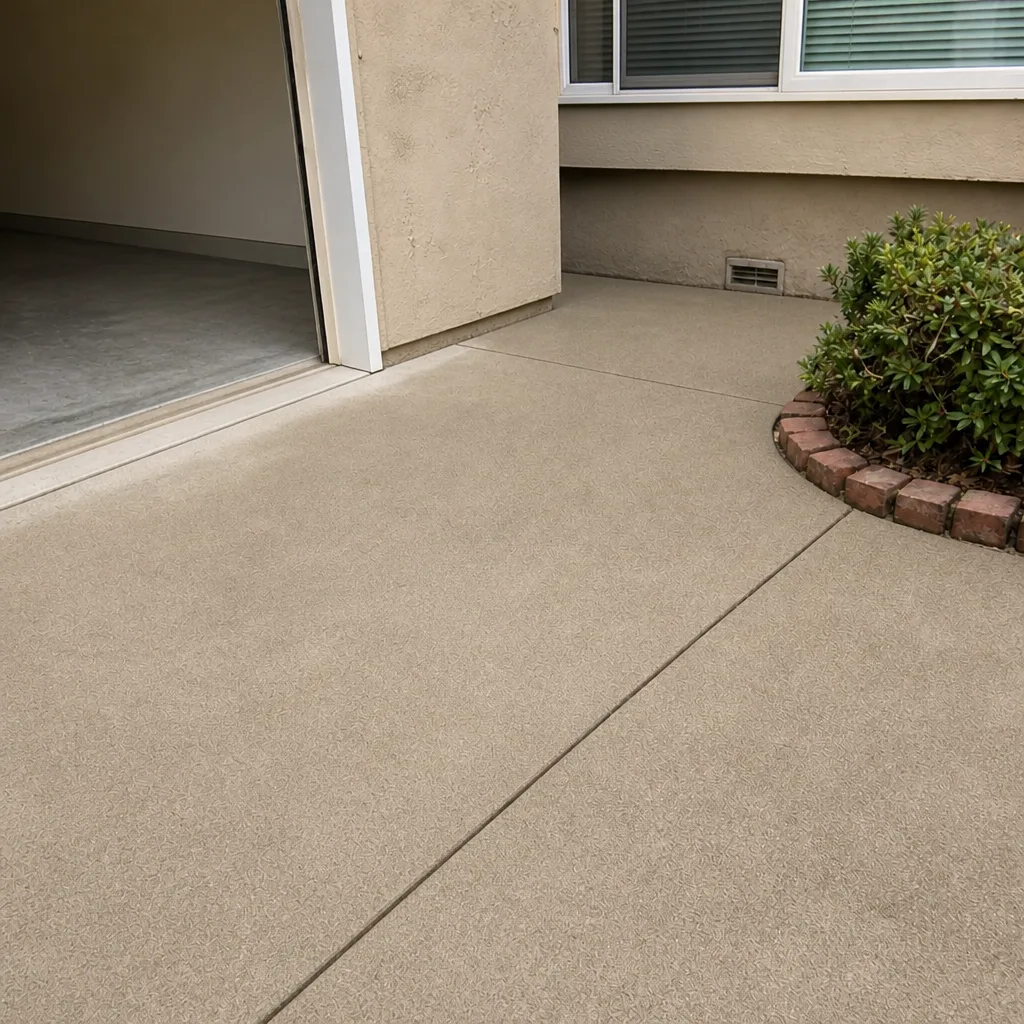 After
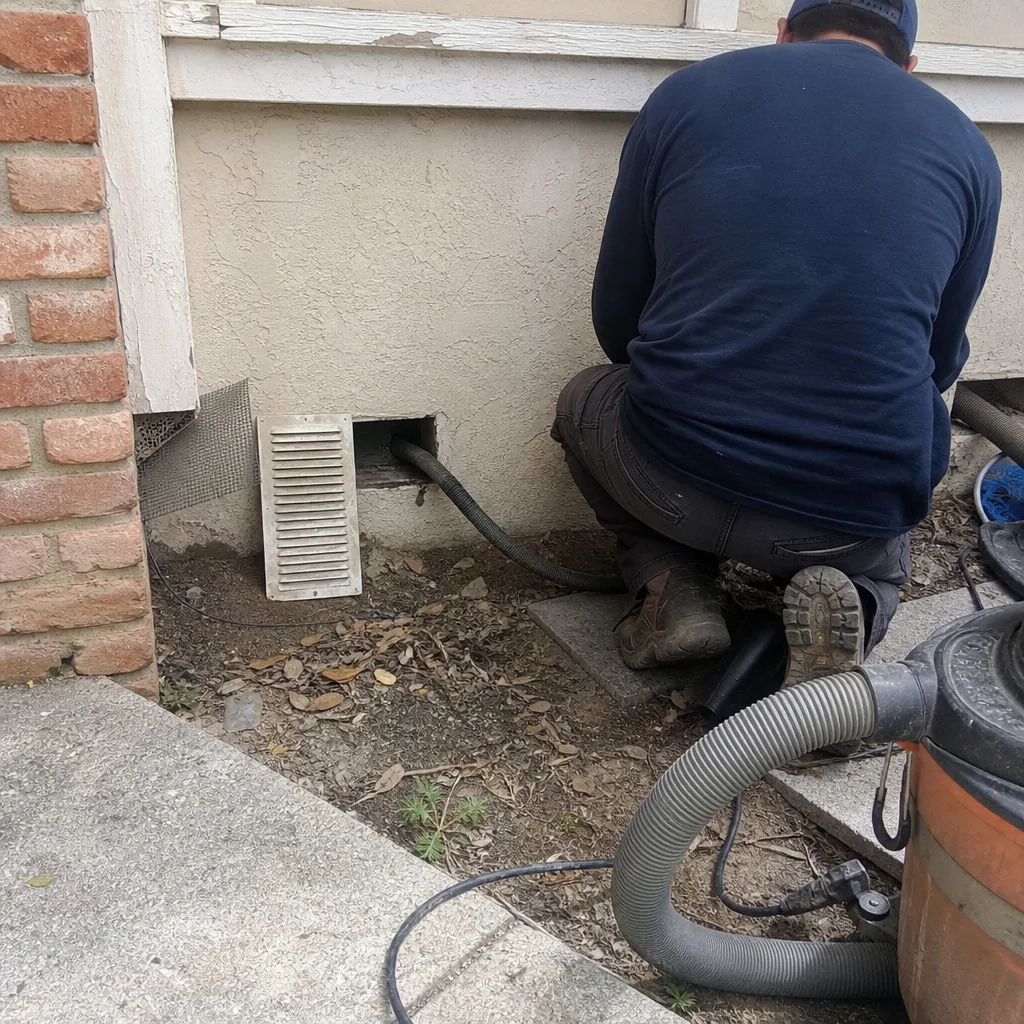 Before
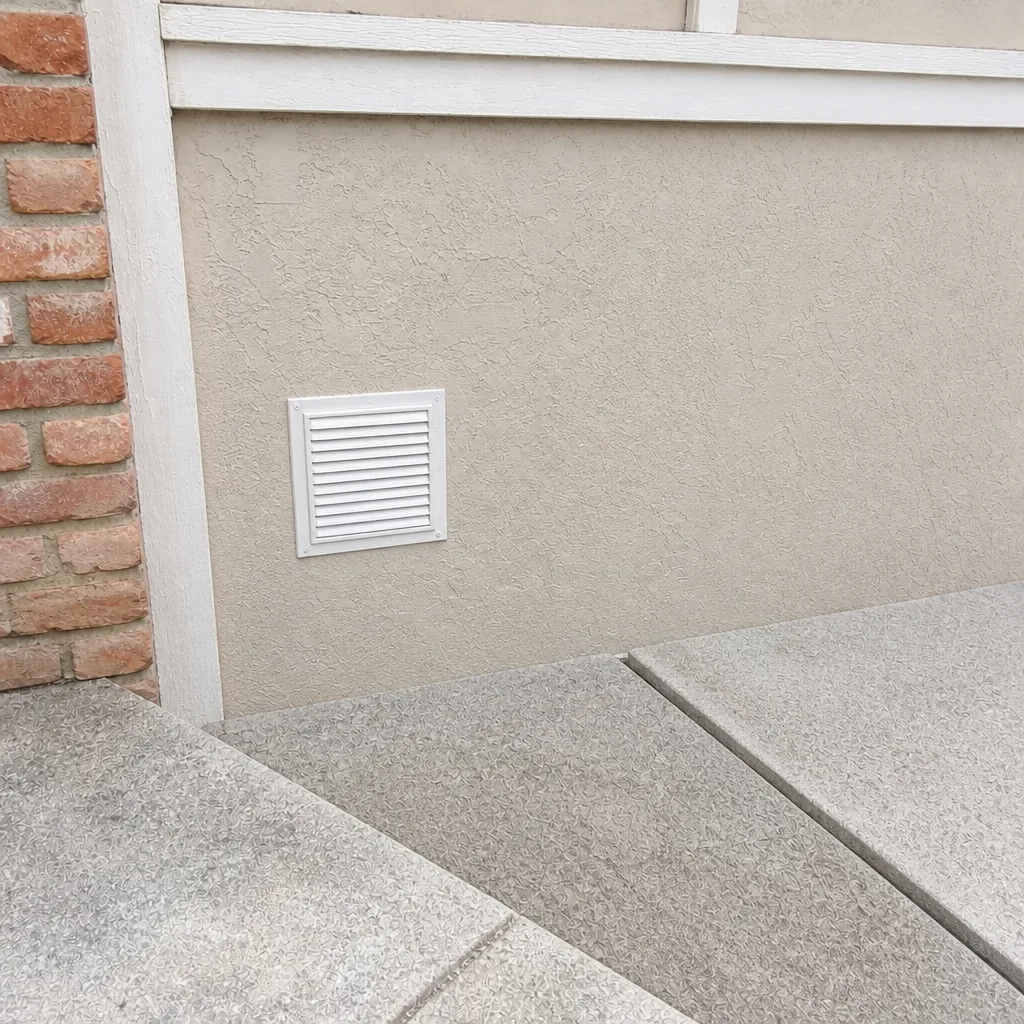 After