
Last updated November 4, 2026
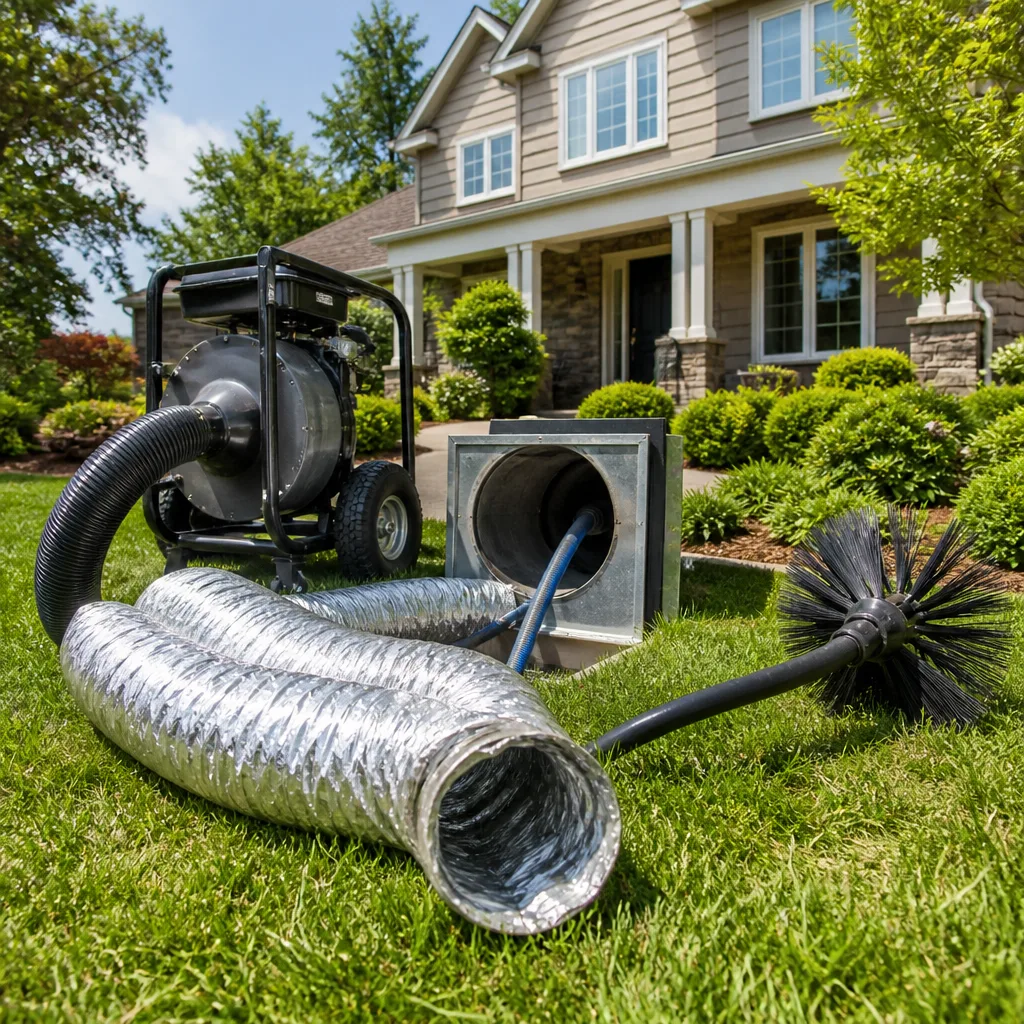 Whole-home duct cleaning
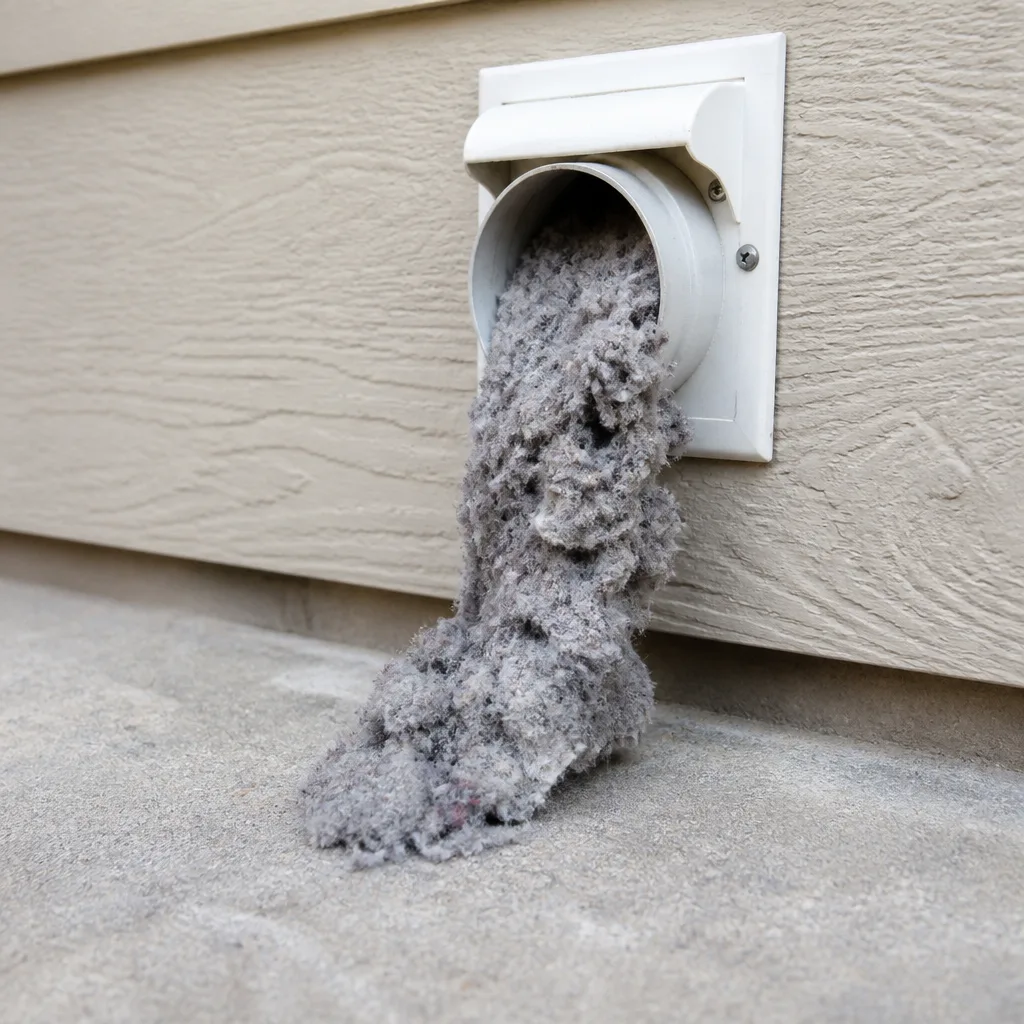 Dryer vent cleaning
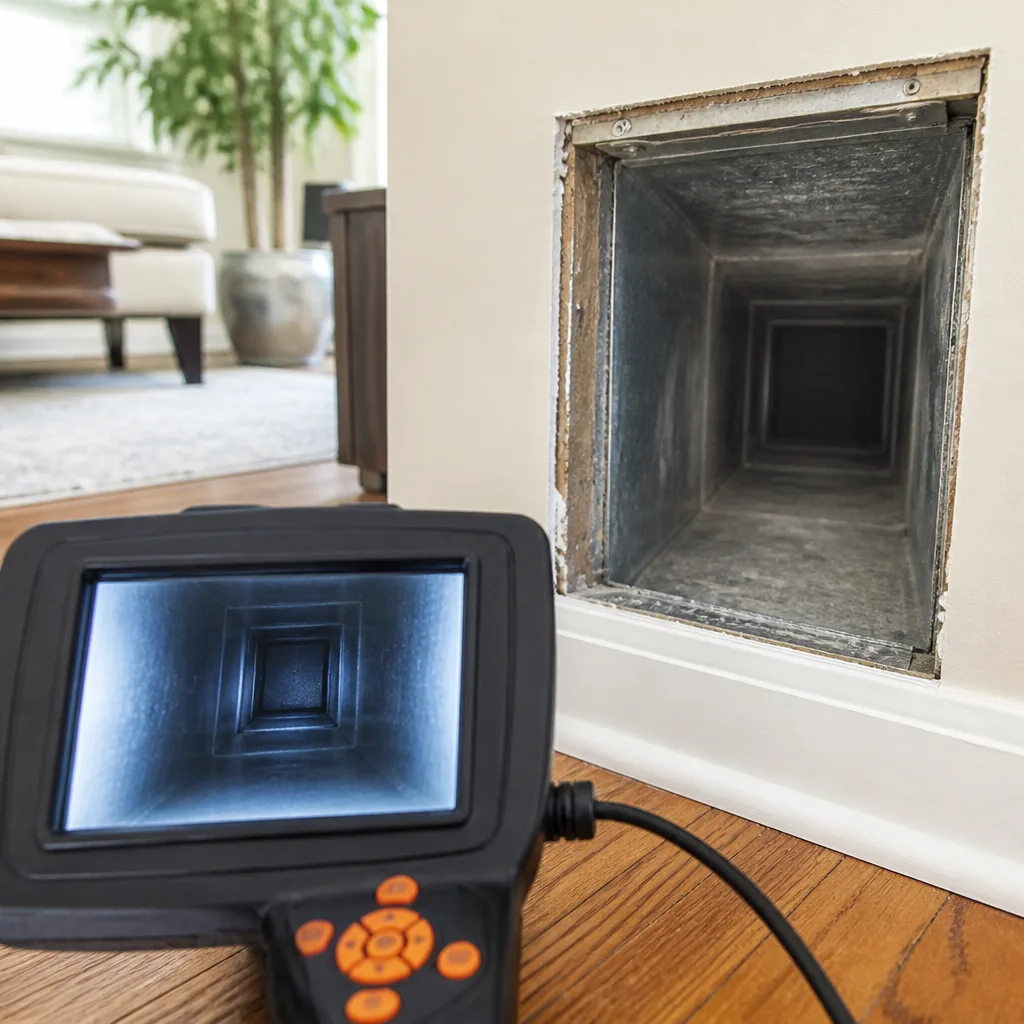 Camera inspection
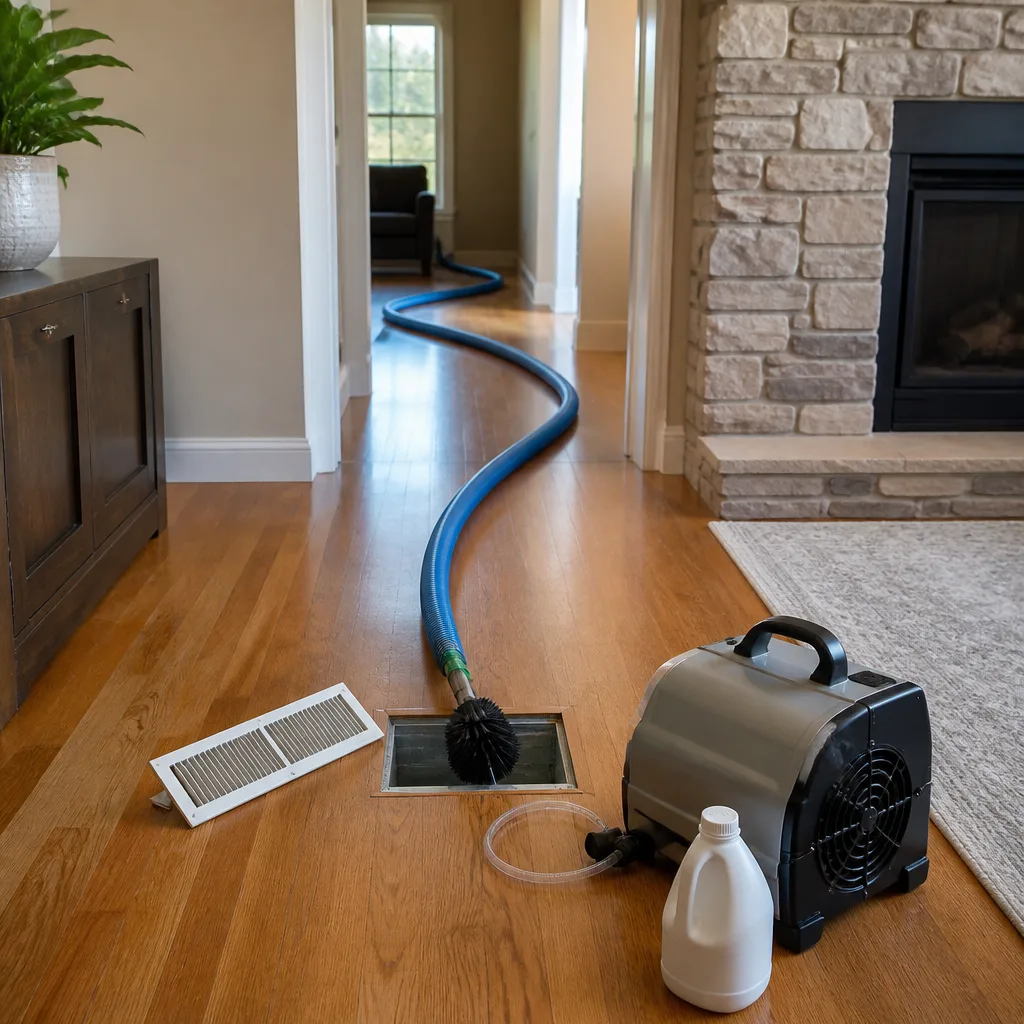 Sanitizing & deodorizing
Whole-system duct and dryer vent check with before-and-after photos - you see exactly what came out of your vents
That "$99 whole-house special" is a bait ad - the real number appears once they are in your hallway, or the "clean" is a shop-vac at the register. We photograph the inside of your ducts before and after instead.
Air Duct Cleaning Maintenance Schedule: What to Do and When
The “3 to 5 year” duct cleaning interval you see quoted everywhere was never based on airflow science or indoor air quality research. It was a compromise number the industry settled on decades ago, loose enough to keep customers from feeling pressured and specific enough to sound authoritative. The truth is more useful: your actual schedule depends on four variables that most guides never mention, and once you understand them, you’ll know exactly when your Hayward home needs service without guessing.
This guide gives you the decision framework we use when a homeowner asks us how often they should clean their ducts. It covers what to inspect yourself each year, how your filter tells you more than any chart, and why a 1960s ranch in Hayward’s flatland neighborhoods and a 2010 build in the hills have almost nothing in common when it comes to maintenance timing.
Quick Answer
Most Hayward homes need professional air duct cleaning every 3 to 5 years, but homes with allergy or asthma sufferers, multiple pets, recent construction, or a history of rodent activity should clean every 2 to 3 years. Your filter’s condition at 30 days is the most reliable leading indicator: if it’s heavily loaded, your ducts are loading up too. The four variables that set your actual interval are filter MERV rating, occupant sensitivity, duct material, and whether rodents have ever been in the system.
Styles & brands we work with
- Whole-home duct cleaning
- Dryer vent cleaning
- Camera inspection
- Sanitizing & deodorizing
Table of Contents
- The Four Variables That Actually Set Your Schedule
- What to Inspect Annually Before Calling for Service
- Why Hayward’s Older Homes Need a Tighter Schedule
- How Filter Change Frequency Predicts Duct Cleaning Needs
- Building a Maintenance Log That Pays for Itself
- Duct Material: Sheet Metal vs. Flex Duct
- Rodent Activity and Why It Changes Everything
The Four Variables That Actually Set Your Schedule
Any schedule chart that says “clean every X years” without asking about your home is guessing. We’ve cleaned ducts in Hayward homes that were spotless after eight years and others that needed full cleaning after eighteen months. The difference always comes down to four things.
Variable one: filter MERV rating. A basic fiberglass filter, the kind you can see through, catches maybe 20 percent of airborne particles. That means most of what circulates through your return registers ends up coating the inside of your ductwork. A MERV 11 or MERV 13 filter, like the Honeywell and Aprilaire media filters we install, traps far more before it reaches the ducts. Homes running higher-MERV filters simply don’t load up as fast. If you’ve been using the cheapest filters available, your ducts have been doing the filtering, and they’ll need cleaning sooner.
Variable two: occupants with allergies or asthma. We’re not going to tell you dirty ducts cause asthma, because that’s not how it works. But for someone with reactive airways, the particulate load in circulated air matters. In our experience cleaning Hayward homes, families with one or more allergy sufferers notice the difference when ducts are cleaned on a 2 to 3 year cycle rather than 5. The ducts themselves aren’t the source of the allergen, but they act as a reservoir that re-releases particles every time the blower kicks on.
Variable three: duct material type. This one gets ignored by almost every guide. Sheet metal ducts are smooth and relatively easy for air to keep clean. Flex duct, the plastic-and-wire spiral tubing common in crawlspaces and attics of homes built since the 1980s, has an inner liner that’s slightly tacky and ribbed. Dust adheres to it differently. Homes with long flex duct runs typically need cleaning on the shorter end of the interval.
Variable four: rodent history. If mice or rats have ever been in your attic, crawlspace, or walls, assume they’ve been in your ducts. Rodent activity means droppings, urine, nesting material, and sometimes carcasses inside the duct system. This isn’t a cleaning schedule question anymore; it’s a hygiene issue that needs addressing before anything else. We’ll cover this more below because it changes the entire approach.
These four variables interact. A home with MERV 8 filters, two cats, a kid with seasonal allergies, and original 1970s flex duct might need cleaning every 2 years. A home with MERV 13 filtration, no pets, no sensitivities, and clean sheet metal might genuinely be fine at 6. The point isn’t to memorize a number. It’s to know which variables apply to your house.
What to Inspect Annually Before Calling for Service
You don’t need to call a professional every year to know whether your ducts need attention. There are three checks you can do yourself in about ten minutes, and they’ll tell you whether it’s time to schedule a cleaning or keep waiting.
- Pull a few register covers and look inside. Unscrew two or three supply registers, ideally one near the air handler and one at a far end of the house. Use a phone camera with the flash on if you can’t get your head in there. Look for visible dust accumulation on the duct walls, especially dust that’s built up in a mat or a crusty layer rather than a light film. Light dust is normal. A thick, fuzzy layer you can scrape with a key means the system is loading up.
- Check visible flex duct runs in the attic or crawlspace. Flex duct that’s sagging, kinked, or collapsed is a problem that cleaning won’t fix and that most companies will happily ignore. In Hayward homes, we find flex duct that’s separated at the joints more often than you’d expect, especially in houses where the ductwork was retrofitted. If you can see daylight at a joint, or the insulation jacket is torn and the inner liner is exposed, that’s an air duct repair issue, not just a cleaning issue.
- Look at your return air path. The return registers pull air back toward the blower, and that’s the air that carries whatever’s in your home into the ducts in the first place. If the return registers are visibly packed with dust and pet hair, the ducts downstream of them are getting that same load.
One annual habit we recommend: take a photo of each register you check, with the date in the filename. A year later, compare. Photos don’t lie the way memory does. If you see progression, you know the system is actively accumulating. If it looks the same, you can push the cleaning interval out.
These checks are not substitutes for professional cleaning when it’s due. They’re the decision tool that tells you when “due” is.
Why Hayward’s Older Homes Need a Tighter Schedule
Hayward’s housing stock spans a wide range, and that range matters for duct maintenance. The flatland neighborhoods west of Mission Boulevard and the older residential pockets around downtown were largely built between the 1940s and 1970s. Those homes were originally heated with floor furnaces or wall heaters, and many had ductwork added later, often as part of a retrofit when central air arrived.
Retrofitted ductwork in Hayward tends to be a mix of materials and sizes, because it was designed around an existing floor plan rather than integrated from the start. Transitions between different duct sizes create turbulence, which drops particulates out of the airstream and onto the duct walls. Those homes also have decades of accumulated dust from before good filtration was common. We see this pattern consistently: a 1950s Hayward bungalow with original galvanized duct plus a flex-duct addition from the 1990s will load up faster than a 2005 tract home with properly sized, sealed sheet metal.
Newer construction in Hayward, including the developments up toward the hills, was built with tighter building envelopes and better filtration from day one. Those homes can often go longer between cleanings, assuming the occupants don’t have unusual particulate loads. The ductwork is cleaner to begin with, and tight construction means less dust infiltration from unconditioned spaces.
None of this means old is bad or new is good. It means the schedule should match the house. If you own one of Hayward’s older homes and you’ve never had the ducts inspected, assume they’re on the shorter end of every interval in this guide until proven otherwise.
We work across Hayward and surrounding cities, and the older-home pattern we describe here holds everywhere we go. Age of the structure plus retrofit history is a better predictor of duct condition than square footage or number of bedrooms.
How Filter Change Frequency Predicts Duct Cleaning Needs
The single best diagnostic tool you have is already in your HVAC system. Your filter tells you how much particulate is moving through the return air stream, which is the same air that deposits dust inside your ducts. If you want to predict when your ducts will need cleaning, watch your filter.
This is how to read it at 30 days: Pull the filter and hold it up to a light. If you’re running a basic fiberglass filter and it’s visibly gray-brown with a solid coating across the media, your home is generating or pulling in a lot of particulate. That same particulate is what’s lining your ducts. Under those conditions, a 3-year cleaning cycle is probably right, and 2 years isn’t unreasonable if you have pets or allergies in the house.
If you’re running a MERV 11 or higher pleated filter and it looks lightly loaded at 30 days, your ducts are seeing relatively clean air. That home can often go 4 to 6 years between professional cleanings. The higher-MERV media filters we work with from Honeywell and Aprilaire change this equation significantly because they remove more of the load before it reaches the duct walls.
Some Hayward homes sit near busy arterial roads, and road dust is a real particulate source that varies by season. Summer brings dry conditions and more airborne dust from construction and traffic. If your filter loads noticeably faster in summer, that’s a signal your ducts are seeing a seasonal pulse too. You don’t need to act on every variation, but tracking it over two or three seasonal cycles gives you a pattern you can use.
One thing to be careful about: a filter that’s completely plugged at 30 days doesn’t mean your ducts are suddenly dirty. It means your house has a high particulate source, and you should change the filter and keep watching. But if that pattern holds for months, the ducts are accumulating in proportion, and the math will catch up with you.
Building a Maintenance Log That Pays for Itself
Most homeowners have no record of what’s been done to their HVAC system. When we arrive for a cleaning, we ask questions, but the answers are often vague: “sometime before we moved in” or “the previous owner mentioned it.” That uncertainty costs money, because an uninformed cleaning schedule tends to default to either neglect or unnecessary service.
A maintenance log doesn’t need to be elaborate. A simple note in your phone or a sheet of paper in a drawer works fine. Here’s what to record:
- Date and result of each annual register inspection you do yourself, including photos if you take them. Note whether dust levels look light, moderate, or heavy.
- Filter changes, with dates and the MERV rating you used. If you switch from MERV 8 to MERV 13, that’s a meaningful change that affects your cleaning interval, and you’ll want to know when it happened.
- Any duct cleaning or repair work, with dates and company names. If you have a professional cleaning done, note what equipment was used and whether the technician mentioned any issues like separated joints, torn flex, or rodent evidence.
- Any pest control events, especially rodent treatments. If you’ve had traps set in the attic, bait stations placed, or a pest professional confirm rodent activity, that’s directly relevant to duct hygiene.
- Occupancy changes that matter: a new pet, a new family member with allergies, or a major remodel. All of these shift particulate load and should shift your thinking about the schedule.
When you call for service, this log lets you have a more accurate conversation. Instead of “I think it’s been a while,” you can say “we’ve been running MERV 13 for two years, added a dog in 2023, and the registers looked moderate last fall.” That’s the difference between a guess and a diagnosis. It also means you won’t get talked into a cleaning you don’t need by a company that works on commission.
For our own customers, we keep internal service records, but having the homeowner’s side of the log means less time spent reconstructing history and more time on the actual work. It’s a small habit that pays off every time the conversation comes up.
Duct Material: Sheet Metal vs. Flex Duct
Your ducts are built from one of two materials, and they age completely differently.
Galvanized sheet metal is the old standard, common in Hayward homes built before roughly 1980. It’s rigid, smooth on the interior, and holds up well over decades if it stays dry. Dust accumulation on sheet metal tends to be lighter and more even. The weak points are the joints, where sections connect, and the seams that run along the length. Over time, vibration from the blower can loosen seams, and older sheet metal systems often leak conditioned air into attics or crawlspaces. That leakage doesn’t directly add dust, but it changes airflow, and changed airflow changes where dust deposits.
Flex duct is the spiral-wound plastic and wire construction that became standard in the 1980s and remains common today. The inner liner is a thin plastic film that’s slightly textured. Dust adheres to it more readily than to smooth metal, and the spiral ribs create micro-turbulence that encourages particle dropout. Flex duct also has a shorter service life; the plastic liner can tear, the outer insulation jacket degrades, and the duct can sag or kink if it wasn’t supported properly. In attics, which get very hot in Hayward summers, the plastic becomes more flexible and sagging increases over time.
Your schedule should account for this. Homes with long flex duct runs in a hot attic typically need cleaning on a tighter cycle because the duct surface is more dust-retentive and the physical condition of the duct deteriorates faster. Homes with clean, well-sealed sheet metal can often go longer between cleanings, because the duct walls don’t hold particulate the same way.
When we clean systems with flex duct, we’re also inspecting for sag, kinks, tears, and separated joints as part of the service, because a cleaning that ignores the physical condition of the duct is incomplete. Our air duct cleaning work includes identifying repair needs as they come up, and we handle air duct repair as its own service for when cleaning alone isn’t enough.
Rodent Activity and Why It Changes Everything
Of the four variables that set your schedule, rodent history is the one that overrides the rest. Rodents in the attic, crawlspace, or wall cavities will find their way into ductwork eventually. They’re drawn to the warmth of the air stream, the shelter, and the route of travel through the house. Once they’re in, they leave behind what rodents leave behind: droppings, urine, oils from fur, and sometimes nesting material they dragged in.
This isn’t a matter of dust buildup anymore. It’s a sanitation problem inside the air pathway that serves your bedrooms and living spaces. If you’ve had confirmed rodent activity anywhere in the home, or if you’ve found droppings in the attic or crawlspace, the ducts should be inspected. Cleaning may be needed, but just as important is inspecting the duct system for entry points: separated flex joints, gaps where ducts pass through framing, or torn sections that rodents used as doorways.
In Hayward’s older neighborhoods, where crawlspaces are common and access points under the house were rarely sealed well, rodent entry into ductwork is more frequent than in slab-foundation homes. If you’ve dealt with a rodent problem, don’t assume it stopped at the traps. The ducts are often the part nobody checks.
After a rodent episode, the cleaning interval resets. A system that was cleaned and then had rodent intrusion needs cleaning again, not because of the calendar but because of what happened inside. And if the entry points aren’t repaired, the problem repeats. That’s where a company that does air duct repair as a distinct service matters: sealing the system is the only way to keep the next cycle from starting.
Common Mistakes to Avoid
- Following a chart without checking your own registers. The “every 3 to 5 years” rule is a starting point, not a prescription. Homes in Hayward’s older neighborhoods with retrofitted ductwork and basic filters may need cleaning sooner, while a newer home with good filtration can go longer. Look at your registers before making the call.
- Running the cheapest filter you can find. A $2 fiberglass filter means your ducts are doing the filtering. Stepping up to a higher-MERV pleated filter from Honeywell or Aprilaire reduces the load that reaches the ducts and extends the interval between cleanings. It’s the single most cost-effective thing you can do for duct hygiene.
- Assuming cleaning fixes everything. Duct cleaning removes accumulated debris from the inside surfaces. It doesn’t repair a torn flex liner, seal a separated joint, or fix a sag. If the physical condition of the duct is compromised, cleaning alone leaves you with the same problem. We repair what others just clean around.
- Ignoring the return path. Most attention goes to supply registers, but the returns are where air enters the system, and they can pack with dust and pet hair faster than anything else. A clogged return means the system pulls more particulate through, and the ducts downstream get the load.
- Waiting until there’s a smell. Musty odors from ducts are a late-stage signal. By the time you can smell it, the system has been redistributing whatever’s in there for months. Annual inspection catches accumulation before it becomes an odor problem.
- Cleaning ducts before fixing the source of moisture. If you have a condensation issue or a water intrusion problem in the ductwork, cleaning is temporary. Moisture causes dust to bond to surfaces and creates conditions for biological growth. Find and fix the moisture first, then clean.
- Using duct cleaning to solve an allergy problem without addressing filtration. Cleaning removes what’s already there; filtration controls what gets in going forward. If allergies are the driver, the combination of a professional cleaning and better filtration is what actually changes the air quality in the home.
See the difference
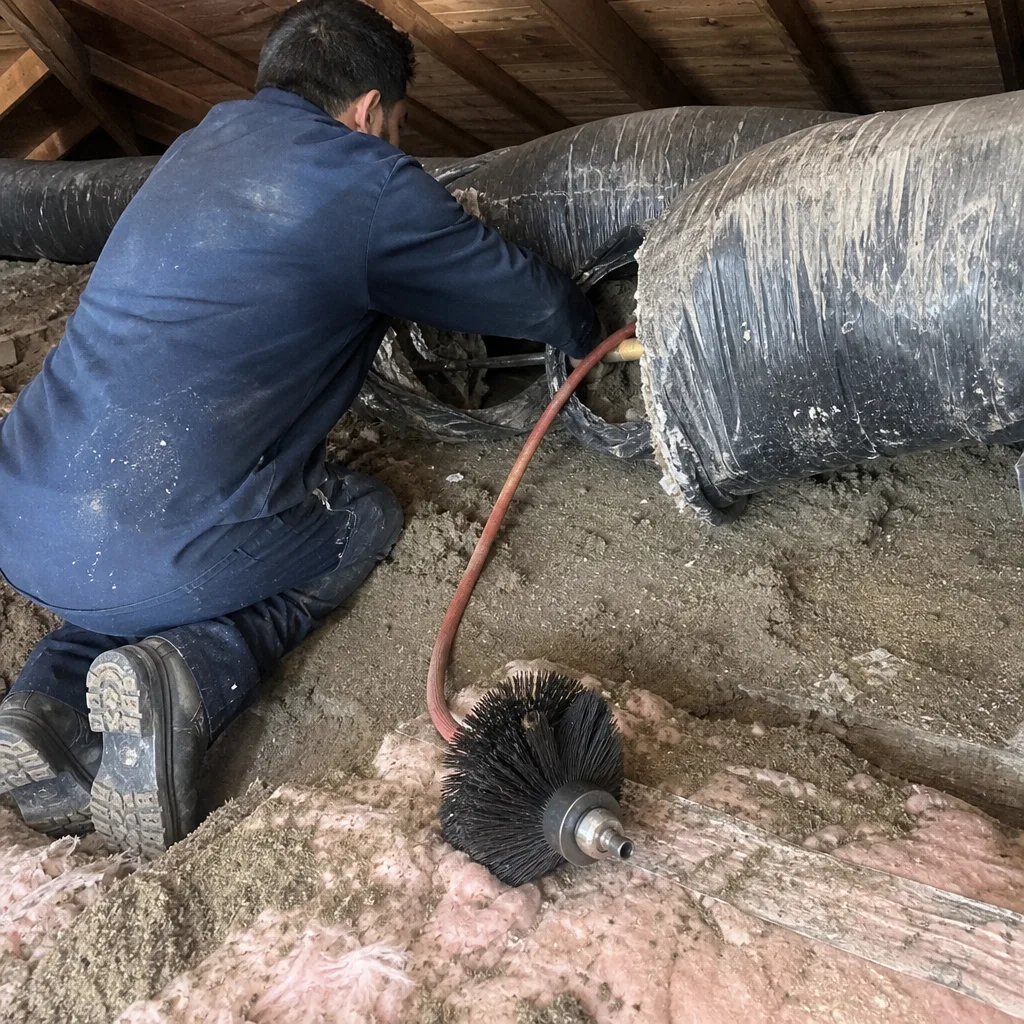 Before
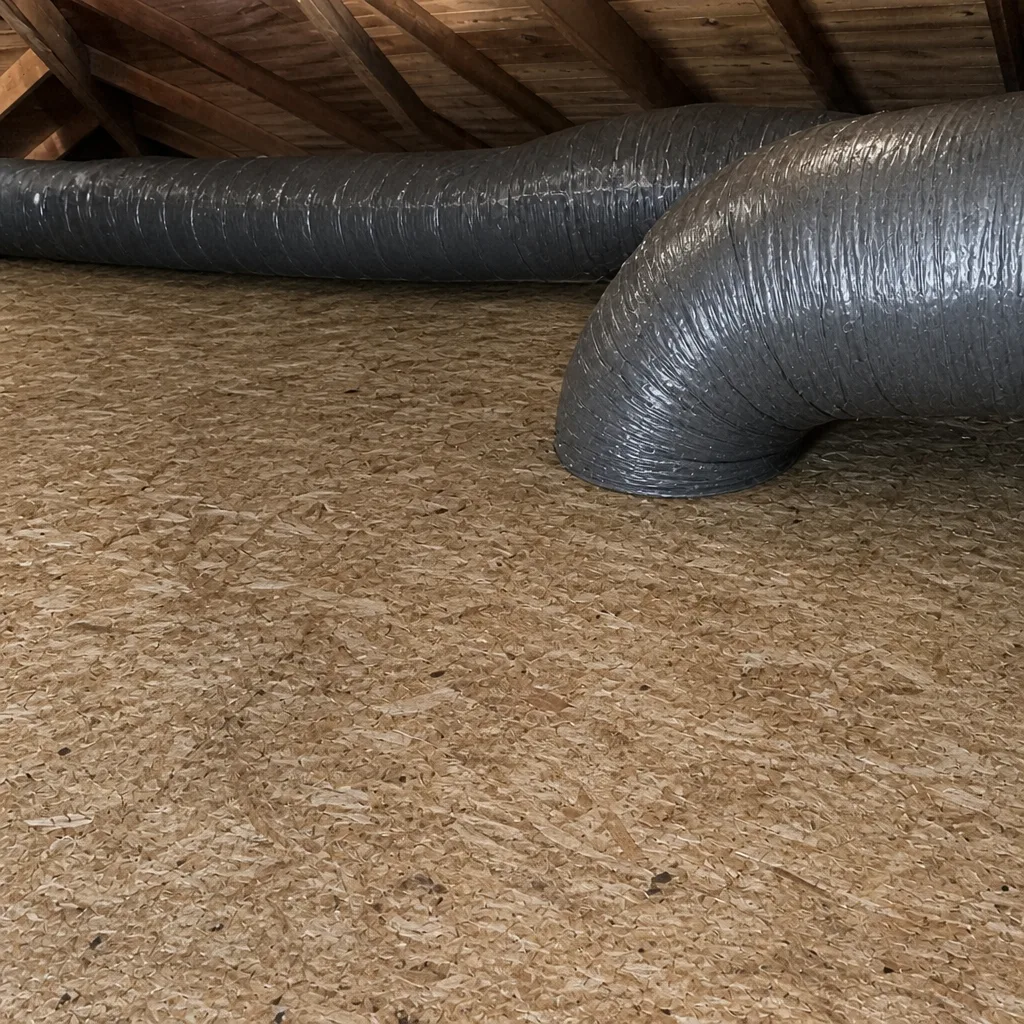 After
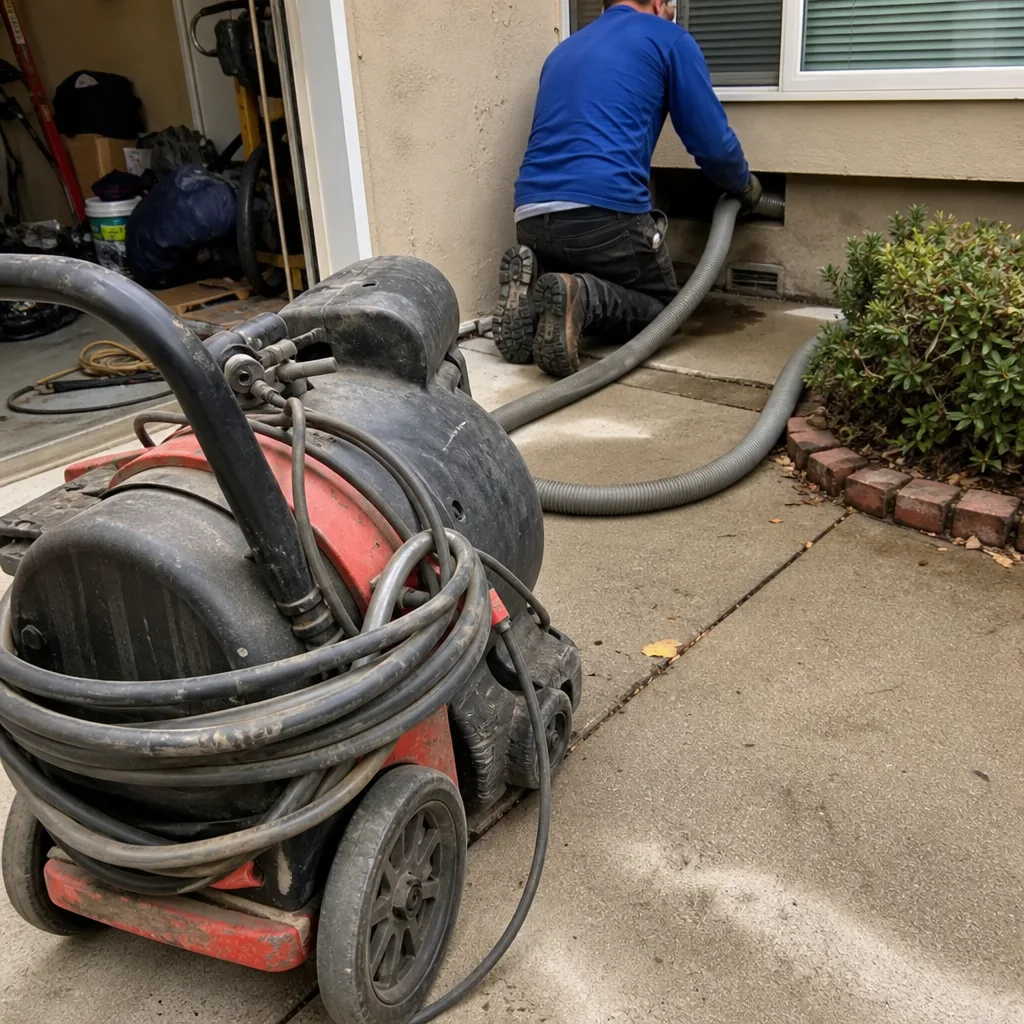 Before
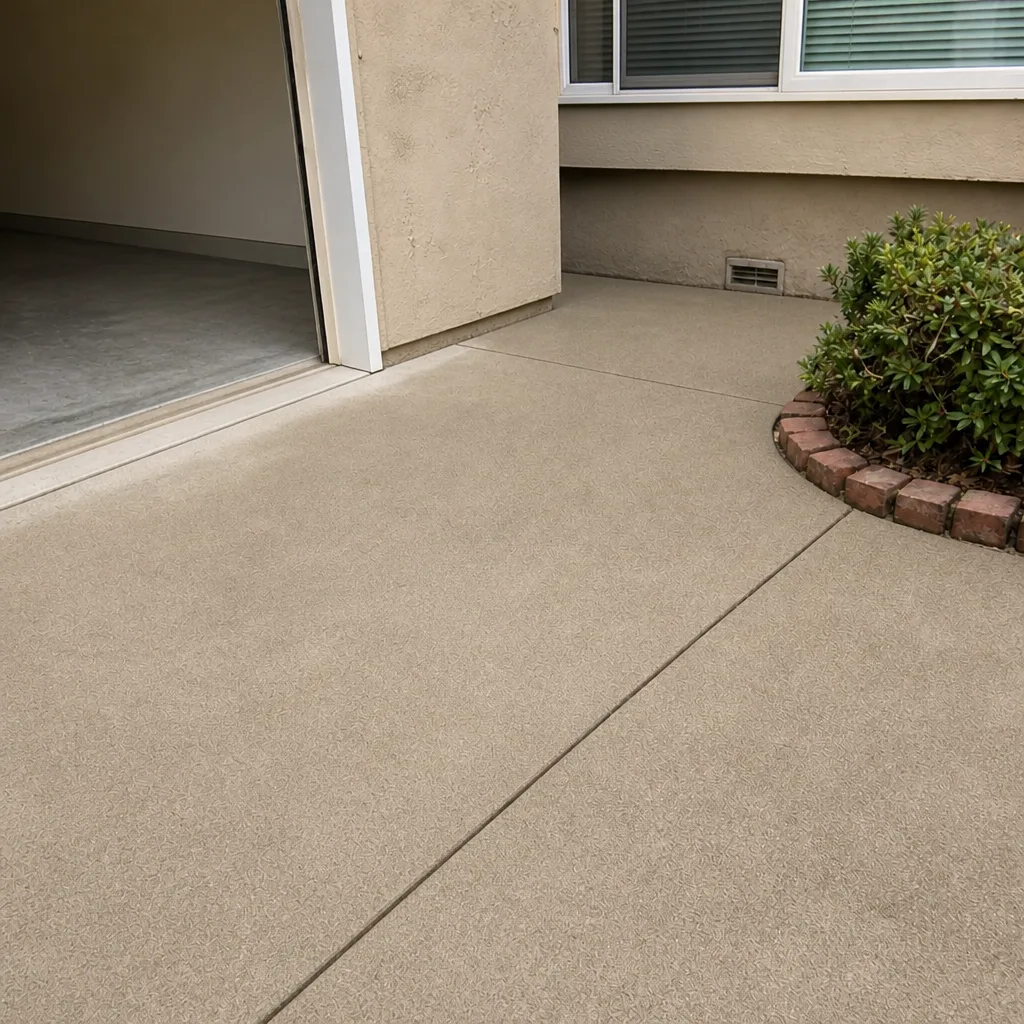 After
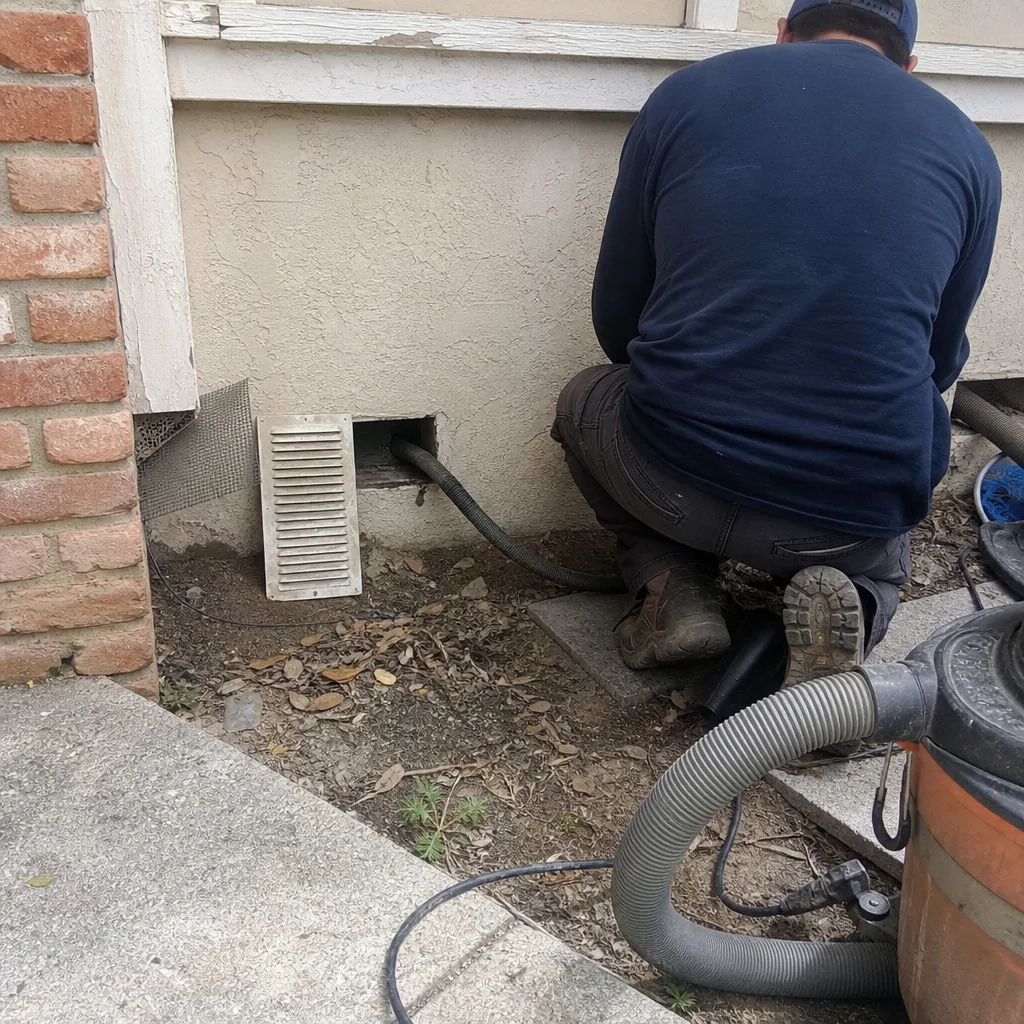 Before
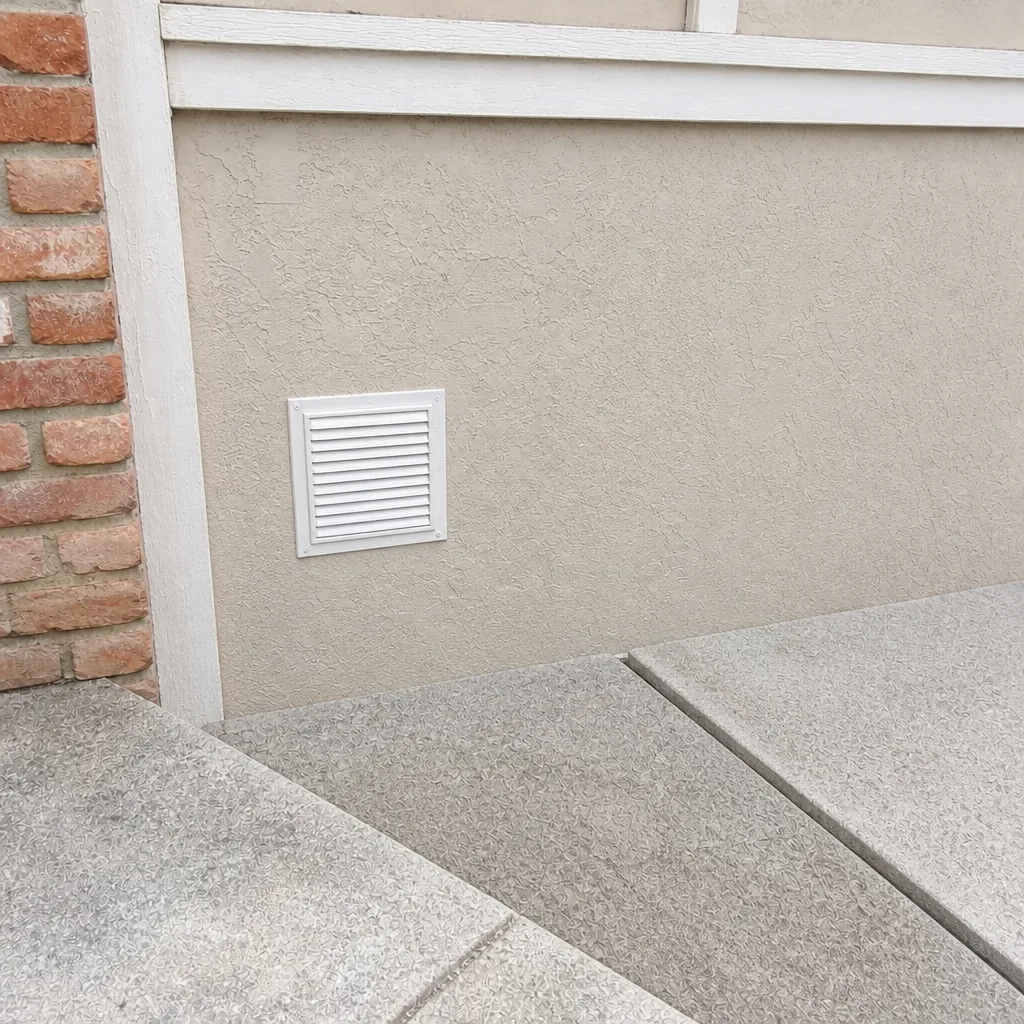 After
When to Call a Professional
Self-inspection goes a long way, but there are moments where the right move is to bring in equipment that actually changes the equation. If your annual register check shows heavy buildup, if you’ve had rodent activity confirmed in the home, if the ducts have never been cleaned and the house predates 1990, or if someone in the home is dealing with unexplained respiratory irritation, those are all reasons to schedule a professional evaluation. Professional-grade equipment matters here: we run Rotobrush and Nikro systems, the same category of tools used in commercial duct work, and we pair that with Abatement Technologies filtration when the job calls for it. This isn’t a shop-vac setup, and the difference shows in what gets removed from the system.
Duct Cleaning Hayward offers free estimates in Hayward. If you’re not sure where your system stands, call (833) 589-9902 and we’ll take a look before you commit to anything. We answer 24/7. Fast dispatch from 7am to 7pm, Sunday through Friday.
Frequently Asked Questions
Most Hayward homes need air duct cleaning every 3 to 5 years, but homes with pets, allergy sufferers, rodent history, or older retrofit ductwork generally need cleaning every 2 to 3 years. Your filter’s condition at 30 days is the best indicator of how fast your ducts are accumulating dust. Call (833) 589-9902 for a free estimate if you’re not sure where your system falls.
Pricing for air duct cleaning is set per job by a written estimate, because homes vary widely in system size, number of returns, and accessibility. A small single-story home is a different job than a two-story with a crawlspace and attic runs. The estimate is free, so call (833) 589-9902 and we’ll assess your system and give you a number before any work starts.
Cheaper quotes typically reflect different equipment and a different scope of work. A company running a small portable vacuum attached to one register is doing something very different from a company running Rotobrush or Nikro systems that agitate and extract debris through the full duct pathway. The per-vent pricing model some companies use also tends to inflate by the end of the visit. We quote one flat price per system before work begins.
Ask to see before-and-after photos of the inside of your ducts. Professional-grade equipment we use, including Rotobrush and Nikro systems, can capture what the duct walls look like before cleaning and after. Photos from inside the system are the verification that matters. We show our customers what we found and what we left behind.
Duct cleaning removes accumulated particulate that re-circulates through the home every time the blower runs, which can reduce the airborne load for allergy sufferers. But the bigger factor in ongoing allergen control is filtration. Pairing a professional duct cleaning with higher-MERV filtration from Honeywell or Aprilaire is what actually changes day-to-day air quality. Cleaning without good filtration is a one-time improvement.
Air duct cleaning addresses the HVAC ductwork that carries heated and cooled air through your home. Dryer vent cleaning addresses the exhaust duct from your clothes dryer to the outside, which accumulates lint and is a leading cause of residential dryer fires. The two systems are completely separate, and we clean both as distinct services. A home can need one without needing the other.
We do both. Air duct repair is a standalone service for torn flex, separated joints, crushed sections, and other physical damage. Most duct cleaning companies clean around these problems and leave them for someone else. Our position is simpler: we repair what others just clean around. Tell us what you’re seeing and we’ll tell you which service applies.
The Bottom Line
Your duct cleaning schedule is not a number on a chart; it’s a decision built from your home’s specific conditions. Filter MERV rating, occupant sensitivities, duct material, and rodent history determine whether you need cleaning every 2 years or every 5 or more. The annual register inspection is your checkpoint, and your filter at 30 days is your leading indicator. For Hayward’s older homes with retrofit ductwork and long flex runs, lean toward the shorter intervals until you have evidence that says otherwise. A maintenance log turns all of this from guesswork into a pattern you can actually use. When the evidence says it’s time, call a specialist who runs professional-grade equipment, not a generalist with a vacuum. Duct Cleaning Hayward is that specialist. Call (833) 589-9902 for a free estimate. We answer 24/7. Fast dispatch from 7am to 7pm, Sunday through Friday.
Written by the team at Duct Cleaning Hayward, serving Hayward since 2011.