
Emergency Air Duct Cleaning Near Me: What Hayward Homeowners Should Do First
If you have smoke odor moving through your vents, visible mold on registers, or confirmed rodent activity in your ductwork, the first step isn’t calling for a cleaning. You shut the system off, identify the source, and document everything before any contractor touches the ductwork. Skipping that sequence spreads the problem and often voids your insurance claim. If you’d rather not work through this alone, call Duct Cleaning Hayward at (833) 589-9902 and we’ll walk you through it.
Step One: Turn the System Off Before You Do Anything Else
Here’s the mechanics of why this matters. Your HVAC blower moves air through every room in the house. If a contaminant entered the ductwork, that blower is now distributing it. Smoke particles, mold spores, and rodent dander all get pulled into the return side, pushed through the trunk lines, and out of every supply register. The longer the fan runs, the more surface area inside the ducts gets coated. What started as a contained issue in one section becomes a whole-system problem.
So the first action is always the same: set the thermostat to “off” and, if accessible, switch the air handler off at the breaker. Don’t just turn the temperature down. A system set to “auto” can still cycle on and off as indoor temperatures drift. You want zero airflow through those ducts until a professional has assessed the situation.
Hayward’s mild climate means you likely won’t face a comfort emergency by shutting the system down for a day or two. That’s a genuine advantage. In colder regions, shutting off heat carries its own risks. Here, you can stop the spread without freezing pipes or risking a secondary problem. Use that window to work through the steps below.
The Three Scenarios That Are Actually Emergencies
Most calls we get labeled as “emergency duct cleaning” are actually long-term maintenance issues that finally became noticeable. There’s nothing wrong with urgency, but it helps to separate what demands immediate intervention from what simply needs to be scheduled soon. Here are the three situations that justify treating this as a genuine emergency.
1. Fire or Smoke Contamination
If you’ve had a kitchen fire, an electrical fire, or any event that pushed smoke through the HVAC system, that’s a real emergency. Smoke residue is acidic and fine. It penetrates duct surfaces, insulation, and any porous material it touches. Running the system after smoke exposure drives those particulates into every room and deepens the contamination.
The correct first responder here is your insurance company. Fire damage claims involving HVAC systems require documentation of the affected area, the extent of the smoke intrusion, and a written assessment from a qualified contractor. A reputable duct cleaning company in Hayward will inspect first, document findings, and provide the kind of report your adjuster needs before any cleaning begins.
2. Confirmed Rodent Infestation in Ductwork
This is the scenario where the wrong order of operations costs you real money. If you’ve found rodent droppings near a supply register or heard activity inside the ductwork, cleaning the ducts before removing the rodents is wasted work. The animals are still there. They’ll re-contaminate the system within days of your cleaning.
Step one is pest exclusion. You need a contractor who seals entry points and confirms the animals are gone. Step two is containment and removal of contaminated material. Step three is the duct cleaning itself, including sanitization where appropriate. A company that quotes duct cleaning over the phone without asking about the status of the infestation is selling you a repeat job in six months.
3. Sewage Backup or Water Intrusion Near the Air Handler
If a drain line backed up into a crawlspace or mechanical closet where your air handler sits, or if a water leak soaked ductwork, you’re dealing with biological contamination. Sewage in proximity to the HVAC system introduces bacteria and pathogens that get pulled into the airflow. This requires containment, possible duct replacement in affected sections, and then cleaning of the remaining system.
For this scenario, the first call should be to a water damage specialist who can assess the extent of the intrusion. Duct cleaning comes after the source is stopped and the contaminated material is removed. In Hayward, where many homes run ducting through crawlspaces, standing water near ductwork is a problem that worsens quickly in warm weather.
Document Everything Before Anyone Starts Cleaning
Insurance claims fall apart for one avoidable reason: the homeowner let a contractor start remediation before photos were taken and the scope was documented. If you’re facing any of the three scenarios above, take these steps before any cleaning company arrives.
First, photograph everything. Supply registers, return grilles, visible mold, water stains, rodent droppings, the HVAC equipment itself. Use your phone. Take wide shots for context and close-ups for detail. Don’t clean anything first. The mess is evidence.
Second, note the timeline. When did you first notice the smell? When did the fire occur? When did you see the droppings? Your adjuster will ask. Writing it down while it’s fresh saves you from reconstructing a timeline weeks later.
Third, keep a record of every HVAC cycle after the incident. If you ran the system for three days after a fire before shutting it off, that’s relevant. It affects the scope of the cleaning and potentially the extent of contamination. Be honest about it. A thorough contractor will find what the airflow spread anyway, and finding it sooner rather than later protects your claim.
Fourth, get any contractor assessment in writing before work begins. A legitimate company will provide a written scope that describes what they found, what they recommend, and what it will cost. We provide this on every air duct cleaning job we quote in Hayward. If a company won’t put it in writing, find another company.
What “Emergency Duct Cleaning” Actually Means
Here’s the honest truth about this service. Some steps in duct cleaning can be accelerated. Some cannot, and no amount of urgency changes the physics of the work.
What can be accelerated: scheduling, inspection, and mobilization. A specialist can get a technician to your home quickly, assess the situation same-day, and set up containment immediately. That matters for limiting further spread of contamination.
What cannot be rushed: the cleaning itself. Proper duct cleaning is a mechanical process. It involves running agitated brush systems through the full length of the ductwork, applying negative air pressure to capture debris rather than just knocking it loose, and verifying the results. We run Rotobrush and Nikro equipment because these are professional-grade systems designed for exactly this work. Cutting corners on dwell time or skipping sections leaves contamination behind, and then you’re paying for the job twice.
Containment setup also takes time. A proper emergency response includes sealing off the affected area, establishing negative pressure so contaminants don’t spread during the work, and using filtration equipment designed for the particle load. Abatement Technologies filtration units are built for this. A contractor who shows up and starts cleaning without containment is making your problem worse, not better.
Red Flags When Calling for Emergency Help
Emergency situations create pressure, and pressure attracts bad actors. Here are the warning signs we tell Hayward homeowners to watch for when they’re calling around in a hurry.
- Quoting over the phone without an inspection. Anyone who gives you a firm price for emergency duct cleaning before seeing the system is guessing. You need a written estimate based on what’s actually in your ductwork.
- Skipping containment. If the plan doesn’t include sealing off the work area and establishing negative pressure, the contaminate will spread during cleaning.
- Pushing full system replacement. Sometimes sections of ductwork need to be replaced, especially after sewage or fire damage. But a company that jumps straight to “replace everything” before inspecting is selling product, not solving your problem.
- Refusing to document. A legitimate contractor will happily provide photos, written findings, and a clear scope of work. If they won’t, walk away.
- No answer for the “what caused this” question. Emergency duct cleaning without addressing the source is a temporary fix. A specialist asks what happened and makes sure it’s actually resolved.
We built Duct Cleaning Hayward around a simple idea: the equipment should match the problem. That’s why we’re authorized to work with Honeywell and Aprilaire air quality components, and why we invest in Guardsman and Abatement Technologies filtration systems. When we handle an emergency cleaning, we’re not just vacuuming dust. We’re diagnosing the system, addressing what failed, and making the air inside your home safe to breathe again.
What to Expect From an Emergency Duct Cleaning Visit
Here’s how a properly sequenced emergency response works, step by step, so you know what to look for.
- Inspection and documentation. The technician walks the system, identifies the contaminated areas, photographs everything, and gives you a written scope of work.
- Containment setup. The affected area gets sealed off and negative pressure is established using professional filtration equipment. This prevents cross-contamination during the cleaning.
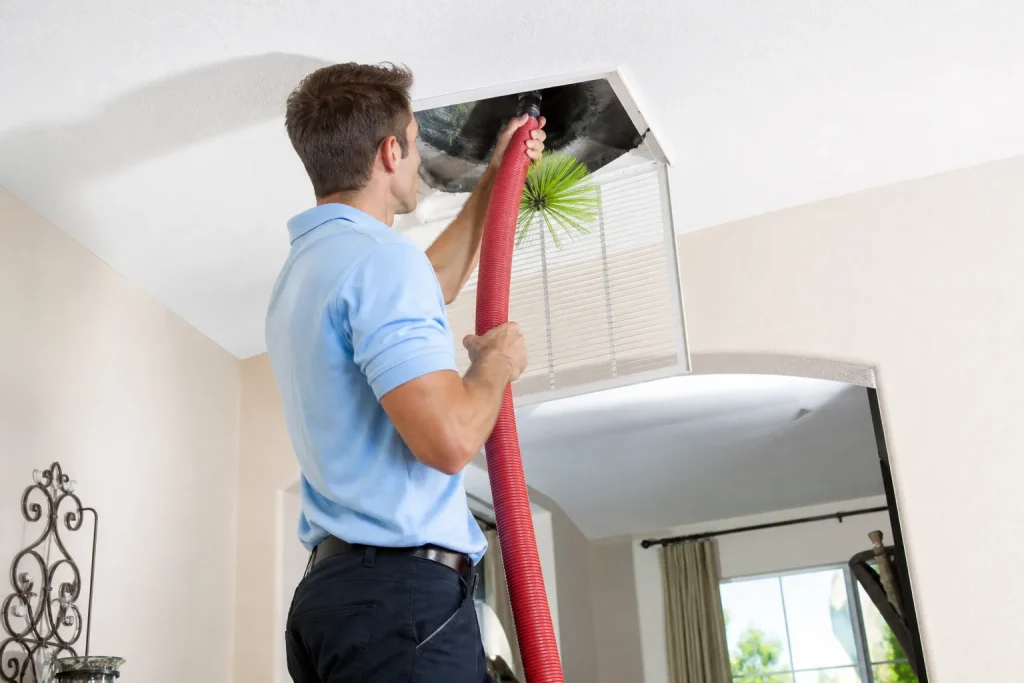
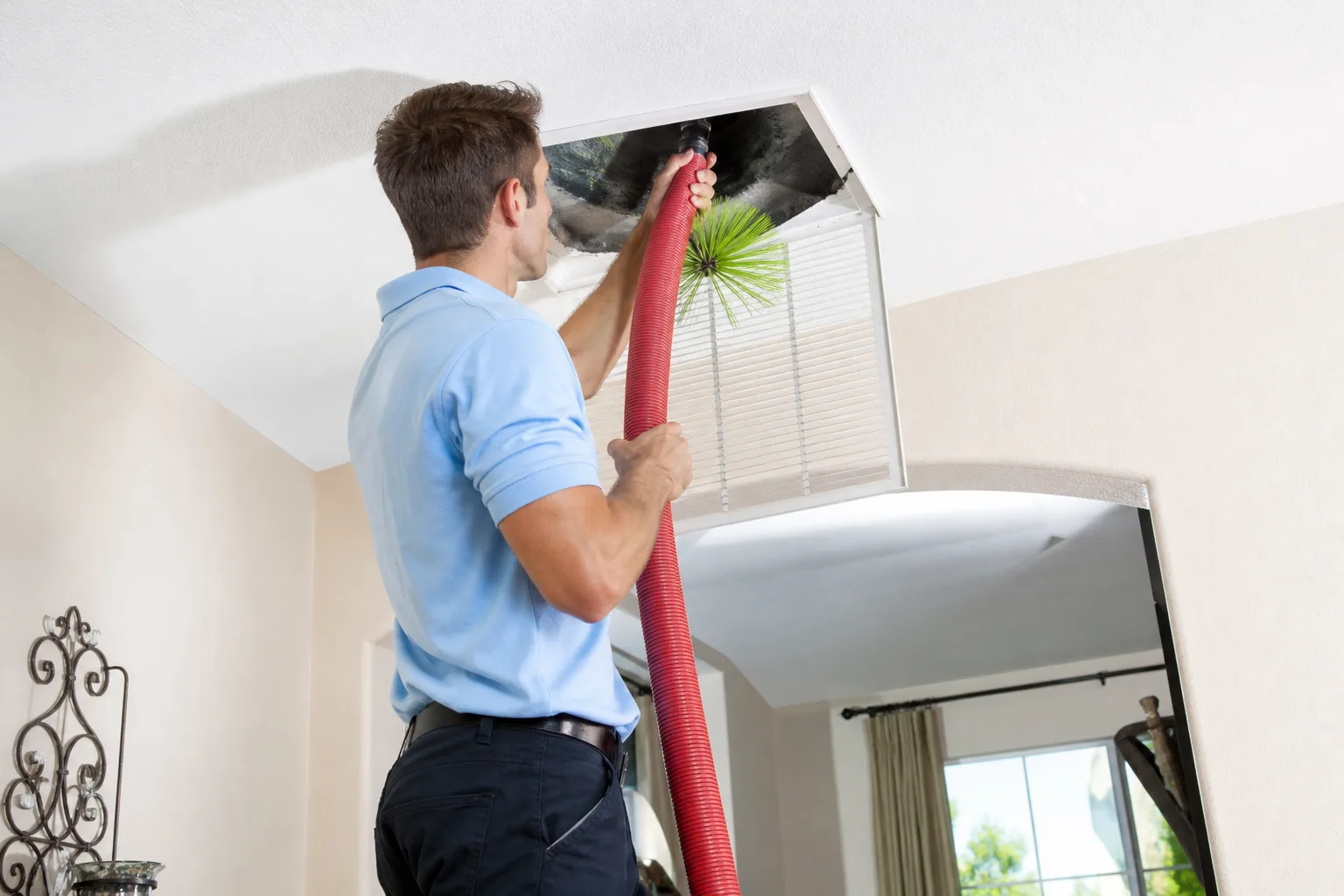
- Mechanical agitation and extraction. Rotating brushes dislodge debris from duct walls while a high-powered vacuum system captures it. This is the core of the cleaning work.
- Component cleaning. Registers, grilles, the blower assembly, and accessible duct sections get cleaned and inspected. Damaged sections are identified at this point.
- Verification. Before-and-after photos are taken from inside the ductwork so you can see what was removed. If air quality components need attention, we can discuss Aprilaire or Honeywell options during this visit.
If the inspection reveals ductwork that’s torn, crushed, or otherwise compromised, air duct repair is part of what we do. Some companies just clean around damage. We fix it, because cleaning a duct with a hole in it means you’re pulling air from your crawlspace or attic into your living space, and that undoes the entire point of the job.
One thing we hear often from Hayward homeowners after an emergency is surprise that the cleaning itself took several hours. That’s normal. Rushing through this work means leaving contamination in place, and then whatever emergency you just dealt with becomes a recurring problem. A thorough job takes the time it takes.
Why Some Duct Problems Keep Coming Back
Here’s a pattern we see repeatedly. A homeowner in Hayward notices a musty smell. They call a budget duct cleaner. The smell returns in three months. They call us. We open the system and find the real issue: standing water in a crawlspace, a disconnected return pulling attic air, or a section of flex duct that’s collapsed.
Cleaning without diagnosis is just moving air around. This is why the “emergency” framing matters less than the diagnostic framing. A real emergency requires finding what happened and making sure it doesn’t happen again. That’s what separates a specialist from a generalist. We repair what others just clean around.
Your ducts work invisibly, until they don’t. When they fail, you need someone who understands the entire system, not just the vacuum side of it. That’s the approach we take on every job, emergency or otherwise, and it’s why we run Rotobrush and Nikro equipment rather than entry-level setups. Cleaner air starts inside the walls, and it stays clean when the system is actually fixed.
The Bottom Line
If you’re in Hayward and you think you have a duct emergency, work through this sequence: shut the system off, identify the source, document everything, and call a specialist who will inspect before quoting. Don’t let urgency push you into hiring someone who skips steps. The wrong first call costs more than money. It costs you the opportunity to get the problem actually solved the first time. If you’re in Hayward and need help, Duct Cleaning Hayward offers free estimates. Call (833) 589-9902. We answer 24/7. Fast dispatch from 7am to 7pm, Sunday through Friday.
Frequently Asked Questions
Yes, same-day dispatch is available when our schedule allows. We answer 24/7 and dispatch technicians from 7am to 7pm, Sunday through Friday. The inspection typically happens same-day. Whether the full cleaning can be completed that day depends on the scope of contamination and the condition of the ductwork. Call (833) 589-9902 and we’ll give you a straight answer about what’s possible.
No. Do not disturb contaminated material. Home vacuums don’t have the filtration required to capture fine particles like mold spores or smoke residue, and DIY attempts can spread the contamination further through the house. Shut the system off, document the situation, and let a professional with proper negative-pressure equipment handle it.
It depends on the cause. Fire and smoke damage, sewage backup, and certain types of water intrusion are commonly covered perils. Duct cleaning resulting from years of deferred maintenance typically is not. Document everything before work begins and check your policy. A good contractor will provide the written scope and photos your adjuster needs.
Ask for before-and-after photos taken inside the ductwork. A professional company using systems like Rotobrush or Nikro equipment can place a camera in the ducts and show you exactly what was removed and what the cleaned surfaces look like. If a company can’t or won’t show you the inside of your own ducts after the work, find someone who will.
Written by the team at Duct Cleaning Hayward, serving Hayward since 2011.
Need Air Duct Cleaning Help?
Call Duct Cleaning Hayward - licensed & insured, here with fast help in Hayward.
(833) 589-9902